TRAINS, BUSES AND SUMMER ON CAPE ANN

Children on the Beach. Edward Henry Potthast (1857-1927)

Children on the Beach.                                Edward Henry Potthast (1857-1927)

The Boston and Maine trains played an integral role in my summer vacations in Gloucester.  Now after reading the pieces written by Peter Anastas and Eric Schoonover I wondered if Enduring Gloucester’s readers could stand one more train story!  I hesitated then decided to take a chance. Trains seem to have played a memorable role in the lives of my generation.

1Pru - Train Depot

Each summer my mother and I would take the train from my small hometown in central Massachusetts to rendezvous in Boston at North Station with “Auntie” with whom I would spend my long awaited summer vacation days in Lanesville and Folly Cove.

While in Boston we shopped at Jordan Marsh and Filene’s for a new bathing suit for me and a new dress and shoes for the first day of school in September.  Then if I was lucky enough we might visit to Jack’s Joke Shop before riding the subway back to North Station and the Rockport line at Track 2. There I would say good-by to Mother and board the train to Gloucester with Auntie. In the early years engines were formidable, behemoth locomotives belching clouds of black smoke, later replaced by streamlined diesels.
2Pru - Train

My happy anticipation grew as we left the cities of Boston and Lynn behind and approached the Salem station.  At that point in our journey the lights were turned on in the passenger cars.  I knew what that meant. We were about to enter the tunnel.  How exciting that was to a four or five year old!

That event was followed by a sharp change in scenery.  After leaving the Beverly station there were glimpses of big houses, and blue ocean water.  And what was that funny sounding station…Montserrat? That stop was followed by Beverly Farms and Pride’s Crossing; then Manchester with sail boats in the harbor.

After passing the Lily Pond and the West Gloucester station, none too soon for me, the conductor would call out, “Gloucester, Gloucester.”

As we alighted from the train the familiar sights, sounds and smells left no doubt that we were really in Gloucester. Auntie and I then proceeded out to Washington Street to wait for the bus with me sitting on my suitcase in front of the Depot Café to wait for those big orange busses of the Gloucester Autobus Co.  We must watch for the bus that said “Lanesville, Folly Cove.”  That was very important. 3Pru - Orange bus Heaven forbid that we get on the wrong bus!

While impatiently waiting on the sidewalk I stared at the big house on the corner of Commonwealth Avenue and thought it was quite wonderful.  It was almost new then.  It is still wonderful but, like me, showing its age.

The landscape soon became more and more familiar.  As the bus made its way along Washington Street Auntie, always a teacher, pointed out the old Ellery house and, on the opposite side of the road, the big yellow Babson house.  The construction of the rotary, Route 128 and the A. Piatt Andrew Bridge were still a distant idea.  Little did I know that these historical landmarks pointed out to me as a child would be so important to me as an avid preservationist many decades later.

Way down the road we traveled under the Riverdale Willows, saw the abandoned Hodgkins Tide Mill and crossed the causeway to Annisquam.  After a few more miles we passed the Consolidated Lobster Company at Hodgkins Cove. I was told with a slight tone of disapproval that their lobsters came from Nova Scotia and not as good as our Ipswich Bay lobsters.  Our lobsters would come from George Morey at Lanes Cove.

Shortly thereafter we went down one last hill and there was Plum Cove and the sandy beach!  Oh happy day! We’re almost there.

After stops in Lanesville the big orange bus traveled down Langsford Street until it approached Butman Avenue and Ranta’s Market.  It was extremely important to pull the overhead cord at just the right moment to tell the driver we wanted to get off, not too soon and not too late.

From there it was a short walk with Auntie dragging my suitcase (without wheels of course) up Butman Avenue to Washington Street after which it was downhill to Auntie’s house. The magic of my summer vacations was about to begin.

Every day was filled with fun at Plum Cove or Folly Cove.  Cloudy days were fun, too, with hikes through the woods on the Rockport Path to the Paper House in Pigeon Cove, picking blueberries, walking to Dogtown or a bus trip to Rocky Neck.  On Rocky Neck there was a wonderful shop that I loved called the La Petite Gallery.  Other trips to Bearskin Neck or shopping in downtown Gloucester filled the long summer days.  One trip to downtown each summer always included a stop at Gloucester’s vast City Hall so Auntie could pay her taxes.

It was with great sadness that at the end of August the trip by bus and train was reversed.  I huddled by the window hiding my face so no one would see my tears.  Next summer was such a long way off.

Every detail is forever burned in my brain.  Little did I know that Gloucester would become my permanent residence and that I would be living in Auntie’s house or that my children and grandchildren would also know the magic of summer in Lanesville.

Little did I know that in the warmer months I would be standing in the now so- called 1710 White-Ellery house, no longer across the road from the old yellow Babson house.  The ancient house is now located behind the Babson house and here is where once a month  in the summer I tell  visitors about the construction of the house and explain to them how it was moved across the road in 1947 to save it from demolition as Route 128 became a reality..

And that is where I was on the first Saturday in June as another summer on Cape Ann begins.
 

Prudence Fish

Prudence Fish, of Lanesville, is a published author and expert on antique New England houses. Read Prudence Fish’s blog, Antique Houses of Gloucester and Beyond.
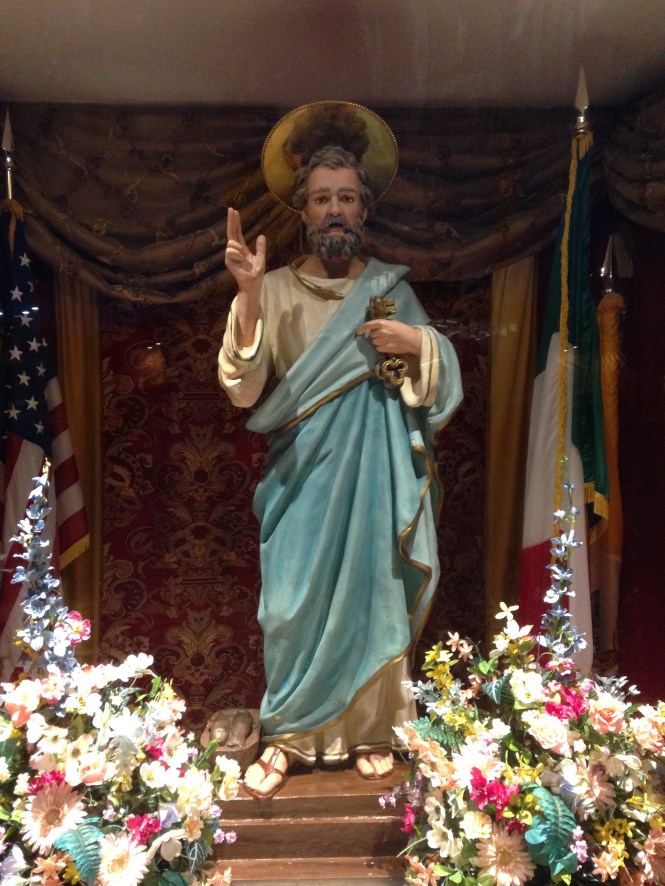
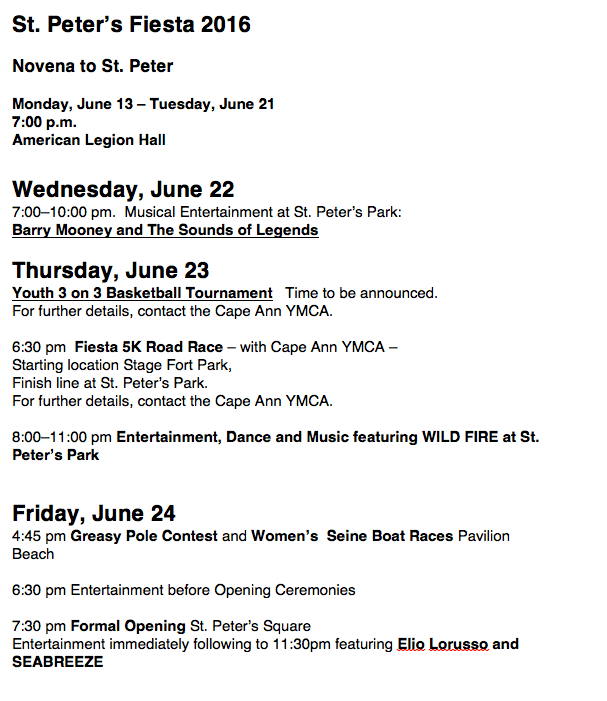
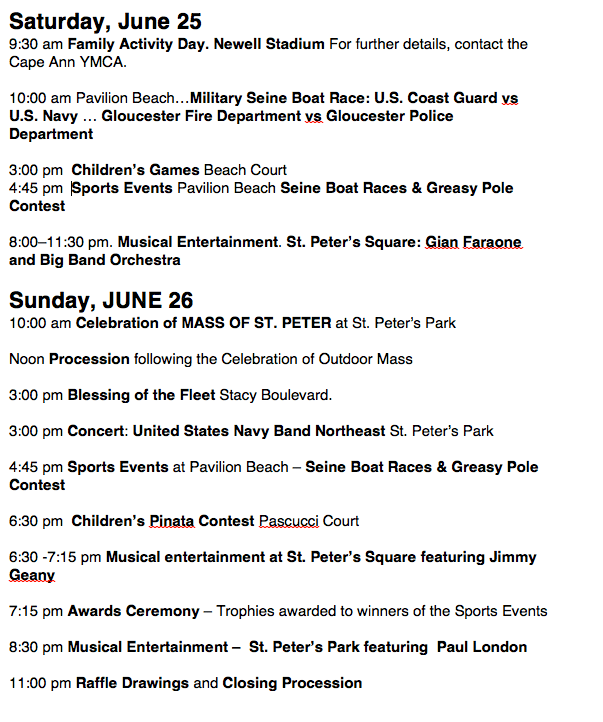
St. Peter’s Fiesta 2016 ~ 89th Anniversary Schedule of Events

St. Peter SPFaSPFd

***Note: There will also be a procession of St. Peter from the American Legion Hall to the St. Peter’s Club, immediately following Tuesday evening’s Novena.***


For further information, please visit the official St. Peter’s Fiesta website at: http://www.stpetersfiesta.org/ 


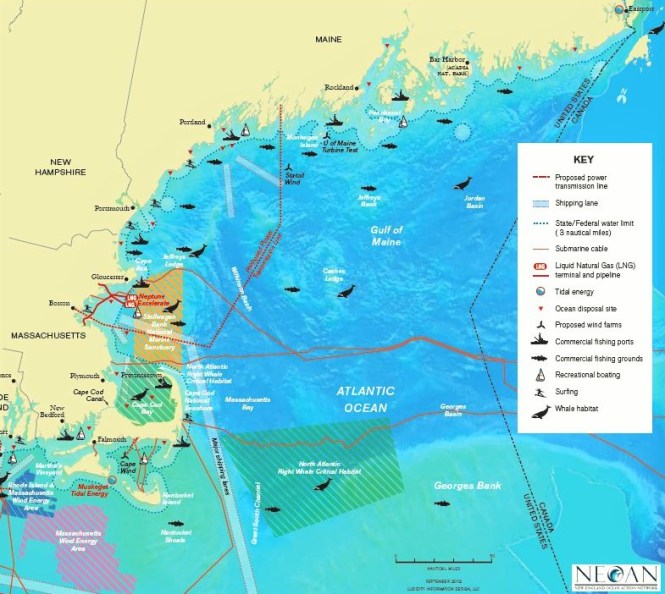
Northeast Regional Planning Board Seeks Input

Ocean-Use-Map-Low 2

Northeast Regional Planning Board Seeks Input on Draft Ocean Plan

at Gloucester Public Meeting on June 13, 2016


The Northeast Regional Planning Board (RPB) is holding a public hearing to solicit public comment on the Draft Northeast Ocean Planning document.  The meeting is scheduled on Monday, June 13th at Maritime Gloucester at 6:00 pm If you cannot attend, you may file comments electronically at the link below.

http://neoceanplanning.org/plan/

The following topics are covered in the plan:

  • Regulatory and Management Context
  • Marine Life and Habitat
  • Cultural Resources
  • Marine Transportation
  • National Security
  • Commercial and Recreational Fishing
  • Recreation
  • Energy and Infrastructure
  • Aquaculture
  • Offshore Sand Resources
  • Restoration

The public comment deadline is July 25, 2016, and you can comment on each chapter electronically at each chapter landing page, in-person at any of our upcoming public comment meetings, through the comment form, or by submitting written comments to:

Betsy Nicholson, NE RPB Federal Co-lead
National Oceanic and Atmospheric Administration
National Marine Fisheries Service, Northeast Regional Office
55 Great Republic Drive
Gloucester, MA 01930-2276.

You may also provide comments by sending an e-mail to:
comment@neoceanplanning.org.

The RPB wants your feedback on this draft Plan. 

Northeast RPB principles:

  • Meaningful public participation. Reflect the knowledge, perspectives, and needs of ocean stakeholders— fishermen; scientists; boaters; environmental groups; leaders in the shipping, ports, and energy industries; and all New Englanders whose lives are touched by the ocean.


The Trains Took Us to School

©Eric Schoonover

Symphony of the East Wind. © 2016 David Tutwiler (b.1952)

Symphony of the East Wind.                                                                  © 2016 David Tutwiler (b.1952)

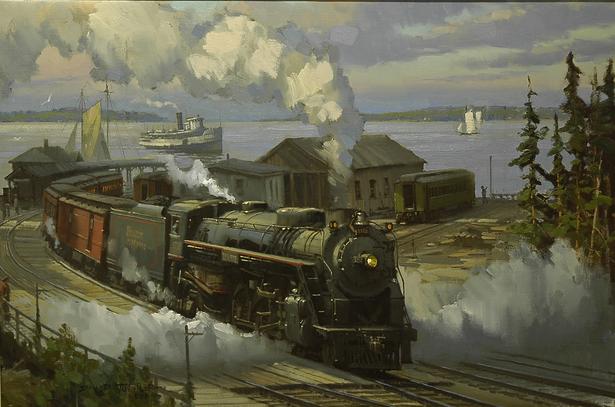
I like to see it lap the Miles—Emily Dickinson

By Eric Schoonover


I, too, as Peter Anastas (Enduring Gloucester, 13 April 2016), “come from the era of trains.”  In fact, my earliest understanding of Gloucester (probably 1942 or 1943) was of an enormous billboard advertising Gorton’s Codfish Cakes alongside the tracks of the Boston & Albany just outside of Boston, probably somewhere between Framingham and Natick. Little did I know that I was to move to Gloucester some sixty-five years later.

In those days, I favored sitting toward the end of the train so that I could see its full length as we went around curves—from the locomotive, the baggage and mail cars and then passenger cars. The locomotive belching black smoke and steam formed the focus of my view: perhaps a heavy Pacific, or a Hudson or, if lucky, a behemoth Berkshire pounding the earth with its immense power, perhaps let loose from a freight obligation to the West. Moreover, when sitting toward the rear, the cinders were not as aggressive, for in all but the coldest days, I sat with my head out of the window, reading the signals ahead, practicing for when I would grow up to be an engineer of a streamlined Hudson. Too, the trip was to Filene’s or Jordan’s war-limited counters with my mother. Her purpose was to buy fabric and patterns with which to make our clothing. (We could not afford off-the-hanger clothes in those days.) The real purpose of the trip was to enable my father to meet with his Ph.D. advisor at Harvard. Thus the beginning, in a way, of the train taking one to school; and which would end in my graduate days in Philadelphia. A good tradition.

We would return late in the day from Boston with cinder smuts in my eyes. Those steam locomotives that pulled my trains to Boston were unlike any of our current-day locomotives: one saw the machinery that drove those enormous wheels, pistons pushing long rods, connecting rods attaching to wheels, and at night, the firebox projecting light onto the roadbed. Whitman wrote of this power: “Thy black cylindric body, golden brass and silvery steel. / Thy ponderous side-bars, parallel and connecting rods, gyrating, shuttling at thy sides.”  In 1881, the power of the locomotive so impressed him that he termed it “Type of the modern—emblem of motion and power—pulse of the continent (“To a Locomotive in Winter”).

Today, our engines are shrouded: we don’t see their power, their gears, their turbines. All is contained.  Only their sound is left to us:  the 747 roaring into the sky, the Electro-Motive diesel thundering on the earth. Of course they are sleek and silvery; only the streamliners of the early part of the last century could compete.

*

Trains have been intimately connected with my education from the demise of steam in the early 50s to the Modern Era of diesel-electric traction. The great days of rail are gone, and despite Amtrak’s optimistic claims, even it is not doing very well. Yet so many years ago, when I went away to school and then to college, the railroads were still fairly strong. They were my sole means of transportation. They were my habit.

I spent most of my teens in Europe where the trains were mainly electric and fast and in Africa where the trains were hot and slow. On  returning to the States, I attended a secondary school located near the end of the New Haven’s Springfield extension. Often, I would board that train at 125th  street. My father, then teaching at Columbia, would take me up there by taxi; and in the winter twilight a tired New Haven train would depart the city, to struggle through the rest of Manhattan and into Connecticut. In the dark we crossed above the Norwalks, looking down on their empty neon streets, shining in the rain, spaces as lonely as a Hopper painting. Often, a man would burst into the car shouting out “Sandwiches, soda, candy bars!” Sometimes I would buy something. (“Ham and cheese, egg salad, ham salad. What ya want?”) The two salad sandwiches made me nervous. How long had they been sitting in his fiberboard box? How many days ago had they been made up? So, I might settle for the safety of the ham and cheese (on puffy white Wonder bread).

Later, my college fortunately was located equidistantly between two railroads; one the Pennsylvania Railroad, the other the Philadelphia and Western (the Pig and Whistle as we called it). Both originated in Philadelphia but from different terminals.  Both were an easy walk from my college. Most often, though, I took the PRR’s Paoli local, an eight-mile ride in to Philadelphia’s 30th Street Station. The local was the most ordinary of trains, day coaches that had seen much better days, but it shared the tracks with those streamlined GG1 electric trains of Raymond Lowey’s design, as they roared their way to Harrisburg. Four tracks and demanding curves could make the Main Line of the PRR a dangerous place, and locals were known to play “chicken” on its tracks. The P&W was a more like a bus, wandering though tree-lined suburbia and pleasant landscapes. In fact it looked like a bus: cream top, maroon sides, and it stopped only on command. Would-be passengers on the platform pulled a rope that turned on a signal lamp, or so one hoped. It always made me anxious: maybe the lamp had burned out.

*

I still ride the trains today, but they seem so different. The Acela may take the prize, for the long-distance hauls. The Lake Shore Limited and the California Zephyr have steadily declined over the past six years that I have taken them. Recently in Denver I strolled down to the head of our train, thinking to take a photograph of its Genesis locomotive with its consist trailing off into the dusk. A police officer approached,  saying, “No photographs!” She was armed, a sub sandwich in one hand, the other resting on her gun. The food in the diner that night was served on thin plastic plates and was inedible. The officer’s sandwich, even that egg salad on the New Haven in the 50s would be preferable. I ordered some more wine.

Although my school days are over, I still take the train, mostly the local commuter rail to Boston—not for education but for medicine; and once or twice a year I take the longer hauls.

We are in the 21st century. Like it or not, I must cope with the limited seat space on my flights to the West or to Europe. There’s no hopping at the command of a conductor shouting “All aboard!” Just standing and standing and taking off my shoes. But when the wind is coming from the Northwest, I do have the joy of hearing the whistle of a train as it crosses Maplewood Avenue here in Gloucester.


eric schoonoverEric Schoonover, Professor Emeritus of American literature and literature of the sea, now lives in a small 1735 Cape Ann cottage with his wife, a writer. His next book, Telling Tales will be published in June.


COMMON IRISH VALUES

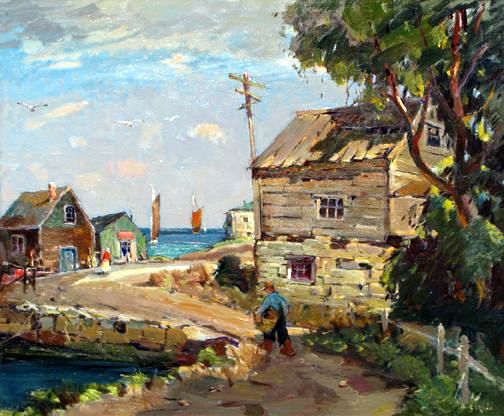
Lane's Cove. Antonio Cirino (1889-1983)

Lane’s Cove. Antonio Cirino (1889-1983)

Spring morning bright

shining grass

alone

around Lane’s Cove


Mail Lady arrives

hops out

breaks up treats

Dog in truck

sniffs for more


Sun through

yellow tulip petals

dropping shadows


An hour on a flat rock

behind the wall

near his easel

with infrequently met Eddy

was in The Lorraine sleeping

when it burned down

lost two hundred paintings

didn’t matter so much as

the people of Gloucester

were so giving gave each

thirty five hundred dollars

I gave a small truck bed

filled with winter clothes


Eddy was married to a WASP

When they went out to dinner

she wouldn’t look at the servers

She was brought up that way

Her family wore clothes

with holes in them

Ridiculous!

And had an old station wagon

How did you know?

Brought up with them

After the fire

my ex let me stay with her

for as long as I liked

She had a huge place

Children?  Horses


My life to him his to me

Common Irish values

Chelsea and Cambridge


Joe Roderick said

When I broke my elbow

it didn’t heal right

See these bumps?

My buddy was jumping

off his roof onto the porch

and I didn’t have time

to pull my arm back

broke folded the wrong way

pieces of bone everywhere

They gimme a cast

but I cut it off

It was smelly

I was lobstering at the time

Bait got in it


Can I play goal with

one arm?  Yah!

Hangman?

Hint   It’s near my shoes

and it’s red

Water Bottle

This is done outdoors

Bouble Play!


Melissa de Haan Cummings

May 10, 2016


OLYMPUS DIGITAL CAMERAMelissa de Haan Cummings majored in French and English Literature at Bryn Mawr. She has published poetry in a number of journals.  She describes her interests as including, “much small boating around Cape Ann, love of Charles Olson, Hatha yoga practice since 1969.”
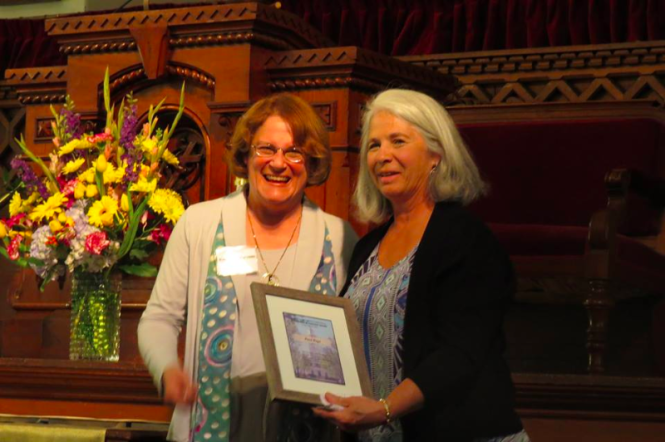
Congratulations Patti Page ~ 2016 Gloucester Citizenship Award Winner.

2016 Citizenship Awards.

Rev. Janet Parsons and Patti Page. May 22, 2016

Our own Patti Page was one of the recipients of the 2016 Gloucester Citizenship Awards for her exemplary achievements with and on behalf of SailGloucester as well as her advocacy for Gloucester Harbor and the working waterfront. The ceremony took place on Sunday May 22nd at the Unitarian Universalist Church. Patti was among ten deserving winners chosen this year.

Patti’s acceptance speech:

I would like to thank the Church’s Social Justice committee for their confidence in my efforts. I am grateful for the support from my family who continue to support all my ventures.

The announcement stated this award is given to those who worked persistently and quietly, with an open heart giving to others, solely for what those gifts mean, for no pay, and often with little or no public notice.

Persistent I am, rarely am I quiet. Working with and being mentored by Damon Cummings, Hilary Frye, and Guy Fiero, who have great experience in all things maritime, has enriched me and has provided me the most rewarding experience. The pay check I receive is priceless. The support the program has received from Vince Mortillaro, Peter Bent, Linzee Coolidge and city administrations, past and present, is a solid example public/private projects can be successful.

You should all feel part of this award – it is in your honor that this comes about.   My advocacy is focused on public access – your public access – access to the water.  It is my belief public access onto the water is an unalienable right. The community of Gloucester is fortunate to have many resources and be situated with safe, adequate waterfront access points. This opportunity created by the sailing program is a solid step towards the end goal. The future vision of community waterfront access is now coming into full view. If your community resources are utilized to their highest and best use, everyone will benefit. That includes public/private partnerships as the city moves forward with waterfront renovation projects, which should be focused on community uses.

Enduring Gloucester also extends our heartiest congratulations to all the other awardees; Pauline Bresnahan, Ellie Cummings, Nome Graham, George Hackford, Charles Nazarian, Peter Souza, Delores Talbot, Alice and Mike Wheeler and Save Our Shores. Truly Gloucester’s finest.


The Legacy of Fr. Daniel Berrigan

Michael Cook

 This essay may seem to some Enduring Gloucester readers as touching on concerns beyond the blog’s local purview. However, my hope is that it will prove to have some relevance to the issues we are facing in Gloucester, as the fishing industry continues to change and the subsequent economic, social, and political consequences of those changes become apparent, along with how we, as a community, think about the best ways to respond to those changes. 

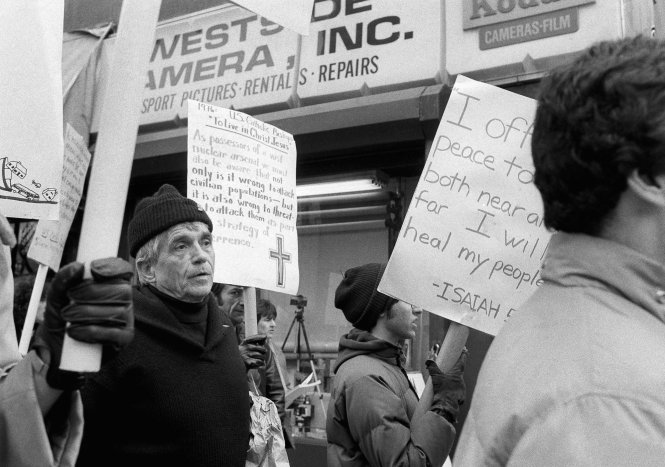
This April 9, 1982, file photo shows Daniel Berrigan, a Roman Catholic priest and Vietnam war protester, marching with about 40 others outside of the Riverside Research Center in New York. AP phot

This April 9, 1982, file photo shows Daniel Berrigan, a Roman Catholic priest and Vietnam war protester, marching with about 40 others outside of the Riverside Research Center in New York.   AP photo.


On April, 30 the world lost a man who, for me, personified what it means to be a Christian generally and a Catholic more specifically.

I am, of course, referring to Father Daniel Berrigan.

The Jesuit priest and scholar’s life-long commitment to peace, social/economic and political justice, often put him at odds with not just the American political, legal, corporate, and military establishments, but also with factions of his own Church.

Like many of his fellow Jesuit and Maryknoll priests and nuns, Berrigan’s work and activism took him to Latin America, Southeast Asia, as well as right here at home.

In 1968, Berrigan became the first American priest to be arrested in the 20th century after he and eight other men of the cloth and the laity set fire to dozens of draft cards they had taken from the local draft board office in Catonsville, Maryland. They became known as the “Catonsville Nine”.

Along with his activism against the American war on Vietnam, Berrigan also became a vocal critic of US foreign and military policies in Central America in the 1970’s and 1980’s. Berrigan was one of the few American priests who dared to publicly criticize Pope John Paul II, for his failure to attend the funeral of the Archbishop of San Salvador, Oscar Romero. Romero was assassinated by a US trained senior Salvadoran military officer while celebrating Mass the day after he called on the Salvadoran military to stop the slaughter of their impoverished fellow countrymen on behalf of the country’s  ruling junta.

In the 1980’s, Berrigan joined with Father Ron Hennessy, a Maryknoll missionary in Guatemala, to raise the American public’s awareness of the involvement of the US government, military, intelligence services, corporations, and Christian fundamentalist groups in the propping up of a succession of right wing Guatemalan regimes that carried out what can only be called a genocide against the long oppressed Maya population.

As Berrigan aged, he shifted the focus of his fight for social, economic, political, and environmental justice to the United States. He became a vocal advocate in New York for hundreds of thousands of low wage workers who, lived under the constant threat of looming homelessness because their stagnant wages simply did not keep up with the ever escalating costs of rents throughout much of the state.

He spoke eloquently of stable, safe, and affordable housing, not only being a fundamental human need, but also a fundamental human right. He worked to shatter the myth that the homeless are homeless by choice, or that all homeless people are drug addicts, drunks, mentally, or some combination of all three. He brilliantly linked the problem of homelessness to the growing wealth and income inequality in America and to the gentrification of once socioeconomically diverse neighborhoods.

He advocated forcefully for the belief that we are today’s stewards of Creation and that we have a moral obligation to do all we can to pass a livable and sustainable planet on to those who follow us.

Berrigan was a powerful advocate of the belief that, like housing, health care is not merely a privilege, but a basic and fundamental human need and right.

Berrigan’s passing, and his long history of activism, inspired me to think about what is happening here in Gloucester and why it is so important for people of good will and good faith to come together to strategize about becoming a constructive and influential force in determining what direction the profound changes confronting the city will take, so that all of Gloucester’s residents, not just its most affluent, can continue to call this beautiful, and sometimes bedeviling place by the sea, home.

We need to figure out how to protect our natural wonders and unique oases, like Ten Pound Island and Dogtown, from those who see them as lures with which to bring tourists to the city in pursuit of the dollars that, will in reality, only enrich a few, while leaving many others working in the service and tourism industries whose wages will not allow them to continue to live in America’s rapidly gentrifying “Oldest Seaport”.

Many people view these issues and challenges solely through the lenses of politics and economics, but, perhaps because of my renewed interest in the Catholicism of my birth, I also see a spiritual/religious aspect to these issues, and a spiritual/religious obligation to speak out about them precisely because they are at the core of the causes for which men and women like Father Berrigan, Archbishop Romero, Ghandi, Dorothy Day, and Harriet Tubman lived and died.

Gloucester, like the nation itself, is fast approaching some kind of crossroad. We here on the island have only a limited ability to impact what happens “over the bridge”, but that doesn’t mean we cannot, if we work together, have an enormous impact on what crossroad we go down locally, so that we can truly become a community that embraces the belief that things like housing and access to health acre are not just privileges reserved for the lucky few, but fundamental human rights to which all people are entitled.

We just have to come together to try.


Mike CookMike Cook is a long time liberal and gay rights activist who saw the uniqueness of Gloucester from the first moment he drove over the bridge during his move from Cambridge to Cape Ann in 1991 to run NUVA’s AIDS education and services programs.


Our Green Pride

It’s no great secret that I consider Ann Molloy a dear friend.  We met at one of many long series of City Council meetings here in Gloucester.  It wasn’t one of the most ideal scenarios to sow a friendship, but it worked and has grown into a rich friendship that I didn’t even know my life lacked.

Ann’s family, as many know, own and operate Ocean Crest Seafood and Neptune’s Harvest.  Back in the Winter of 2012 another friend of mine, Rona Tyndall, had a wonderful idea to start a Community Garden down the Fort.  Ocean Crest owns a piece of property across the street from their company, part gravel parking lot, the rest a small field with an apple tree on it.  1It was a no brainer to approach them in hopes that they would let us dig it up and turn it into not only a vegetable patch for the fort community to share in, but a place that drew folks together. Not only did Ocean Crest say yes to us using the land for the garden, but Neptune’s Harvest even donated the fertilizer, and has continues to do so each year. They overwhelmingly said yes, because that’s the kind of people they are – kind.
While Winter slowly turned to Spring, plans were made in rough drafts on pieces of paper, dreams of fresh vegetables feeding our imagination as to what it could be.  A lot of work, but fun work.  In comes another bonus, my cousin, Debbie Adkins, has this contact with some University of Maryland students who, rather than go off to some sunny resort or home for Spring Break, they have “Alternative Break,” where they seek a destination and help people.  Debbie asks, “How would you like them to come here and help start the garden?”  Another no brainer.  How lucky are we?  We get these young kids, eager to help and not afraid to get their hands dirty.  It’s been so much fun having them over the past three years.  They work like there’s no tomorrow, and then we have a lunch break.

This slideshow requires JavaScript.

Somehow everything tastes more delicious after a morning together in the garden. With a well deserved lunch in our bellies, it’s not back to work for the students, but out on tour.  A little make shift Gloucester history tour, an educational walk through Ocean Crest and Neptune’s Harvest, perhaps a dory ride…  what ever it may be, the kids love coming here and reach out to us year after year to see if we have a need for them in the garden.

I’ve moved from the Fort and find spare time scarce for heading over to the garden to see how it’s going.  Funny how life can take us in so many different directions in so little time.  I hope the garden will continue to be a place for folks to gather together.  What has flourished, in addition to the garden, is my friendship with Ann.  It’s been extremely apparent to me, that when she became my friend, I got the entire family along with her and I’m not talking about just her siblings, but their kids, the kids of those kids, cousins, nieces, nephews, their kids, her mom, her son…  I feel like I’ve been adopted into an empire of love.

Now I’d like to give back, return some of that goodness that they’re always pouring out on me.   How the heck do I do that?  By asking you.  You see, Neptune’s Harvest is up for another great “Green” award.  I say another, as last year they received an award for “Outstanding Innovation & Leadership in Achieving Sustainable Practices in the Gulf of Maine,” by the Gulf of Maine Council on the Marine Environment.  Pretty cool if you ask me.  This time they are up for an award from “Green America.”  This award is for their commitment to advancing organic agriculture, but there’s a catch, there are ten finalists and they need your vote. All the finalists must excel in an overall commitment to both social and environmental responsibility.  I’d say they’ve nailed that.  So please, go to the link provided here and cast your vote for Neptune’s Harvest. If you’re a gardener and haven’t tried their products, please do, your garden will love you for it.

To vote for Neptune’s Harvest, click the following link:

http://www.greenamerica.org/green-business-people-and-planet-award/index.cfm


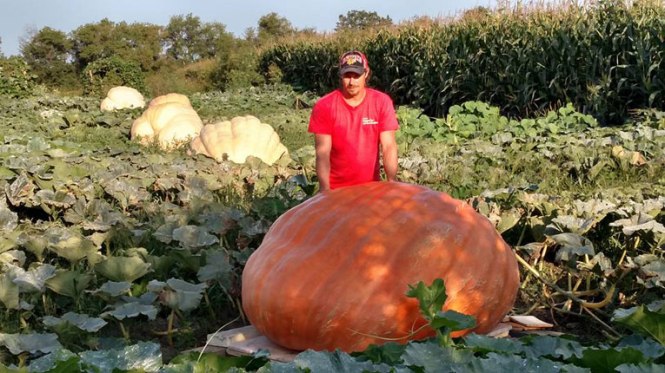
Pumpkin-Suchanek-1-(2)-(2)


Laurel - Headshot touch up vignetteLaurel Tarantino, is happy to live in her hometown, Gloucester, with her husband, James, “Jimmy T,” daughter Marina Bella, and the family dog, Sport. She is known for “stopping to smell the roses” and loves to photograph and write about her beloved waterfront community.


Proud to be Greek

Peter Anastas

This slideshow requires JavaScript.


You gotta love it.  Due to the success of the Academy Award-nominated film, “My Big Fat Greek Wedding,” Greeks suddenly found themselves to be “in.”  According to the New Yorker, Greeks, who once rushed to Americanize themselves, were “now adding syllables back to their names.”  So, in keeping with this new ethnicity, let me tell you a secret.  My real name isn’t Anastas, it’s Anastasiades.  Yes, there really were a couple of syllables dropped from our original family name.

It happened to my father like it did with so many other Greeks.  Upon his arrival at Ellis Island in 1908 at the age of nine, the immigration authorities couldn’t handle Dad’s given Greek name, Panos Anastasiades.  So they changed it to Peter Anastas.  My actual first name is Panayiotis, which means “little Peter” or “junior.”  But my parents only used that for my baptism, after which they reverted to Peter, like my dad.

If you are wondering what Anastasiades means, let me explain.  Anastas is the past participle of both the ancient and demotic, or modern, Greek verb “anisto-anastasis,” which means “to stand up, rise or be resurrected.”  So Anastas means “having stood up” or, like Christ, “having risen.”  The final syllables, “iades,” stand for “the son of,” like the Russian suffix “ovich.”  Therefore, my name literally means “son of the one who stood up” or “son of the arisen.”  Not bad for the child of an immigrant, who arrived in America at the age of nine wearing his mother’s shoes.

Ah, but it wasn’t “in” to be Greek in 1908, anymore than it was hip to be Italian or Jewish.  When my father arrived in Lowell to join his father as a laborer in the Massachusetts Cotton Mill, he witnessed some horrendous battles between the newly arrived Greeks, the French-Canadians and the Anglo-Americans, who made up the primary workforce.  They were turf battles that later became labor struggles, eventually driving many immigrants to other towns, or even back to the “old country,” as the Greeks called home.  In fact, my father, whose own father had actually died before Dad arrived, soon left Lowell to sell newspapers and shine shoes in downtown Boston, where he remained until his induction into the army during World War I.

From boyhood I heard these stories about my father’s arrival and subsequent life in America, stories which I’ve passed down to my own children.  Dad’s story is the story of many Greeks, who came here penniless or orphaned, went to work, educated themselves, and eventually started their own businesses, not untypically lunch rooms or grocery stores.

Some immigrants, like my uncle Cyrus Comninos, who was a physician, or the sculptor George Demetrios, whom Dad knew when they were both young men in Boston, became successful in the professions or the arts.  Yet, while Greeks, like Theodoros Stamos, have become major painters in America, and Harry Mark Petrakis has written powerfully about Greeks in Chicago, we have not produced a novelist of the stature of Jewish American writers like Saul Bellow and Philip Roth, or the Italian American novelist Pietro di Donato, whose Christ in Concrete is one of the great novels of immigrant experience in this country.  But look how long it took for Greek American life to make its way into the movies!

For all its popularity, which led the New Yorker to compare the film unfairly to a sit com, “My Big Fat Greek Wedding” is a remarkable picture of Greek American life, pitting first generation children like me against their foreign-born parents.  On the afternoon I happened to be seeing it, the audience was comprised mostly of Greek Americans.  There were a lot of little old ladies in black dresses, whispering to each other in Greek before the film began.  And once it started, I listened with delight as many in the audience anticipated the words before they had even come out of the mouths of the characters, especially the father, who, naturally, owns a restaurant at which the entire family works.

“Oh, God, how I know that world!” I exclaimed during the film, tears of recognition streaming down my face.  Tears, too, of immense sadness because the father, who is constantly reminding his children of their Greek heritage, was so like my own father, now dead.

Of course, the power of the film, and, indeed, its immense appeal, is not only because it’s about an ethnic group that many Americans know very little about.  It’s also because the film depicts family dynamics that we all share—a child’s need to separate herself from an overprotective family, a traditional father’s conflict with modernity, and the terrible difficulty we all experience in letting go, no matter what our ethnic backgrounds may be.

If anything, the film’s sequel, “My Big Fat Greek Wedding 2,” just released in time for Greek Easter, is even more relevant, as it explores the relationship between the teenage daughter, Paris, and her mother, Tula, who, in the first film, was struggling to individuate from her Old World parents. In choosing to leave Chicago for college at NYU, Paris separates herself from her loving, if often stifling, Greek family; but in the process she learns that they will always be part if her life.

And, yes, even for the strength of their critical insights into the crippling aspects of Greek American culture that so many in my generation tried to escape from, these two films, which I highly recommend, still made me proud to be Greek.


Peter at Museum (1)Peter Anastas, editorial director of Enduring Gloucesteris a Gloucester native and writer. His most recent book, A Walker in the City: Elegy for Gloucester, is a selection from columns that were published in the Gloucester Daily Times.