The Day After Christmas
By Tom Welch
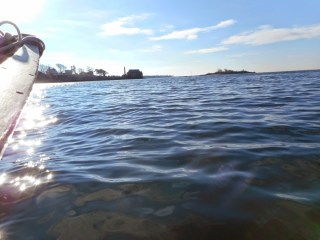
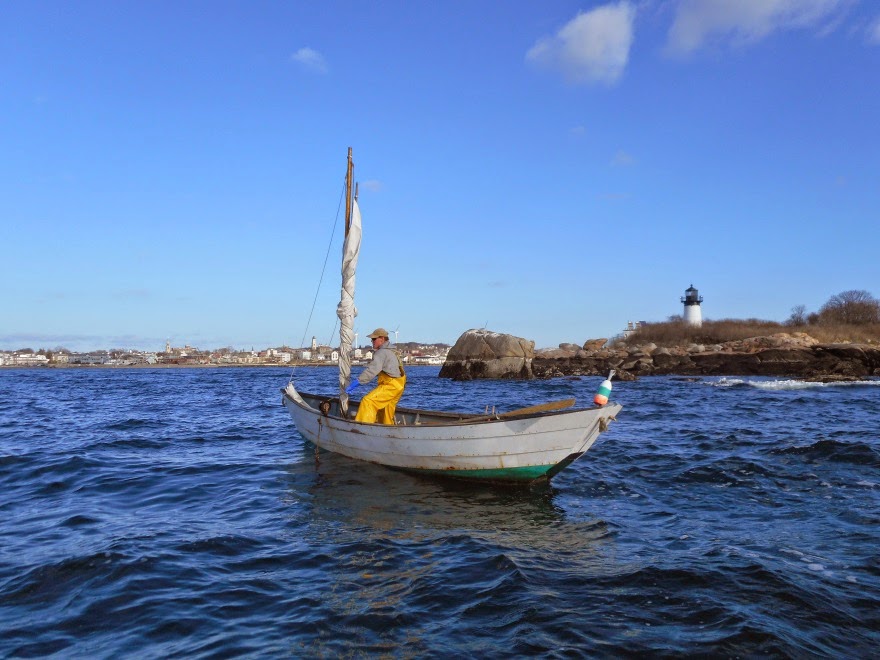
On the day after Christmas, before the Sun rises, while most of us haven’t even woken up and begun our day of nursing yesterday’s overindulgences or heading to the Mall to exchange things we don’t need for other things we don’t need, Tom Jarvis is down at Santapaolo’s wharf in East Gloucester. He’s a true Gloucesterman, so the routine of checking his dory and gear for hauling lobster traps is more like breathing than a difficult thought process.

He lets go of the lines, rows out of Smith’s Cove and arrives at the Gloucester Maritime dock with the first rays of morning sunlight. His first order of business is to take care of his favorite girl, the only one he’s ever been able to commit to. She’s the “Resolute”, a Burnham-built Friendship Sloop with such beautiful lines you can’t gaze upon her without a double-take or a lasting, long look. The Burnham family courted Tom to buy the “Resolute” for years, knowing he’d take good care of her, they finally let him have her for a song- the cost of the new engine they put in, as Tom says, “I bought an engine with a beautiful boat around it!” He starts the engine to charge her battery and pump what little water might be in the bilge, lingering long enough for a few sips of coffee, his hand on her boom, listening to her purr.
Now it’s back in the dory, rowing out past Harbor Cove and the Fort, the back of his neck tells him the forecast for Southwest wind was accurate and dictates that he’ll row toward Stage Fort Park, using the lee of the Magnolia shore to get to his first traps set over by Norman’s Woe, the infamous rocks causing the “Wreck of the Hesperus”.
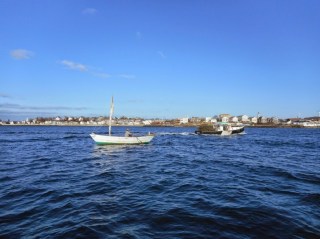
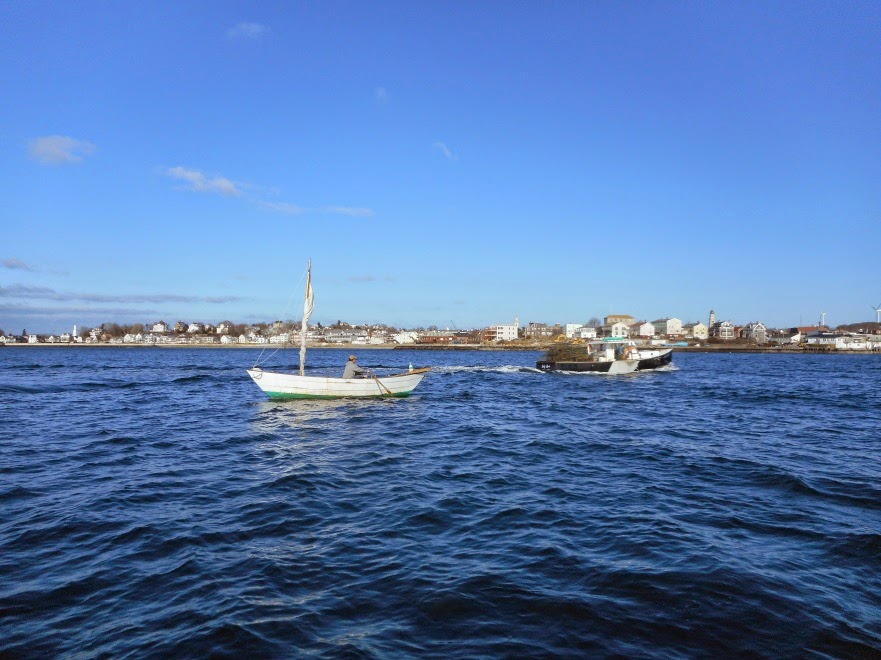
Most of the Inshore Lobstermen are putting their traps ashore for winter because the lobster have migrated to safer, deeper water and winter storms can cost thousands of dollars in damage to a lobsterman’s gear. One passing close by, starboard to starboard, with a deckload of traps, steaming in, shouts “Jarvis!” and Tom acknowledges the greeting with a respectful raising of the chin. The hands, arms, back and legs are too busy sweeping the oars and driving the dory the 3 miles windward to the first traps. This simple greeting holds countless fathoms of mutual respect, each knowing they share the many secrets that only come with Sea time.
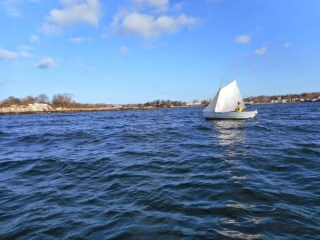
Once on his gear he quickly secures the first buoy to the dory, using it as a mooring line to hold the boat in place just long enough for him to don his boots and oilskins. As he hauls his traps he is totally present, senses heightened by the pitch of the Sea, the squeal of the gurney and the cold salt spray spinning off of it. The Southwest wind freshens. The waves grow larger with white caps and deep troughs between. Now Mother Nature requires total awareness or she’ll take a toll. Tom embraces what she has taught him, raising his sails, she takes him ENE to Black Bess, the rocks off Joe Garland’s house on Eastern Point, where he hauls another couple of strings.
Again the sails are raised, this time the port rail to the wind as he steers NW to his gear south of Ten Pound Island. A Harbor Seal recognizes the dory and swims nearby, hoping another tasty herring will make its way into the water instead of the bait bag. And so it goes. Hauling. Setting. Trimming. Steering. Rowing. Every motion a lesson in efficiency taught by years of experience. When all is said and done he is back at his truck before noon.
The haul for the day?
Six keepers.
What???
Six Lobsters, that’s it???
There are those that would say, “What a fool! All that work in the freezing cold for six lobsters? It’s not worth it!”
It’s not about the lobsters for Tom Jarvis, Hell, these’ll most likely end up either in his Mom’s kitchen or in a pot on the woodstove of Gino Mondello’s “Dory Shop”, feeding his fellow Gloucestermen on a Saturday afternoon.
It’s about the connections…. with the Waves, the Seal, the Lobsterman, the Sun and the Wind.
It’s what he does.
It’s who he is.
A true Gloucesterman.
Before most people even get out of bed the day after Christmas.

Charles Olson’s Call to Activism
Peter Anastas
I hate those who take away
and do not have as good to
offer.
I hate them. I hate the carelessness.
–Charles Olson
“A Scream to the Editor”
December 3, 1965
Beginning in the late 1950s and lasting for nearly a decade, the bulldozers of Urban Renewal tore through Gloucester’s 300-year-old waterfront, leveling sail lofts and net and twine manufacturers, driving ship’s chandlers and carpenters out of their shops on Duncan Street and working people from homes and tenements clustered around the Fitz Henry Lane house on Ivy Court. The Frank E. Davis fish company headquarters on Rogers Street, long thought indestructible, was knocked down, and 18th and 19th century buildings of considerable historic and architectural value in the city’s West End were also demolished.
Urban renewal in progress, Gloucester 1966 Photo by Mark Power
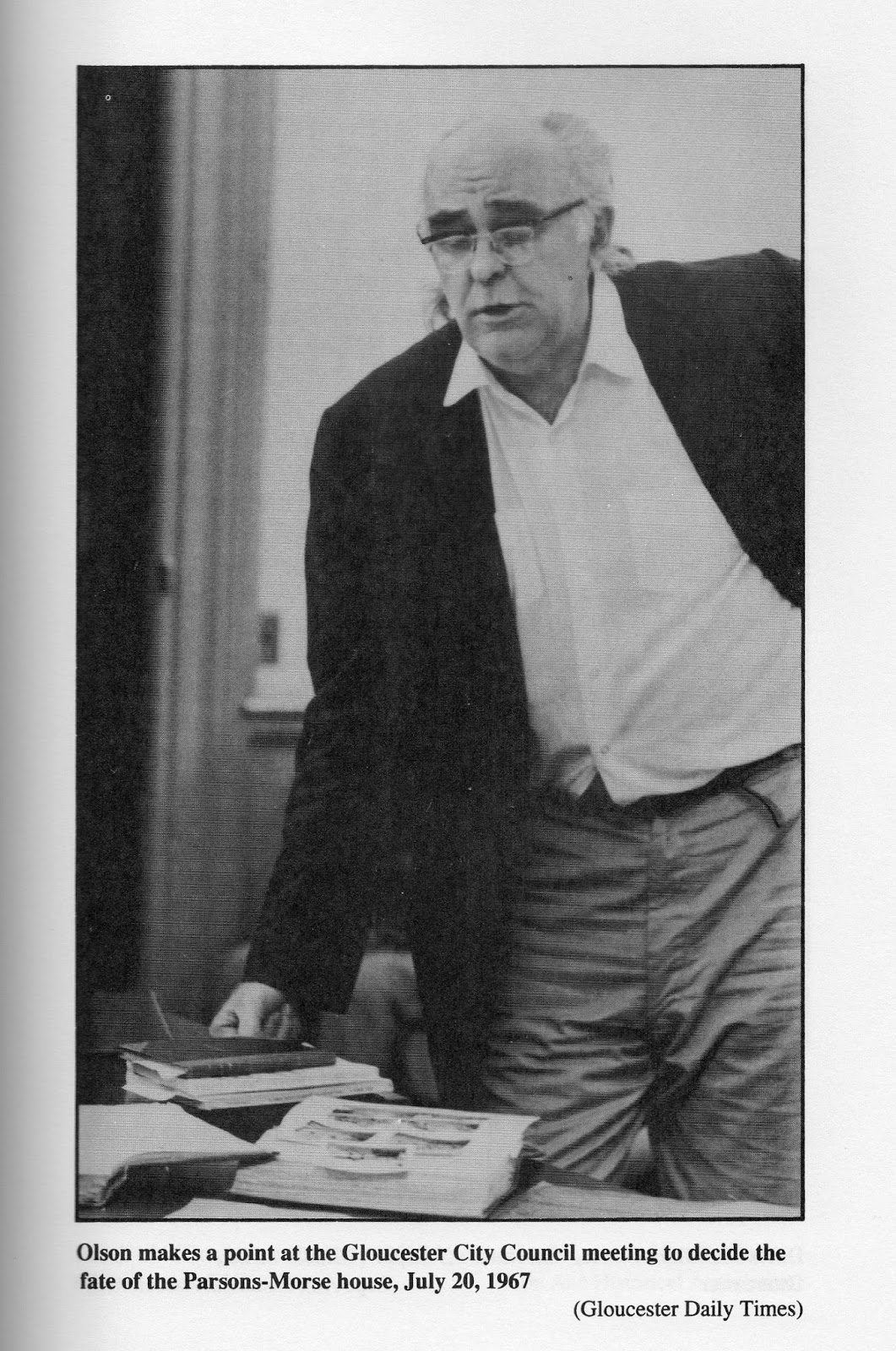
Only one person spoke against what had been sold to the city as a panacea for our post-war economic woes. That lone voice was Charles Olson’s. Known even then, in the early 1960s, as one of the century’s most important poets, Olson, who had worked in Washington under FDR, saw clearly the implications of yet another government “revitalization” program. In letter upon letter to the editor of the Gloucester Daily Times, he called Urban Renewal “renewal by destruction,” warning the city that it was “ours to lose” if we did not stop “this renewing without reviewing,” as he characterized it.
Even when they bothered to read Olson’s passionately hortatory letters, many subscribers to Gloucester’s only newspaper thought that the nearly seven foot poet, who walked around town with a Yucatan Indian blanket wrapped around his overcoat to keep his massive frame warm, was crazy. Enraged that the Solomon Davis house on Middle Street, Gloucester’s last surviving Greek revival dwelling, was torn down by the YMCA for a basketball court that was never built, Olson composed what he called “A Scream to the Editor.” “Oh city of mediocrity and cheap ambition,” he charged in a letter that comprised the entire editorial page on December 3, 1965, “destroying its own shoulders, its own back, greedy present persons stood upon.” Olson’s imprecation would have incredible reverberations into the present.
Yet during those years of destruction and loss in Gloucester, Charles Olson was practically alone in speaking out. He took the brunt of criticism from Urban Renewal’s advocates and those who were benefiting financially from a program that effectively displaced most of the families who lived along the city’s waterfront (Urban Renewal quickly became a euphemism for “relocating the poor”), leaving the Fitz Henry Lane house, built in the 1850s by the eminent Gloucester “Luminist” painter, the lone survivor of the kind of downtown wreckage that had been resisted by nearby Newburyport and Portsmouth, New Hampshire. Ironically, while those two cities have suffered more gentrification than Gloucester, they have also retained their traditional redbrick architecture and the intimate quality of their inner city neighborhoods.
Inspired by Olson’s example, a good deal of local activism since the early 1970s has been based on the preservation of a sense of place, a way of being in the world, an understanding that each place we live in has its own unique characteristics. Place, as Olson taught, is not only where we live, but also where we get our bearings from. Place is who we are and how we feel about ourselves, how we’re anchored in the world. Place is our very identity, “the geography of our being,” as Olson put it. And if we lose place, or undermine its character, whittle it away year after year through inappropriate development—chopping up neighborhoods, driving people away from the houses they were born or grew up in—we destroy the basis of our lives, if not our very identities.

Charles Olson and retired fisherman Lou Douglas talk at the kitchen table of Olson’s 28 Fort Square house
As the Australian philosopher and ecopsychologist Glenn Albrecht, has written, “People have heart’s ease when they’re on their own country. If you force them off that country, if you take them away from their land, they feel the loss of heart’s ease as a kind of vertigo, a disintegration of their whole life.” In a 2004 essay (quoted in a New York Times Magazine article of January 27, 2010, “Is There an Ecological Unconscious?”), Albrecht coined a term to describe the condition he called “solastalgia,” a combination of the Latin word solacium (comfort) and the Greek root –algia (pain), which he defined as “the pain experienced when there is recognition that the place where one resides and that one loves is under immediate assault . . . a form of homesickness one gets when one is still at ‘home.’” Olson not only understood this condition, but he warned of its consequences in his letters and poems, thereby anticipating today’s ecopsychology movement.
Place is topography, the look and feel of the land, the mapping of streets in a town, the complex of neighborhoods; what has been built by humans or has evolved from nature. A sense of place also includes knowing the history of where we live—who inhabited it before we did and how they impressed themselves and their culture on the land. Place includes our personal and collective history as we live daily in a given town, city or region. Place concerns the life forms we cohabit with, indeed all the biota of our environment. Place is also symbol and myth; for a single town or city, the history of its founding and growth, as Thoreau believed, can be viewed as an archetype for the origin and evolution of all places on the earth.
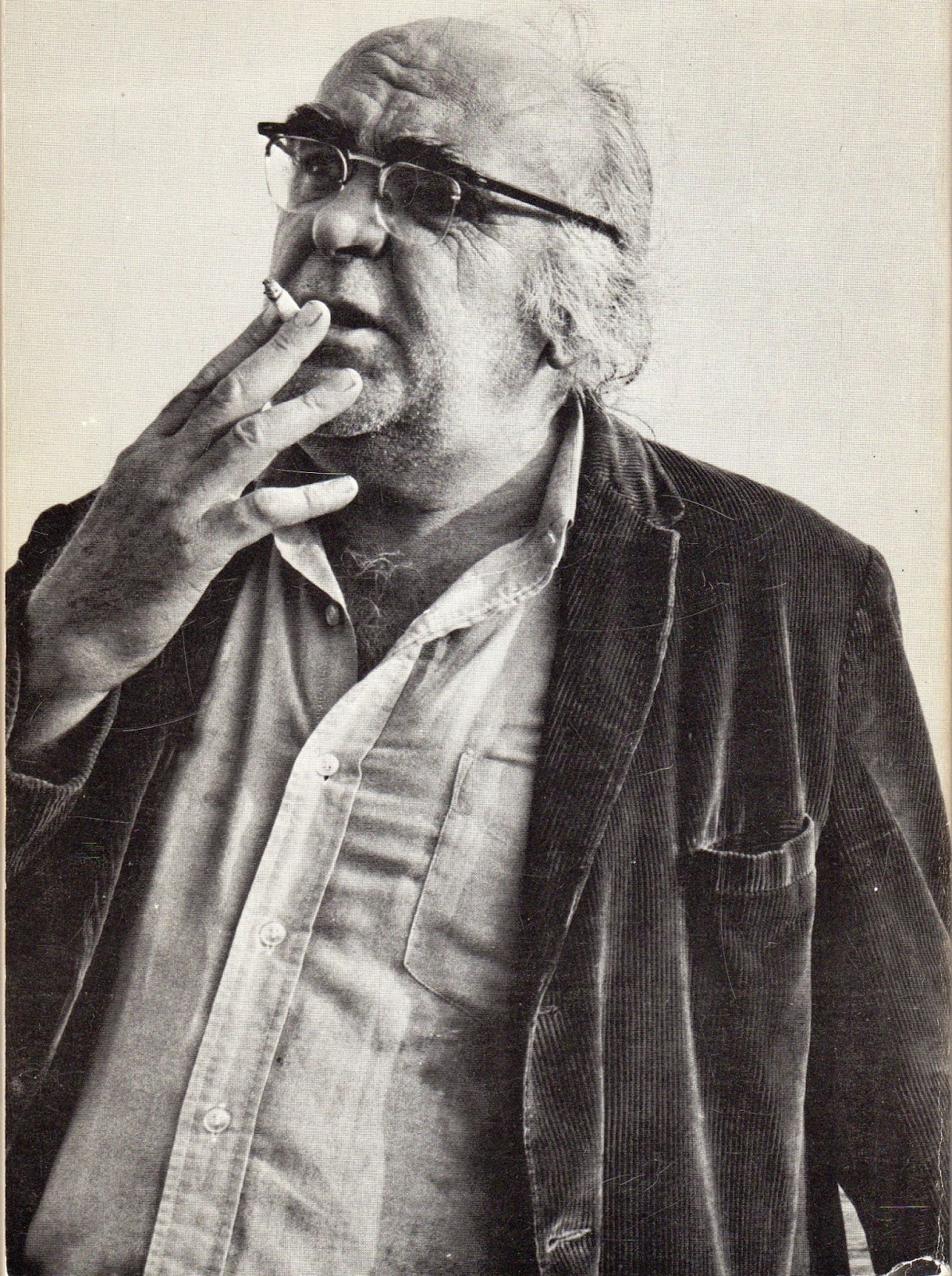
Charles Olson on the porch of his house at Fort Square
Considering Olson’s example, it is the responsibility of writers and artists—indeed, of all citizens— to help those who inhabit a community to understand what forces have shaped that place, what impact its history and indigenous industry have had on its character and identity, and what must be done to preserve that identity while fostering orderly economic growth and social cohesion. For Olson, Gloucester was a Polis, referring to the ancient Greek concept of a self-contained and self-governing body of citizens, a place of great cultural and linguistic diversity. Even given the depth of its history, no place can stand still. Like their inhabitants, places themselves are in continual evolution. The many committed citizens, both individuals and groups like the Gloucester Fishermen’s Wives, who have joined forces over the years to sustain our working waterfront and the integrity of our Polis, understand this. We have never advocated for “no growth,” nor have we opposed every development proposal, as some have charged. Rather, we have supported growth that we felt was sustainable and had the least deleterious impact on existing architectural and social structures in the community and on the surrounding natural environment, which comprises an essential dimension of place, indeed sustaining us all—the air we breathe and the water we drink, the woods and watershed areas that are so nourishing to us in actual as well as aesthetic ways, our natural ponds, and the ocean itself.
The longer Olson lived in his adopted city, interacting daily with its citizens, the more local the politics of this old New Dealer became. “I am a ward/ and precinct/ man myself,” Olson wrote in The Maximus Poems, “and hate/universalization” (his term for what would soon be known as “globalization.”). He had the ability to peel back the layers of time in a locale, a neighborhood, a single house even, a patch of forest, a moraine landscape, to reveal the depths and dimensions of its history. Consequently, Olson helped many of us to recognize that Gloucester was not merely the oldest fishing port in America and, as such, an archetypal place of human activity; but rather that it was a living, breathing city of 28,000 interconnected inhabitants. He also helped us to comprehend that Gloucester was a continually evolving ecosphere, and that an understanding of the rich and complex ecology of one’s home town and the woods and fields that surround it led to an understanding of the natural history, geography and ecology of what Olson called “an actual earth of value.”
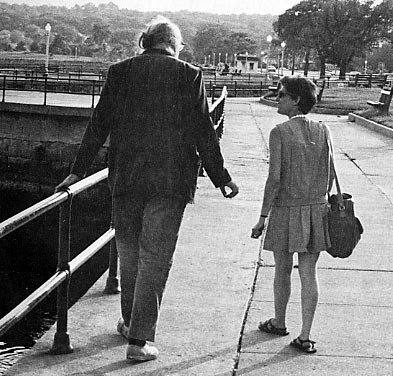
Olson and Kerouac biographer Ann Charters walking on Stacy Boulevard
Olson encouraged citizens to study the history of their birthplace, their region and, indeed, the nation itself, as he had, through an examination of primary documents. Court papers, land transactions in probate, property line surveys, wills and testaments and Quarterly Court records of civil litigation were, for Olson, the ur-texts of history, and as significant as the land itself for reading the passage of human habitation in given places. Maps told him more than chronological histories; though when it came to the narrative he said he found more significance in town histories, written by local historians, than in the dominant works of academic scholarship.
His theory of “saturation”—that you concentrated on one place, one writer, one topic until you had absolutely exhausted it for yourself and therefore prepared yourself henceforth to take on any subject—has proved to be immensely helpful to many of us in approaching not only the study of Gloucester, but also of larger topics in literature or history.
Olson also demonstrated that by living in a book-filled $28-dollar-a-month cold-water walkup at 28 Fort Square, on Gloucester’s waterfront, one did not need to possess material wealth in order to pursue a rewarding life. Olson counterposed himself and his ideas against the consumerist culture that was growing around us (“in the midst of plenty/walk/as close to/bare”), noting once, in the pages of the Gloucester Daily Times: “One has to have the strength of a goat, and ultimately smell as bad, to live in the immediate progress of this country.”
But Olson’s letters and poems to the editor are not mere criticism or jeremiad. They contain a wealth of historical, practical and ecological information and insight. Long before ecology became a household word and “environmentalists” were armed with wetlands protection measures, Olson, who had been a close reader of Carl Sauer’s ecological geography, was speaking out against the filling of tidelands and productive marshes. He defined ecology, in one letter, in terms of “creation as part of one’s own being,” while alluding to the impact of topology on the quality of one’s aliveness to the landscape, so that one could understand that to erase the land of its original forms and contours, either natural or man-made, would be to live a debased personal life on it. Furthermore, he showed how, if one is ignorant of one’s own history, one’s future is already circumscribed, if not blighted. And finally, he insisted in one visually stunning evocation after another—of the West End’s brick and granite architecture, the pristine marshes of Essex Avenue, the mist-shrouded banks of Mill Pond—that even though much of the city was “invisible” to her citizens as a result of the daily habit of living here and taking her extraordinary beauty for granted, the destruction of even a portion of that beauty (“the brightness which sparkles still for me, a heron, some red-winged blackbirds, several hornets sweeping down the run of that small raised path”) would constitute immeasurable loss, not only for those living now, but for “persons unknown to us in the future, who will never know what they have lost because easy contemporary ideas and persons dominate the land.”
Olson on Dogtown with poet Diane diPrima
Taken together, Olson’s letters and poems constitute a handbook for living in Gloucester in concert with her history and natural ecology. They are a call to be awakened to the morning’s light as it illuminates the “rosy red” facades of 19th century Main Street, the curve of roadways on a winter’s night, roads that follow still older, indeed aboriginal and animal paths across Cape Ann. They are a reminder, as Thoreau insisted, that no matter where we go on the face of the earth, someone has been there before us.
Deeply and specifically, Olson’s letters are a plea that we citizens recommit ourselves to our original stewardship of the land and sea, to be held in common for human use and sustenance, not to be exploited for individual profit or gain. They are an indictment of unplanned growth and development, which was beginning to occur in Gloucester during the 1950s and 60s. They speak of unnecessary change, which brings with it resentment and anger at the loss of familiar landmarks. They speak against arbitrary decisions of government to build this or destroy that, decisions which do not include those who will be affected. And they make clear, again and again, that the loss or disregard of specific local knowledge—of the land, the sea, the people, their histories and customs—leads only to a historyless future, in which Gloucester, one of the primary cities of the earth for Olson, will become “indistinguishable from/ the USA
Olson’s ghostly figure overlooks the Birdseye building before demolition.
Finally, it was Olson’s activism against Urban Renewal, against the loss of Gloucester’s historic architecture, against the filling of wetlands and all the “erosions of place,” as he called them, that helped to inspire a burgeoning grass-roots advocacy on behalf of the fishing industry and the working waterfront, the preservation of Dogtown Common, now a public conservation trust, and against overdevelopment and gentrification. For in the end, this activism— citizens acting singly or in concert on their constitutional right to make their voices heard— is about the preservation of place, not only as an idea or ideal but as a real, living, breathing community: as home and biosphere. Even as I write, Olson’s own neighborhood, the Fort section of Gloucester’s waterfront, where marine industries and residents have co-existed harmoniously for over a century, is about to undergo dramatic change. Ground has just been broken for the development of a 96-guest-room boutique hotel, said to include “an executive suite, a bridal suite, meeting rooms with state of the art audio visual equipment and two lavish ballrooms,” at the site where Clarence Birdseye invented his “flash-freezing” method for the preservation of fish. With the City’s Master Plan out of date by fourteen years, this project was undertaken in a virtual planning vacuum. Such an unconscionable lapse in planning has allowed developers to define the city and map its future, rather than the citizens themselves, creating conflict where consensus is crucial.
Like every community, Gloucester has needed the voices of citizens like Olson to remind us who we are and what we mean, both to ourselves and the world, because living here, caught up in the stresses of daily life, our home place often recedes from our awareness. As a consequence, many of us who were born or have settled here have taken Gloucester for granted. Walking the streets daily, knowing each other, working together, even arguing together, we have been given an enormous gift, the gift of community and of the ocean that surrounds and sustains us. Even if we do not fish ourselves or our families did not follow the sea, living in Gloucester, here at the ocean’s margins, we all follow the sea; and as the waterfront, which is the very heart and soul of Gloucester, stands or falls, so do we all. This is not romanticism; it’s not a nostalgic yearning for the past, as some have argued—it’s not obstructionism. It’s who we are and what we care mostly deeply about. If we lose or abandon our sense of place, allowing Gloucester, or any other significant community where people make their lives, to become like so many American towns or cities who’ve lost or abandoned their identities, or been gentrified out of existence, we will lose ourselves and everything else that matters about our lives here. As Olson warned in a letter to the Gloucester Daily Times:
Lose love
if you who live here
have not eyes to wish
for that which gone cannot
be brought back ever then
again. You shall not even miss
what you have lost. You’ll only
yourself be bereft
in ignorance of what
you haven’t even known.
Gloucester Makes Headlines in the Wall Street Journal….and some of the contributors to Enduring Gloucester weigh in on the story.
![]() |
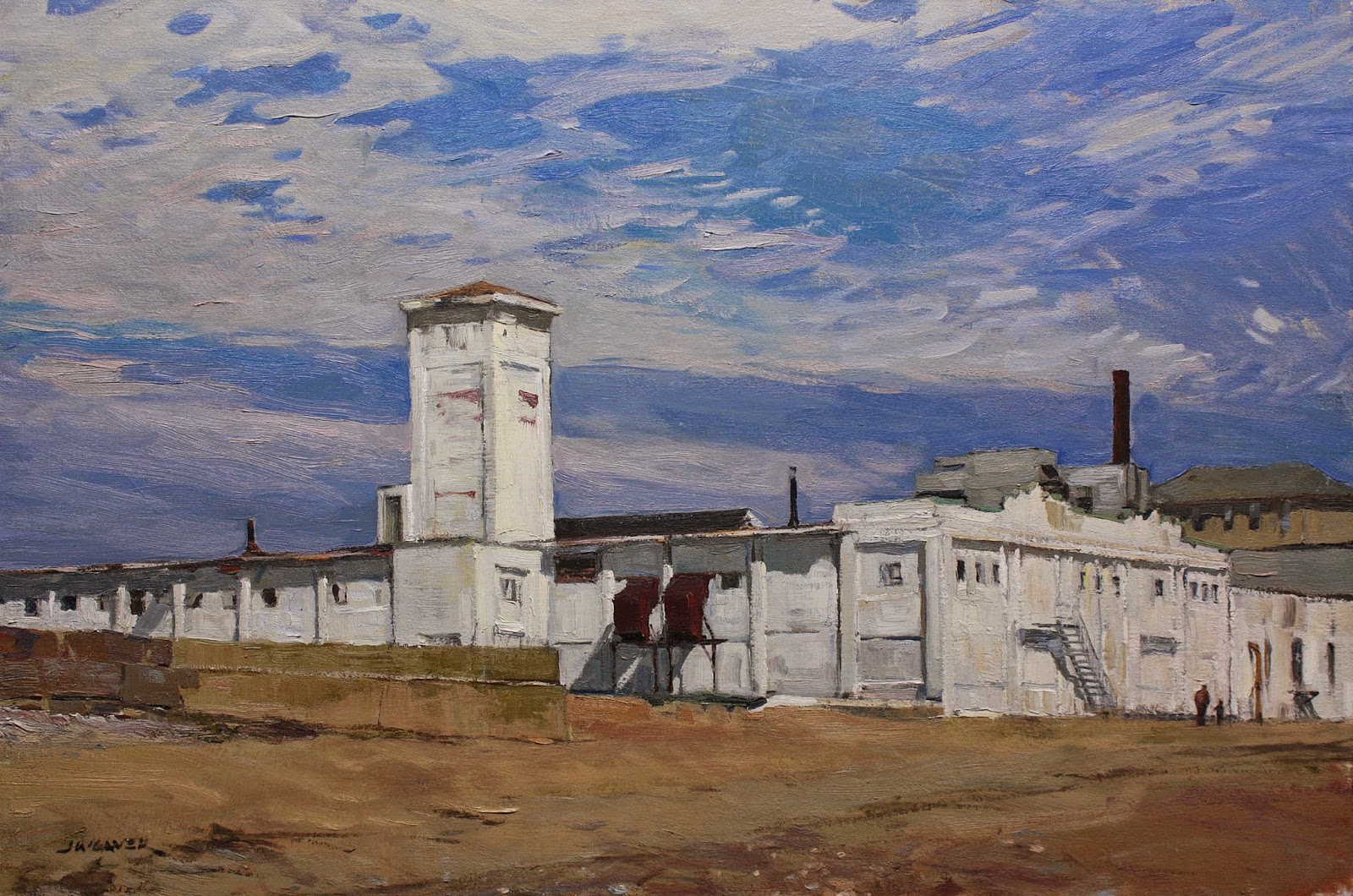
| Factory on a Beach painting by Gloucester artist Jeff Weaver 2012 |
Gloucester Makes Headlines in the Wall Street Journal….and some of the contributors to Enduring Gloucester weigh in on the story.
Wall Street Journal
December 9, 2014
Gloucester Fights Over Its Identity
by Peter Grant
A development group including athletic shoe tycoon Jim Davis has broken ground on a waterfront hotel in Gloucester, Mass. The project has been the focus of an acrimonious debate between residents who want to expand the city’s tourism sector and others who want to preserve its fishing and seafood industry.
The group led by developer Sheree Zizik–and including Mr. Davis, the chairman of Boston-based New Balance Athletic Shoe Inc.–has been planning the 96-room Beauport Hotel Gloucester for more than six years. The project, to be built on the site of a historic Birds Eye food factory, is valued at more than $25 million and has support from the mayor and City Council, which believe Gloucester’s first full-service hotel is important for job creation and economic development.
“I hope to make it a destination for a lot of visitors,” Ms. Zizik said, who owns a restaurant and catering hall in Gloucester.
But other Gloucester residents fought to block the hotel, arguing that the city’s waterfront should be preserved for seafood processing and other industrial uses. Opponents have said that unless the city protects Gloucester’s working waterfront, factories and the hundreds of people that they employ will be driven out by developers of condominiums, hotels and shopping malls.
Opponents also want to preserve the city’s gritty ambience, made popular by the book and movie “The Perfect Storm.” Gloucester was the home port of the doomed boat in the true story, the Andrea Gale.
The battle over development has torn the community apart, said Valerie Nelson, a former City Council member who opposes the hotel and has lived in the area for about 30 years.
The fight in this historic Cape Ann city about 30 miles northeast of Boston resembles similar battles that have erupted in communities throughout the country over the use of waterfront real estate. Increasingly, traditional industrial users of waterfront property are being displaced by developers who are willing to pay up for prime real estate.
“In the last 20 years, waterfronts have become the hot places to develop in cities,” said Tom Murphy, a former mayor of Pittsburgh who is now a senior fellow at the Urban Land Institute.
When communities are targeted for gentrification, restaurants and bars have typically been among the first to show up, followed by upscale stores, apartments, hotels, condominiums and numerous services that appeal to the new residents and workers. Waterfront development often is supported by city governments eager for the additional property and sales-tax revenue that it can produce. Industrial users can’t compete with the rents and prices that other users can afford to pay.
“Once you start this process, you’re not going to be able to contain it, ” said Ms. Nelson. She said Gloucester residents who opposed the hotel are already girding themselves for battles at other sites.
First settled in 1623, Gloucester bills itself as the East Coast’s oldest shipping port. In recent decades, some of its food processing plants have closed, like the Birds Eye factory where Clarence Birdseye pioneered innovations in the frozen food industry. The fishing industry also has been hurt by such actions as the recent cod fishing ban in the Gulf of Maine by the National Oceanic and Atmospheric Administration.
But many of its seafood businesses have stayed strong. Businesses near the waterfront include Gorton’s Inc., a subsidiary of Japanese seafood conglomerate Nippon Suisan Kaisha Ltd., which employs close to 600 people and produces fish sticks and other frozen seafood for the U.S. market. Next door to the new hotel site is Mortillaro’s Lobster Co., which annually ships close to five million pounds of live lobsters throughout the world.
Indeed, the hotel’s opponents have questioned whether it would be popular with guests who have to listen to big trucks in the morning and smell the sometimes-pungent odors of the nearby seafood businesses.
Supporters of preserving the Gloucester waterfront for industrial uses have blocked some developments in the past. In the late 1980s, they prevented a proposed shopping center on an urban renewal site that has remained vacant. Across the harbor, they stopped residential development at the site of an old paint factory, which today is the headquarters of Ocean Alliance, a nonprofit research group.
The site of the old Birds Eye plant falls in an area that used to be zoned for marine industrial and other commercial uses but excluded hotels. The Gloucester City Council in 2012 approved an exemption that allowed the Beauport Hotel to proceed.
“If I could boil down the objection, it comes down to fear: fear of change, fear of loss of identity of our economic seaport,” said Carolyn Kirk, Gloucester’s mayor. “We had to work hard to build trust with the community.”
The Beauport Hotel will include a large conference facility, a beachside restaurant and rooftop pool. It will also display some artifacts donated by the Birdseye family, including photos and Clarence Birdseye’s microscope and snowshoes that he used when he studied the science of freezing food.
Mr. Davis, who owns a vacation home in the Gloucester area, declined to comment through a New Balance spokeswoman.
Write to Peter Grant at peter.grant@wsj.com
Melissa Cummings:
I was under the impression that waterfront property is to be used for marine purposes. By law. They want to build the building but will they fill it? Perhaps they just want the money from the construction, could care less whether their edifice falls into disuse. Surely Pavillion Beach is too rugged for tourism, nevermind damage from the occasional storm. Do they have a plan for taming nature?
Bing McGilvray:
I found Mr. Grant’s piece to be a surprisingly balanced (not New Balanced) assessment of Gloucester’s creeping ’boutiquing’, especially coming from Rupert Murdoch’s (FOX News) Wall Street Journal. There is much to read between the lines here. It’s hard to argue that those who would put an upscale hotel in this location don’t have further designs on The Fort.
Hilary Frye:
Not “fear of change” Ms Mayor, but dread of the monotonous homogeneity that has befallen other(former) seaports.We should look to the model set for us by Portland ,Maine.There, they have promoted and invigorated marine industry ,validating their maritime heritage.
Patti Page:
“If I could boil down the objection, it comes down to fear: fear of change, fear of loss of identity of our economic seaport,” said Carolyn Kirk, Gloucester’s mayor. “We had to work hard to build trust with the community.”
We do not fear change. Gloucester’s successful waterfront businesses and fishermen have a strong history of changing, adapting and diversifying in the most innovative of ways to very sudden and extreme market fluctuations . It is the very nature of waterfront industry. If you stay the same, you die.
It boils down to the type of change that is being imposed. The known fear is the needless and careless loss of identity of the port.
The objectives of adequately serving the visitor economy, providing employment, supporting existing retail establishments and adding to the city tax revenue were completely attainable at several, more appropriate locations for a business conference hotel.
No longer will mariners make approach into Gloucester harbor and be first greeted by the quaint lighthouse on Ten Pound Island, back dropped by the Tarr & Wonson Paint Factory with the white Birdseye tower to port.
How will the destination marketing folks convince visitors Gloucester remains an historic fishing port when a waterfront boutique wedding hotel is the most prominent structure in the harbor followed by a over-sized, white show boat docked at a catering hall? And look no further than to the waterside Solomon Jacob’s Park which will be the future location of an abstract steel sculpture.
Laurel Tarantino:
I’d like to address the mayor’s statement, and it had nothing to do with “fear,” and everything to do with “doing the right thing.” Had our elected officials worked as hard for the fishermen and marine industry, as they did bending over backwards to push this hotel through, we probably wouldn’t see the community so divided. Remember, we’d been trying to save the MI for six plus years from hotel development, not just these past couple years. Saying, “We had to work hard to buildy. trust with the community,” is laughable. I don’t think there will be any “trust,” bestowed anytime soon, to the mayor, or those who sat on the city council the day the re-zoning got voted through, not from me anyway and I have a feeling, there are a lot of folks out there that feel the same way.
Lois McNulty:
I was told by a Gloucester friend, 35 years ago, to get out of Newburyport, where I was living, and come to Gloucester, because Newburyport was losing its soul. I stayed in Newburyport, though, and witnessed first-hand the gradual loss of the city’s identity as a beautiful city with an open public waterfront along the Merrimack River with a view to the ocean, a place where artists could live and work, where historic buildings were respected.
One man, Stephen Karp, a mall developer who made Nantucket into what it is today, has over the years acquired a substantial amount of downtown real estate in Newburyport as well as most of the marinas along the river. Karp is now being courted by city government as the developer of a large new hotel on Newburyport’s waterfront. Stores downtown which once supplied us with groceries, hardware, stationery, clothing, and tools are long gone, priced out by expensive restaurants and shops selling imported jewelry, mass-produced works of “art,” and gourmet food items. Many shopkeepers had to move to Amesbury or Salisbury or go out of business; local kids can’t afford the rents and real estate prices in town, so they’ve moved away. Wealthy new residents are tearing down historic homes without impunity and replacing them with large pretentious “investment properties.” Shiny new condo developments, (some gated! ) have been crammed into open spaces and ballparks in the neighborhoods. The waterfront, once home to a small fishing fleet and seafood co-op, where people could always get jobs, has turned its moorings over to luxury yachts.
The city has become known as a playground for well-heeled tourists. And guess what? The schools are still laying off teachers and cutting programs, the sidewalks are crumbling, and the city never seems to have enough money to take care of its water and sewer lines or its library. Is it any mystery where all those glittering tourist dollars are going?
Peter Anastas:
“The Beauport Hotel will include a large conference facility, a beachside restaurant and rooftop pool. It will also display some artifacts donated by the Birdseye family, including photos and Clarence Birdseye’s microscope and snowshoes that he used when he studied the science of freezing food.”
So reads the Wall Street Journal’s sharp-eyed report on efforts to undermine Gloucester’s maritime heritage. A beachside restaurant and rooftop pool for affluent guests; not speak of the promised bridal suite…and for Gloucester workers? Jane Danikas said it all in her recent letter to the editor of the Gloucester Times: “As for creating new jobs with the Birdseye Hotel, who will most of them be for — chamber maids? Yeah, that’s a great paying job.”
But the kicker for me is the display of “some artifacts donated by the Birdseye family, including photos and Clarence Birdseye’s microscope and snowshoes that he used when he studied the science of freezing food.” That’s all that remains to memorialize a visionary scientist (my mother was his secretary after she graduated from Gloucester High School in 1928), and an industry that drove the city’s economy, in an iconic building that could have been adaptively reused to house an R&D complex, including fish processing and fish by-product development and production, along with marine and bio-tech research and education. Now those would have been great paying jobs! And they would have helped to provide a viable future for our children.
All that was needed was the vision, which is not lacking in Gloucester, a city full of boundless energy and imagination that our elected officials make little attempt to acknowledge or reach out to. In fact, those who attempt to share the work of their imaginations, or to object to the lack of it in the kinds of development we have been subjected to, are shoved aside as “obstructionists.”
Mayor Kirk has now uttered the ultimate wisdom:
“If I could boil down the objection, it comes down to fear: fear of change, fear of loss of identity of our economic seaport,” said Carolyn Kirk, Gloucester’s mayor. “We had to work hard to build trust with the community.”
I believe our mayor is being disingenuous. What kind of trust is she alluding to? Trust in specious change or trust in those, as Charles Olson wrote, “who take away but do not have as good to offer?” As for the fear, one does well to fear the loss, the very real fear of being driven out by the big money coming in to take possession of the city (Newell Stadium renamed New Balance), while remaking Gloucester in its own image—those rooftop pools! As Jane Danikas writes: “We don’t care what our houses are worth, we don’t want to sell — we want to live here where we were born and raised.”
It is very real to have these fears of loss and displacement. Australian philosopher Glenn Albrecht, has written that, “People have heart’s ease when they’re on their own country. If you force them off that country, if you take them away from their land, they feel the loss of heart’s ease as a kind of vertigo, a disintegration of their whole life.” Furthermore, Albrecht stresses that “the pain experienced when there is recognition that the place where one resides and that one loves is under immediate assault relates to a form of homesickness one gets when one is still at ‘home.’” No wonder we resist certain changes—they are life threatening.
Assault is the issue, and it is not too strong a word for what the citizens of Gloucester, who love and care for their community, have experienced. It is bad enough to have your neighborhood rezoned out from under you, as the residents of the Fort discovered. But when the mayor, who is elected to represent the entire city, not merely the rich and powerful, and to care for its culture and preserve our heritage, dismisses your concern as “fear of change,” (as if we did not understand the agenda underway to transform this storied seaport into a tourist haven), that could be taken as the ultimate assault, especially from an administration that has shown very little respect for the city’s identity. For example, just think of those atrociously colored anddesigned crosswalks that came at a cost of $30,000 and were glaringly dissonant when set against the traditional redbrick of Gloucester’s downtown. Not to speak of saddling the taxpayers with $30+M in debt for a new school in West Gloucester when a rehabilitated Fuller School would have been perfectly appropriate, and far less expensive. Oh, and the rent for St. Ann’s, plus repair and maintenance costs! And the assisted living facility that was promised but never built at Gloucester Crossing (talk about boondoggles). One could go on…
Like many natives and non-natives, who have come here and fallen in love with the city as they find it, I’m haunted by the loss that bears down on us at every point of our lives here. I don’t fear substantive change, change that comes from sound economic, architectural and urban planning, little of which has happened because our Master Plan is out of date by 14 years. What I do fear is development by default, which leads to change, driven not by what the people of Gloucester desire in terms of sustainable growth, but by what developers in collusion with our leaders force on the community, which then gets sold to us as the only possible way to go. Woe to those who oppose it!
The Beauport Hotel is precisely that form of imposed not evolutionary change. There was wide consensus that the city needed a downtown hotel, but not in the heart of a marine industrial zone, in a building that did not have to be demolished to create a rooftop pool for affluent guests, who would be waited on by natives, who deserved not be employed as a servant class, but to be offered permanent jobs with solid pay and comprehensive benefits. The people of Gloucester deserved better than this, and I doubt that the hotel’s development has truly been engendered or driven by the trust the mayor so cavalierly claims she has built.
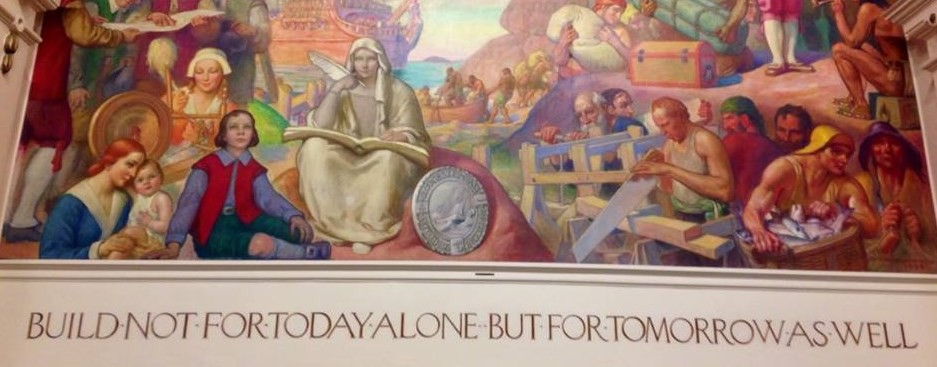
…the sky, a besmudged cauldron, leaking sudden shafts of sunlight; the water, tossing quicksilver. Like crisp white cat’s ears, the sails pop up, and the near-empty harbor dances to life.
Sail GHS Enlivens the Harbor
by Hilary Frye, with Patti Page
photos by Hilary Frye
…the sky, a besmudged cauldron, leaking sudden shafts of sunlight; the water, tossing quicksilver. Like crisp white cat’s ears, the sails pop up, and the near-empty harbor dances to life.

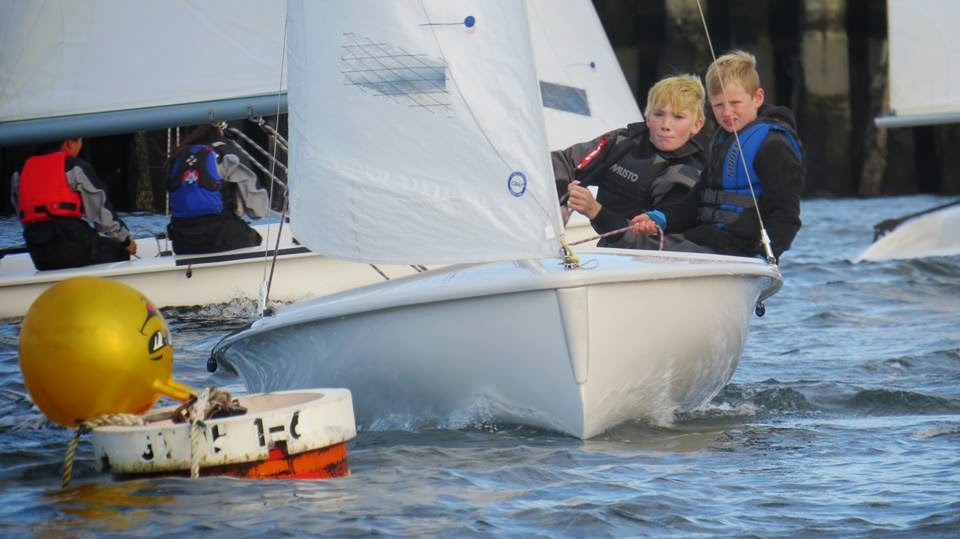
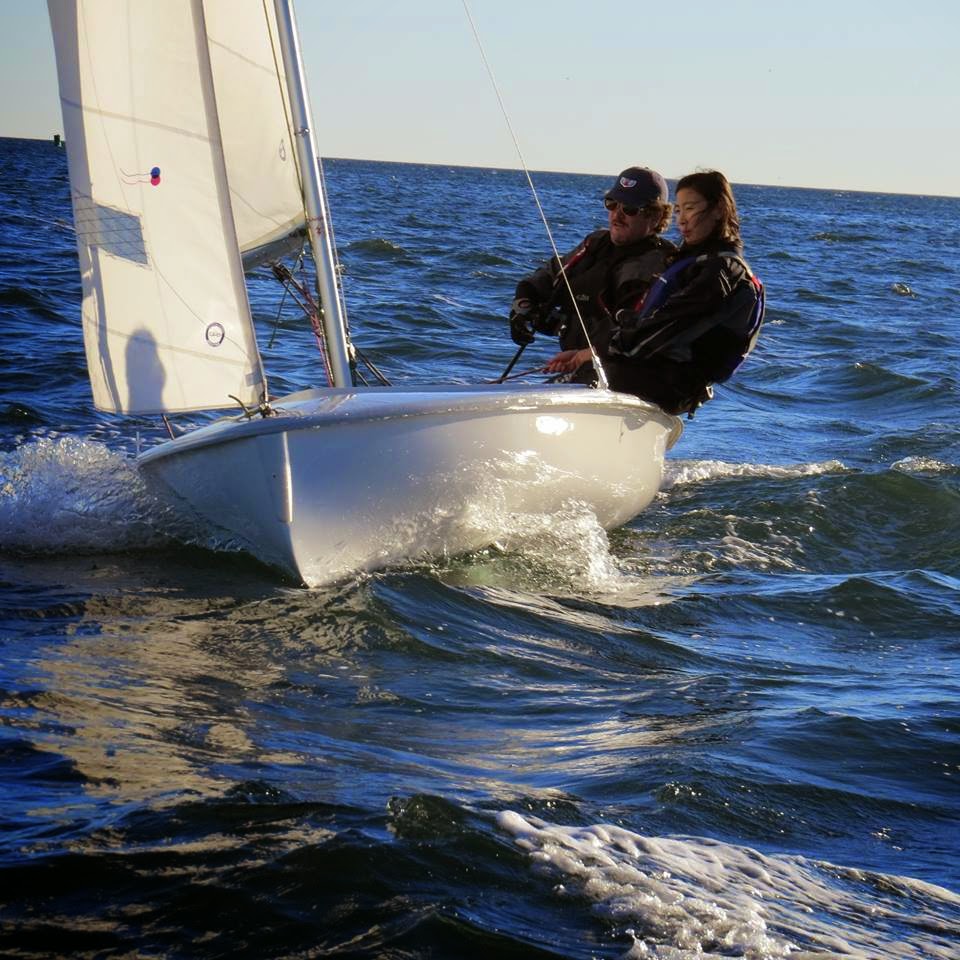
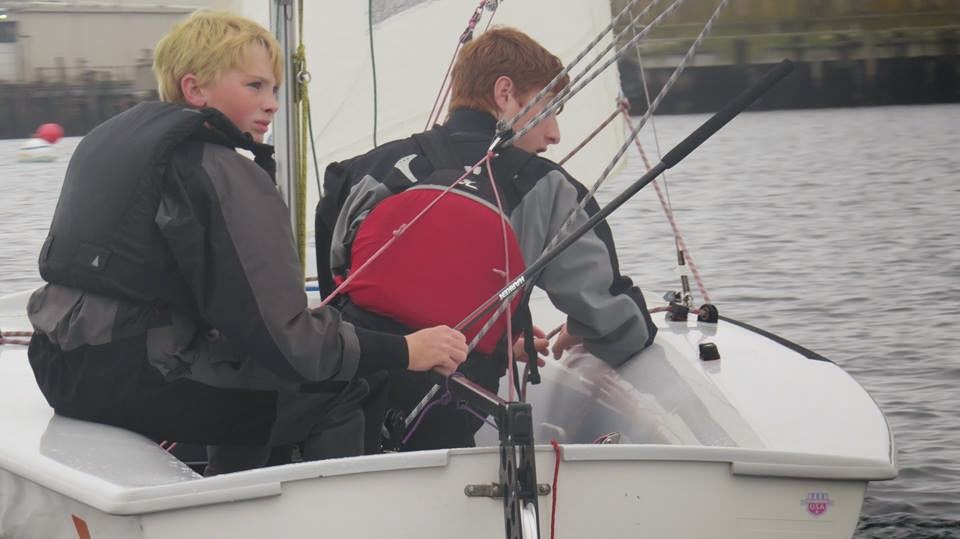
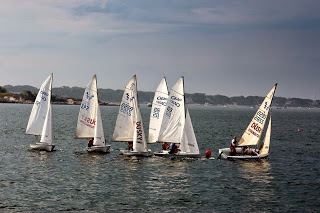
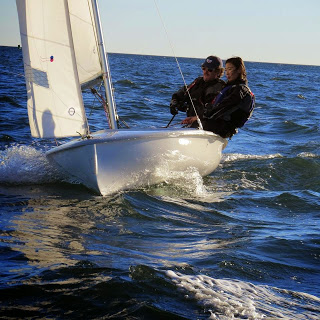
This was the scene on Gloucester Harbor on October 30, the last day of sailing for 2014. Sail GHS will be back on the water in the middle of March.
In 2008, Patti Page introduced scholastic sailing to our city. With a harbor as beautiful as ours, she envisioned a high school sailing team as a shining asset for this historic port.
With three donated C420 sailboats, and the quiet authority and guidance of Dr. Damon Cummings, she began to build a racing team.

Page engaged Guy Fiero, a canny, creative instructor, with many years of experience, as the coach. Scouring the environs of Cape Ann, she banded together a crew of intrepid high school -aged sailors who took their place as the new sailing team, Sail GHS, in the Mass Bay League racing organization.

The competitive season for scholastic sailing is early spring, when conditions are cold, stormy and unpredictable. Sailing is arduous at best. Page spent many an afternoon with icy winds, stinging rains, and waves breaking over the bow of her 13 foot whaler, tending her skittering flock.
By diligent fund-raising, chasing grants and soliciting donations, she equipped her team with life vests, dry suits, chase boats, insurance, league fees, and a coach, with no cost to its young members.
The Dusky foundation, ever- generous with its community enrichment efforts, endorsed the conspicuous success of the program by donating, (in conjunction with Brown’s Yacht Yard,) six brand new C420s and a fully equipped chase boat.

In 2012, Page motivated the city to appropriate funds to replace its derelict floats at the head of the harbor with a new state-of-the-art system. The Sail GHS racing fleet now shares the floats with the Cape Ann YMCA summer program.
With persistent nurture, Patti Page’s one-time wish was emerging as a winged reality.

Page considers Sail GHS to be the foot in the door that keeps the gate from being slammed shut on public access to our harbor. She believes that the harbor is a resource to be enjoyed by all.

Many coastal cities and towns around the country are vigorously embracing Community Boating Centers as prosperous enterprises that invigorate their waterfronts. Patti is an active proponent for just such a center, here in Gloucester.
In light of what she has accomplished with discarded or donated gear, imagine what she could make happen given actual support from the city. Give her a chance, and she just might find a way for the city to enhance the existing harbormaster’s building as a public shore-side facility. Ward Councilors would like to hear your thoughts about programs such as Sail GHS.
Sail GHS is a competitive high school sailing program which is open to the youth of Cape Ann and beyond. Contact info: sailghs@yahoo.com Look for Sail GHS on facebook.