Aquaculture

Thursday, February 26, 2015

Does Gloucester Need Aquaculture?

aquaculture diagramSome say YES:

from the Boston Globe, Dec 3, 2014

The Future of Gloucester Could be in Biotech

Shirley Leung

“Serial entrepreneur Greg Verdine, Eastern Point,  is … exploring the idea of Gloucester raising its own fish. Over the summer, he and (former mayor Carolyn) Kirk visited fish farms in Japan. The types of species that could thrive in Gloucester Harbor will depend on the water temperature, and a team from Japan will come in the spring to help sort that out. …

‘It’s opening another channel to bring fish across the docks of Gloucester,’ said Kirk.”

Some say NO:

Ann (Parco) Molloy is director of marketing and sales at Gloucester’s Neptune’s Harvest, makers of organic fish fertilizer since 1986. The company depends on the by-product of high quality local fish to make its very effective and popular organic fertilizer. She has a few things to say about aquaculture:

“Farm-raised fish are not healthy fish. They are raised in pens where they can’t swim in the wild, so they become weak and sick. They are routinely fed on genetically-modified soy feed which results in questionable nutritional value of the fish itself, and when they inevitably get sick, they are fed antibiotics.

Any genetically modified Farmed Fish, raised in pens, have the chance of escaping into the wild, where they can cross-breed with local wild fish,risking the local wild stocks. When the genomes are compromised like this, you could lose a wild species forever. “I wish people would stop thinking they can outsmart, and do things better, than Mother Nature. We have the best fishing grounds in the world. Why would we want to risk losing them, for any reason? Do they want to raise fish inshore and onshore so they can get the fishermen, who are the eyes and ears of the ocean, off of it? Then big corporations can have their way it, mining it, and extracting whatever they can from it? The oceans were meant to feed the world, not feed greed!”

I won’t eat farm-raised fish. It’s not nutritious at all, and can actually be bad for you. We won’t even use it for our fertilizer.”


Aquaculture

Does Gloucester Need Aquaculture?

Some say YES:
from the Boston Globe, Dec 3, 2014
The Future of Gloucester Could be in Biotech
Shirley Leung
 “Serial entrepreneur Greg Verdine, Eastern Point,  is … exploring the idea of Gloucester raising its own fish. Over the summer, he and (former mayor Carolyn) Kirk visited fish farms in Japan. The types of species that could thrive in Gloucester Harbor will depend on the water temperature, and a team from Japan will come in the spring to help sort that out. …
‘It’s opening another channel to bring fish across the docks of Gloucester,’ said Kirk.”
Some say NO:
Ann (Parco) Molloy is director of marketing and sales at Gloucester’s Neptune’s Harvest, makers of organic fish fertilizer since 1986. The company depends on the by-product of high quality local fish to make its very effective and popular organic fertilizer. She has a few things to say about aquaculture:
“Farm-raised fish are not healthy fish. They are raised in pens where they can’t swim in the wild, so they become weak and sick. They are routinely fed on genetically-modified soy feed which results in questionable nutritional value of the fish itself, and when they inevitably get sick, they are fed antibiotics. 
Any genetically modified Farmed Fish, raised in pens, have the chance of escaping into the wild, where they can cross-breed with local wild fish,risking the local wild stocks. When the genomes are compromised like this, you could lose a wild species forever. “I wish people would stop thinking they can outsmart, and do things better, than Mother Nature. We have the best fishing grounds in the world. Why would we want to risk losing them, for any reason? Do they want to raise fish inshore and onshore so they can get the fishermen, who are the eyes and ears of the ocean, off of it? Then big corporations can have their way it, mining it, and extracting whatever they can from it? The oceans were meant to feed the world, not feed greed!”
I won’t eat farm-raised fish. It’s not nutritious at all, and can actually be bad for you. We won’t even use it for our fertilizer.”
See how Nova Scotia is doing with its offshore fish-farming:

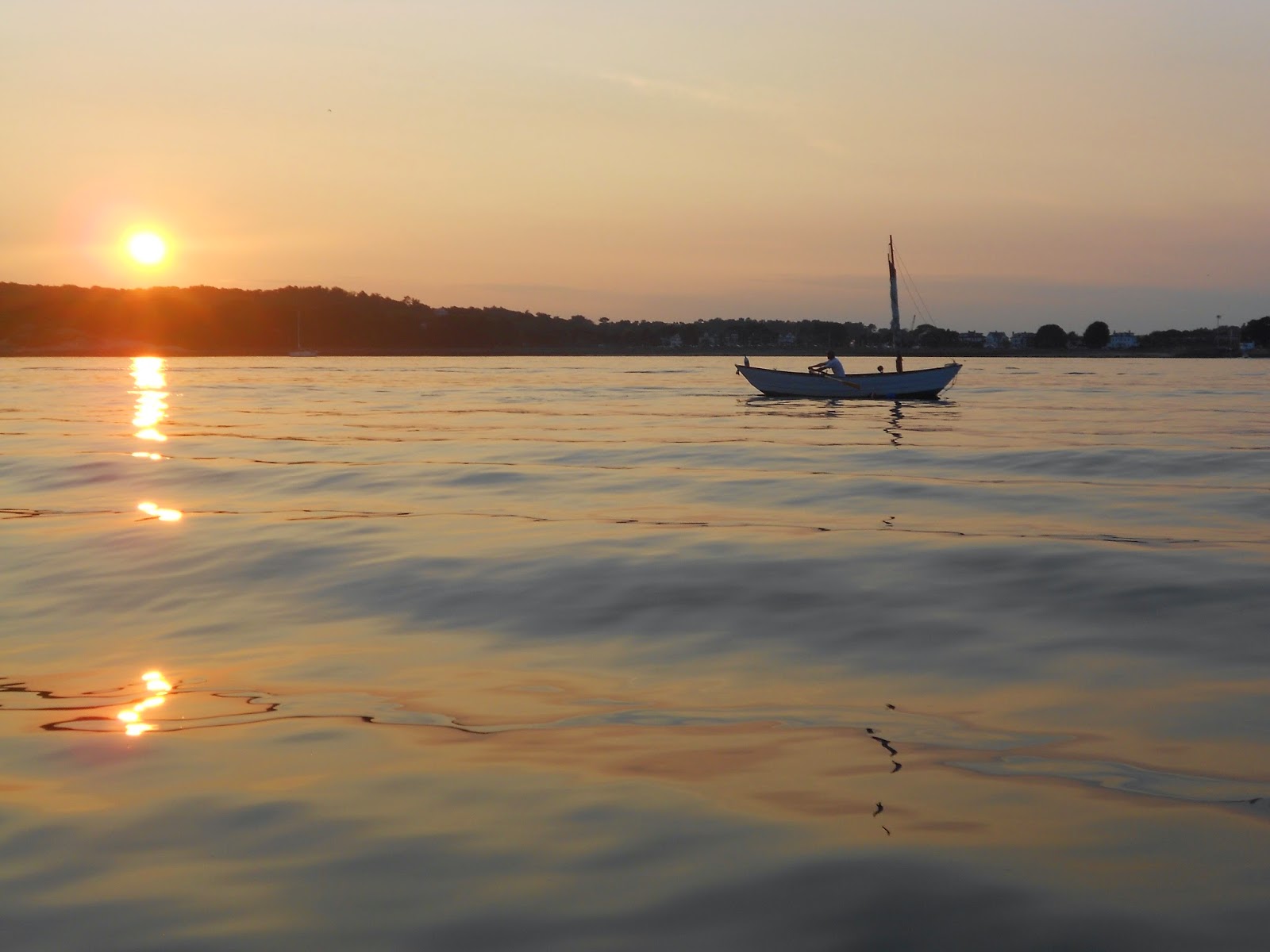
On Gloucester Harbor, by Thomas Welch

2b317-jimmy2bdory

On Gloucester Harbor

The Dory seems to nod with glee

as I stride down the dock with my oars

She, like me, knows she soon will be free

of the lines that bind to the shores

Captain Gus shouts a sharp morning greeting

from the “Captain Dominic’s” deck

In the cool, green shade under Fisherman’s Wharf

a Snow Egret cranes her neck

My awareness expands with every stroke of the oar

out of Harbor Cove I row

to be at Sea, away from the shore,

is a joy only Mariners know

The feel, taste and smell of the crisp salt air

The Wind has the Ocean seething

Me and the boat and the Sea all share

The waves rise and fall, Nature’s breathing

The whole harbor now has come alive

A breathtaking, un-scripted show

Chortling Eiders gather close, the Cormorants dive

Chasing Minnows and Mackerel below

Peter’s sons by the thousands, the finest kind,

have called this Harbor port home

All possessing the genuine character you’ll find

in a Homer painting or an Olson poem.

Set my course for the shore, another day ends

In my wake sunset’s captured in foam

Though I’m blessed on land with fine family and friends

My heart knows this Harbor’s my home.

d7c70-dorywharvey

Spearing Flounder. circa.1890 George Wainwright Harvey (1855-1930


Gloucester on National Public Radio

Did you hear this Gloucester story
 on National Public Radio? 

This story was heard across the country, via Boston radio station WGBH,  on  Feb 17, 2015

What do you think? Please add your comment below.

Note: The print version you see  here and the audio version of the story are not the same.

Click on the LISTEN button to hear the audio version, with the voices of former mayor Carolyn Kirk, Sheree Zizik, Valerie Nelson, and Mayor Sefatia Romeo-Theken.

Why Is The State Paying Millions To Subsidize A Gloucester Beach-Front Hotel?

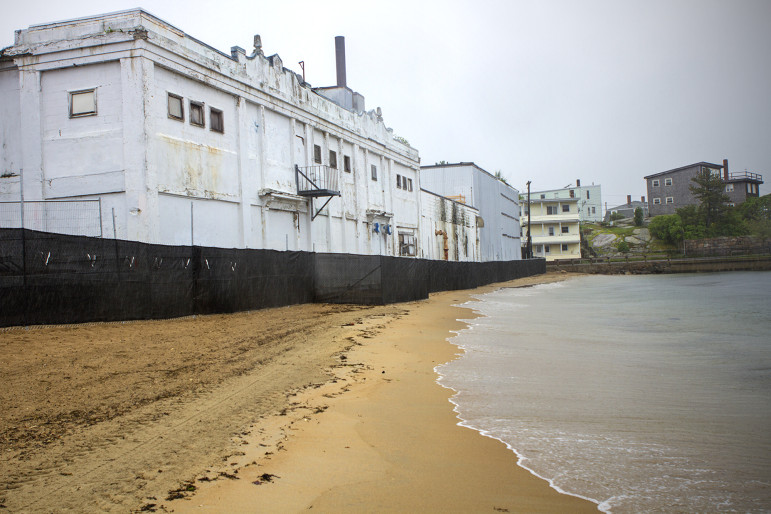
The Birdseye plant, birthplace of the flash-freeze process, stood on a barrier beach in the center of “the Fort,” a historic neighborhood packed with marine industry in Gloucester, Mass. The new Beauport Hotel is rising – with the aid of state subsidies –
The Birdseye plant, birthplace of the flash-freeze process, stood on a barrier beach in the center of “the Fort,” a historic neighborhood packed with marine industry in Gloucester, Mass. The new Beauport Hotel is rising – with the aid of state subsidies – in its place, despite the fact that it’s likely to be under water sea levels rise as predicted.
Credit Lauren Owens / NECIR
On one of the grittiest stretches of the historic waterfront here, the peaks of the Beauport Hotel will soon rise above the truck noise and smell of fish. Yet when the last drop of water fills the rooftop swimming pool, the luxury hotel will be more than incongruous with the neighborhood theme. It will also stand as a challenge to even mild climate change predictions.
For the past century, storms during high tide have flooded this neighborhood. In the next century, a two-foot rise in sea level, projected by an international consortium of scientists, would put the hotel’s property line underwater.
Despite Massachusetts’ very public stance against development on beaches like this one, the state is providing $3 million for roadway and other improvements around the controversial Gloucester hotel development, an examination by the New England Center for Investigative Reporting has found.
The issue is starkly illustrated in Gloucester, but it is a story up and down U.S. seaboards: Regulators are pinched between development pressure and the desire to keep people and property safe from the steady rising of the sea.
“That has pushed regulators to be a little more lenient, particularly when you have a big money developer,” says Jessica Grannis, adaptation program manager for the Georgetown Climate Center, in Washington, D.C.
The $25 million, 96-room hotel is financed by Jim Davis, the billionaire chairman of New Balance, and is touted by proponents as a necessary addition to its gritty working waterfront in order to survive the economic fallout of drastic fishing limits.
The hope is to save the city’s ice plant and fish auction house by generating awareness and tax revenue from tourism.
Yet vocal opponents say given what is known about climate change, it is not prudent to build a grand hotel on a low-lying, flood-prone beach – and importantly, taxpayers should not be helping ensure it gets built.
The first line of defense
Between a metal fence and the concrete of the old Birdseye plant, sand dunes with native plants naturally rebuilt. The Beauport Hotel is being constructed on a specific type of barrier beach – one with an active dune system – that would make any building
Between a metal fence and the concrete of the old Birdseye plant, sand dunes with native plants naturally rebuilt. The Beauport Hotel is being constructed on a specific type of barrier beach – one with an active dune system – that would make any building a non-starter, based on Massachusetts law. But hotel construction is underway.
Credit Lauren Owens / NECIR
In Massachusetts, coastal municipalities largely control the zoning that directs development, and they have broad power to enforce the state’s environmental regulations.
But this dynamic is inherently a conflict of interest. A study from the University of Rhode Island found municipalities might not share a state’s environmental goals, while the University of Vermont concluded coastal tax revenue is enticing to local governments because property owners and federal taxpayers subsidize flood losses.
Gloucester has a track record of exercising questionable zoning authority. In 1996, the state overturned a city decision to allow a shopping mall in an area federally designated as a port. In 2008, a lawsuit brought by residents caused a developer to back out of a proposal to convert an old paint factory into condos—a project the city had approved within the city’s marine industrial zone.
Still, over the past decade, political momentum grew supporting gentrification of the abandoned Birdseye plant – the birthplace of flash freezing. It stood in the middle of “the Fort,” a historic neighborhood packed with marine industry and middle class homes, and bordered by a sandy public beach– a big draw for developers.
After Davis purchased Birdseye in 2011, says Valerie Nelson, a working-waterfront activist and former city councilor, “There was never a serious discussion about whether this was a good place for a hotel.”
Gloucester’s Mayor Carolyn Kirk disagrees, saying most of the city’s residents want the hotel to shore up the city’s property tax base.
“The hotel is the cake, the frosting and the ice cream,” Kirk says. “It’s the property tax, the meals tax, and the lodging tax.”
Nelson says local opposition to rezoning the Birdseye property – including a petition signed by more than 200 residents – was shut down by the City Council in 2012 when it voted to rezone before a full hearing of objections took place.
The missing sea rocket
Paul Godfrey, a retired University of Massachusetts Amherst professor and barrier beach expert, did a pro-bono study for opponents on the hotel’s environmental impact. He found that the waves during high tides and hurricanes hit dead center of the buildin
Paul Godfrey, a retired University of Massachusetts Amherst professor and barrier beach expert, did a pro-bono study for opponents on the hotel’s environmental impact. He found that the waves during high tides and hurricanes hit dead center of the building and contributed to beach erosion.
Credit Lauren Owens / NECIR
As the city and the state reviewed appeals to the hotel’s permits, Paul Godfrey, a retired professor from UMass Amherst and renowned barrier beach expert who has been a consultant to the US Department of the Interior, did a pro-bono study for opponents on the hotel’s environmental impact.
He found the unique shape of the harbor would focus a hurricane’s energy “dead center of the Birdseye building.” He also found that storm waves crashing into Birdseye and deflecting back had significantly eroded the beach.
Godfrey says climate predictions show these patterns will only worsen in time, and that the Beauport Hotel will likely be the first building on this street to be underwater. According to the Intergovernmental Panel on Climate Change sea levels worldwide are expected to rise between 1.7 to over 3 feet by 2100 as the oceans absorb most of the temperature rise from the release of heat-trapping gas from factories, cars and power plants.
“These things have been ignored,” says Godfrey. He was more blunt in a letter to the City Council in 2013: “Have the impacts of Hurricane Sandy had no effect on decisions made in Gloucester?”
The hotel’s development team contested Godfrey’s report, noting a planned new seawall protecting the building will be 20 feet farther from the ocean than the Birdseye building. They also said that the first floor will be raised above a parking area, higher than the federal government’s required height for coastal building.
Les Smith, the hotel’s coastal geologist, says there has been virtually no erosion on this beach for the past 100 years.
“You have to work with what you have and develop good designs based on good engineering,” says Smith.
Godfrey and opponents have claimed the hotel is being built on a specific type of barrier beach – one with an active dune system – that would make any building a non-starter, based on state law. But succulent, thick-leaved plants known as sea rockets – that only grow on barrier dunes – disappeared from the beach in front of the Birdseye site soon after Godfrey identified them in his 2013 report. Some hotel opponents considered it destruction of evidence.
Taxpayers on the hook?
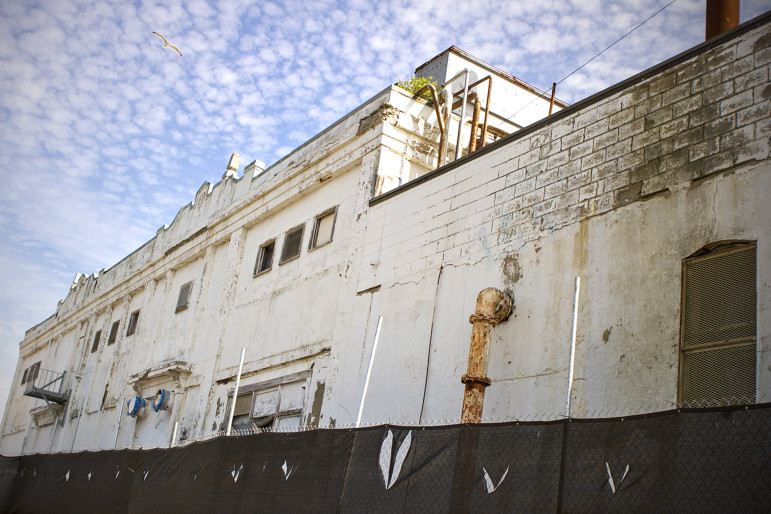
The Birdseye plant in Gloucester, was torn down in the fall of 2014 to make way for a luxury hotel. The site has been inundated repeatedly by storms.
Credit Lauren Owens / NECIR
In November 2013, the Massachusetts Department of Environmental Protection decided the Birdseye property and much of the Fort was once a barrier beach, but no longer.
“The dune form no longer changes in response to wind and waves because it is ‘locked-up’ beneath pavement and buildings,” the agency concluded. In other words, a developed barrier beach should not be regulated as a pristine barrier beach would be.
That determination conflicts with best-practice recommendations from the 1994 state Barrier Beach Task Force, which stated, developed or not, a barrier beach is a barrier beach: “This is an important point that should [not be] overlooked by barrier beach managers.”
As far back as 1980, the state recognized barrier beaches were risky investments. An executive order passed by then-Gov. Ed King – and which the Patrick Administration advised expanding – says the state should not funnel taxpayer money to encourage development on hazard-prone barrier beaches.
Yet that is what is happening in the case of the Beauport Hotel.
Businesses in the Fort say plumbing, drainage, and roads along this developed barrier beach are inadequate for commercial needs.
When the hotel proposal came through, Gloucester fast-tracked an infrastructure upgrade for the Fort, and secured a $3 million grant through the MassWorks Infrastructure Program to do it. MassWorks supported the grant because the hotel was considered a job creator and spur to economic development.
Yet even the city’s director of public works says the new infrastructure – particularly new drainage pipes – won’t prevent flooding, because the Fort’s elevation is simply too low to fix.
Walking a fine line
Despite Massachusetts’ stance against development on barrier beaches like the one where this Birdseye plant stood for a century, the state is providing $3 million for roads and other improvements around the controversial hotel being built there.
Public officials – both elected and appointed – are in an awkward position on climate change.
“We essentially live on a different planet than the planet where these laws and regulatory systems were put in place,” says Seth Kaplan, vice president for climate policy at the Conservation Law Foundation.
Martin Suuberg, state undersecretary for energy and the environment, points to numerous actions Massachusetts is taking to meet the challenge of climate change. For example, the state is giving Gloucester $50,000 to identify its most vulnerable low-lying areas.
Suuberg said replacing the dilapidated Birdseye plant with the Beauport Hotel will be an environmental win-win. “In this particular case, this was a site with a lot of problems that [the Beauport Hotel], frankly, addresses,” says Suuberg.
Suuberg refused to answer questions about the $3 million state grant, which seems to be in violation of King’s executive order.
Yet a 2011 report from Suuberg’s office advises enforcing and expanding that executive order, known as 181. It also says existing rules do not go far enough to protect the coasts: “New construction and redevelopment are likely occurring in areas that will erode and flood within the lifespan of these projects.”
The New England Center for Investigative Reporting — an independent, nonprofit newsroom based out of Boston University and WGBH News.


Anastas and Buckles : Two Generations, Two Perspectives


POSTPONED UNTIL SPRING 
BECAUSE OF SNOW AND PARKING ISSUES

‘Two generations, Two Perspectives’ 

Writers Center event features authors age 28, 77


BY GAIL MCCARTHY 

Two writers representing two generations of Gloucester natives a half century apart will talk about their recent work at an event at the Gloucester Writers Center.

The program is titled “Two Generations, Two Perspectives, TwoGloucesterWriters” featuring Casey Buckles, 28, and Peter Anastas, 77, both of whom will read from their novels about Gloucester on Wednesday Feb. 18 at 7:30 p.m.

Buckles’ book is titled “Plain of Ghosts,” while Anastas will read from his novel-in-progress “Nostalgia.” 


Casey Buckles, 28, will read from his novel about Gloucester during a program titled “Two Generations, Two Perspectives, Two Gloucester Writers” on Wednesday at 7:30 p.m. at the Gloucester Writers Center. 


Peter Anastas, 77, will read from his novel about Gloucester during a program titled “Two Generations, Two Perspectives, Two Gloucester Writers” on Wednesday at 7:30 p.m. at the Gloucester Writers Center. 


For starters, Anastas grew up in the nation’s oldest seaport when it had a thriving fishing industry that employed thousands of residents working at sea and in the shore-related businesses. 

Downsizing industry 

Buckles, on the other hand, grew up at a time when fishing was greatly downsized with the onslaught of government regulations, and when local drug abuse made recurrent headlines as it continues to do so today. His generation is also the first to compete in a global marketplace that’s seen U.S. jobs vanish overseas where the labor market is cheaper. 

A lifelong writer and columnist, Anastas holds degrees in English from Bowdoin College and Tufts University. He also studied Medieval Literature at the University of Florence, Italy. 

Commenting on the value of the young writer’s work coming as it does from his experience growing up in the heart of Gloucester, Anastas noted: ”The city has been the subject of a great deal of poetry and prose, of history and fiction; yet until the recent publication of Casey Buckles’ novel, ‘Plain of Ghosts,’ we have not had an account of what it feels like to come of age at this very moment in a community in dramatic transition.” 

’Locally crafted’ 

Buckle’s novel, he further noted, should be experienced as a “locally crafted and produced work of art.” 

The novel tells the story about the struggles of its main character, Noah, and his friends, as they attempt to make lives for themselves after high school, and while they may dance and drink in local bars and clubs, they are searching for deeper connections of love, companionship and the meaning of community, explained Anastas. 

”For Casey, the bleakness comes from the fact that he is looking at the lives of his generation in Gloucester. What do they have for work? What is in store for them if they stay here? In many ways Casey is a poet,” said Anastas. 

Buckles said this book grew out of years of note taking when he was attending school at the University of Massachusetts, Boston. 

”It was a lot of reflection that turned into what the book is now,” said Buckles, who studied philosophy, anthropology and English. 

Seaport issues 

In addition to Buckles’ reading, Anastas will read from his own work in progress, which is described as a post mortem investigation of how the city came to be what it is today. Anastas has cherished his life in Gloucester, though he too has critical views about the issues that face the seaport today. 

Anastas asked Buckles about what he sees as the future in Gloucester for his generation. 

”The world didn’t end when the Bird’s Eye fell, so there is still a future. Will it include my generation or any type of working waterfront? That will be easier to answer in retrospect,” wrote Buckles in response. “…For those who are here, spread over its 41.5 square miles, for however we live to survive, there is a future in this city.” 

Gail McCarthy can be reached at 978-675-2706, or via email at. 

Gloucester Writes the Sea

 
Gloucester Writes the Sea
Peter Anastas
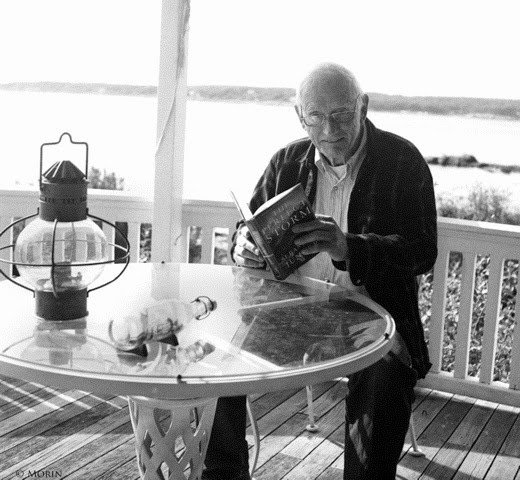
Joe Garland on his porch at Black Bess, Eastern Point, Gloucester, preparing for a visit with Sebastian Junger, 1998,
photo by Ernest Morin


Sitting out last week’s blizzard with a hot toddy and a good book, the distant roar of the Back Shore’s breakers in my ears, I began to think about the storms we’ve lived through, especially the Northeaster of 1991, known historically as The Perfect Storm.  This sent me to the bookcase for my copy of Sebastian Junger’s 1997 bestselling account of the storm and its impact on the city and our fishing families. 
I read the page proofs of The Perfect Stormin one sitting.  Replying to Junger’s publicist at W. W. Norton, who had sent them to the Book Store in Gloucester for pre-publication comment, I told her that I found the book “beautifully written.”  I said it gave “the flavor of Gloucester fishing life as lived by a segment of that community—-the bars, the drinking, the relationships formed out of bar life, the violence of that life, the losses.”  I went on to note that Junger had rendered this life “without judgment and with a precision of emotional detail.”
Eighteen years later I still feel the same way.  While the book has attracted an international readership and its ageless theme of men and women against the sea, of courage in the face of seemingly insuperable obstacles, is universal, its local focus is what still makes it memorable.
The Perfect Storm is a profoundly Gloucester book.  It tells a local story about indigenous people.  It evokes a time and a place in Gloucester’s history.  It is told with precision and candor.  And it doesn’t romanticize the maritime life or mythologize its participants.  Books about the sea often tend to do this, especially if they are fictive.  Melville’s notably did not; neither did Conrad’s or Richard Hughes’.
Closer to home, I find the stories of James B. Connolly, who wrote so prolifically about the lives of Gloucester fishermen, less easy to read than when I was younger.  In contrast, Joe Garland’s books have seemed to ripen with age, as I believe the republication of Lone Voyager in 2000 by Simon and Schuster amply demonstrates.  Connolly’s penchant for “salty” lingo over straight talk has reached the end of its shelf life, while Garland’s Yankee astringency still seems exactly right for its subject.
Yet Connolly, who wrote in The Book of the Gloucester Fishermen (1927) that he’d sailed with Gloucestermen “to the fishing banks, loafed with them ashore, sat with them in their homes,” set a standard for writing about the maritime life here that later writers had to measure up to, including Garland and Kim Bartlett, whose The Finest Kind (1977) is the best account we have of our Italian fleet.  Both succeeded, and beautifully.  As did Geoffrey Moorhouse, an English writer who moved to Gloucester in the 1970s, fished here, and produced his semi-fictional The Boat and the Town,(1979), which documents the pressures on the industry before the establishment of the 200 mile limit, while presenting Gloucester, in the author’s words, as “a paradigm of all the fishing communities in the world.”
These texts, whether he had read them or not, were the models that Sebastian Junger had to write The Perfect Stormagainst, if only in the minds of those natives who knew and lived them.
Are these books, including Junger’s, enough to create a local tradition of writing about the sea?  And is The Perfect Storm part of that company?  In each case, the author has either lived or spent significant time here.  Connolly and Garland had the deepest roots, though Bartlett worked as the Gloucester Times’ waterfront reporter and fished alongside of his subjects.  Junger lived here, too, emerging with a finer understanding of life ashore than many natives.
In 2010, John Morris, the grandson of a dory fisherman lost at sea, published what may well be the definitive history of dory fishing, Alone at Sea: Gloucester in the Age of Dorymen, 1623-1939.  Of this major contribution to Gloucester writing about the sea, Joe Garland wrote:
“John Morris is about to tell you all there is to be told about Gloucestermen and their wives and widows and fatherless kids, and ways of life, and of death by the thousands, of good times and of bad, in a masterpiece that’s been waiting for generations to be told.”
We are fortunate in Gloucester that as this community has evolved there have been people to document in gripping prose the extraordinary quality of its life, what it means, what we stand for, what we must preserve.  In Sebastian Junger’s words, “I love this town, and I really hope that the fishing industry recuperates because that’s the heart of this town.  It isn’t tourism.  It’s not light industry.  It’s fishing, and it would really be a tragedy if business by business, boat by boat, that gets chipped away.”
Junger said this in a 1998 Boston Globeinterview and his words are just as relevant today.  In fact, they speak to our condition even more powerfully.

A Gloucester Artist Speaks Out by JoAnn Castano

We are not a community afraid of change;  we are the change, in the most creative, innovative and enduring spirit. 

Over recent years I’ve watched as we become a blueprint of Salem, now like so many communities across America,  hooked on tourism and the tourists’ dollars. We’ve become followers and not innovative leaders. We were different, but soon we will not be.  Plan 2000 was promising, the Mt. Auburn Harbor Plan was promising and the public forums were also promising.   I don’t see any resemblance to those now.  So I write the following letter and offer one more push,  as I see an opportunity for change… a united change toward openness and transparency.

Greetings Mayor Theken,

First the historic blizzards of 2015 and Patriots World Championship win, you are on a roll. Congratulations on new beginnings.

I’m writing hoping you can provide me a little more insight into the procedures and issues concerning the proposed David Black sculpture.

I understand you, the Administration, will be withdrawing the request Appropriation 2015-SA-10 – $30k of free cash.   As reported in the Gloucester Daily Times, Bruce Tobey, who is leading the project, will do the fund- raising and has implied the project will be funded with private donations.

Also being implied is that there is no urgency now for a community meeting that was required and planned but cancelled due to snow.  We are told the meeting will be held in the spring.  I respectfully disagree regarding its urgency as the $30,000 appropriation was but one part of the community’s concerns.

A remaining issue is the use of Solomon Jacobs Park and the City’s negotiation with National Grid to pay for the base and installation of the sculpture.  I understand going before City Council soon is 2015.SA-19,  the Boating Infrastructure Grant (BIG) which includes the agreement with National Grid to pay for the base of the sculpture and part of the landscaping/installation.

It is not clear whether those funds can be used somewhere else. My question is this:  If approved,  does it lock in that the sculpture would have to be placed at Solomon Jacobs Park? Do you feel the public is fully aware of City plans for this site and has had the opportunity for community input?  

Am I correct to understand that in the Boating Infrastructure Grant (BIG) there is no planning opportunity for community boating and these plans have not been fully discussed with the public?  Are we building for people of Gloucester or for general tourism? If any portion of the appropriation 2015.SA-19 in the Boating Infrastructure Grant (BIG) is being negotiated or allocated to the Black Sculpture installation, I would hope a public forum will be held before a vote, or it may be stipulated that these negotiations will be withdrawn until there has been public community input.

Working together as a community we can strengthen transparency in City governance, restoring the people’s faith and trust.  The public trust, in its growing desire for knowledge and community input,  I hope will be restored in good faith.

We are not a community afraid of change; we are the change in the most creative, innovative and enduring spirit.

I am a sculptor myself with 35 years’ experience in cultural community planning and development in Salem, Newburyport, Brockton and Gloucester. Having lived and worked in an internationally renowned sculpting capital of Pietrasanta, Italy, I have had the opportunity to work and exhibit with some of the most famous and internationally known artists.  My family has been in the gallery business before and during my entire life. My uncle had been the Newbury St., Boston,  dealer of many of the artists Gloucester has historically claimed. We have a history of knowing the arts and the business of art. Gloucester has many seasoned artists and sculptors today with more experience than I in public art installations. We collectively have a wealth of education, knowledge and experience.  I understand the contemporary and educational process of bringing community assets of art into the public arena, as well as funding structures.  I worked on Plan 2000 with efforts to integrate the arts into every part of our urban planning.  We established the Committee for the Arts and spearheaded and co-founded seARTS advocating for and bringing in well over $600,000 from the Mass Cultural Council alone in the first seven years (2003-2010) of the Creative Economy initiative. Since then the funds and MCC’s financial and social investment has continued to increase other local, public and private matching funds.  Our community has worked hard, participated as a whole to strengthen our economy and enliven the livability of Gloucester.

I thank you in advance for providing  hope for stronger communication between the City government and her people. You have given us, in the short time you have held the office of Mayor, a hope to end the divide and polarization we have been enduring for too long. The arts can transcend all,  and this may be the issue that will bring us together and return the “fun” you want to bring back.

We have heard from many of the seasoned and well- respected artists who are very concerned about their future and the direction Gloucester has taken in negotiating industry and the sustainability of living and working here.  Placing art on the harbor without proper and sensitive planning with the waterfront workers,  especially during such difficult times, as outlined in the Mt. Auburn Plan commissioned by the City, is a discredit to the fishing industry and the cultural community as well as all citizens.  This is a community- wide issue and respectfully I request you lend your ear to the people.

The artists’ #1 issue today and for many years now is to have live/work space with incentives such as 1% for the arts. Cultural tourism planning vs. general tourism is paramount to who we are.  We’ve discussed this in recent years as it was brought before City Councilors in 2013 awaiting a public forum.  We are still waiting.

Thank you for continued service to the people of Gloucester.

Respectfully,

Jo-Ann Castano

Jo-Ann Castano of Gloucester ​is a sculptor, arts educator and a community arts activist and organizer.  She is the principal of Castano Design Associates/ArtsGloucest​er​. She was on the Gloucester Plan 2000 committee​, ​was a founder, past president,and acting director of the Society for the Encouragement of the Arts (seARTS) and co-founder of the Gloucester Committee for the Arts.

Classism and its Role in Gentrification by Mike Cook

After I submitted my opinion piece to “Enduring Gloucester” about gentrification’s numerous downsides, and how those downsides have  impacted coastal communities I’ve lived in and loved, from Provincetown to Portsmouth, I introduced a couple of old friends here in Provincetown to “Enduring Gloucester”.

085c1-photo2b7

Photo provided by Document/Morin

They lamented that a similar forum does not exist here.  As middle and lower income, largely  three season workers in the community’s tourism-based economy, they are finding basic survival here increasingly difficult—and very few among the more well to do “political class” that runs the town, as liberal and progressive as they all claim to be, seems to care not a whit.

By basic survival, I primarily mean the ability to find year round housing they can afford to rent or, if they are lucky enough to have bought something in years past, to earn enough money via the tourism and retail driven economy to properly maintain their homes and afford the ever escalating property taxes.

In the not quite three weeks since I have been here, I have been saddened to hear how many people I met and knew through the years, some of them Provincetown’s most interesting and creative residents, have  moved on. Some sold their homes because they did not earn enough in retail and tourism to maintain them, pay ever higher property taxes, and also put food on the table. Others  left because the constant fear of being asked to move, yet again, when a property is sold or another apartment is converted into a condo and the rent sent into the stratosphere, even in the dead of winter, has proven to be just too stressful—especially for people who have lived in and contributed to Provincetown for years and now feel as if the town, or at least the affluent newcomers who have bought up so much of the town in recent years and the political class that does their bidding, neither appreciate their contributions nor the town’s long history of being a place where all are welcome.

Conversations with my friends, sadly, confirmed my observation about Provincetown being a place that celebrates “tolerance and diversity” only so long as it is gay, affluent, and overwhelmingly white, was not as off the mark as I may have once thought.

That realization got me thinking about the gay community itself and what I have come to see as an issue no one in the community, or very few, ever think about—let alone talk about, at least  openly.

The issue I am referring to is classism and, I dare say, it is so pervasive in the gay “community” that it makes a mockery of the very notion that a gay “community” truly exists.

I  first thought about this “ism” within my own “community” on a warm summer night in 1991. My roommate, the late John Barnes, and I were driving home to 51 Fort Square from a swanky fundraiser for what was known then as the North Shore AIDS Health Project. The event was held at the elegant Annisquam home of a very affluent gay male couple.

As we were driving home on Washington Street, Johnny said to me, “You know, Mike, you fit in at the party. It’s that ‘preppy’ look of yours. But if I didn’t have AIDS and wasn’t needed as a ‘token’ for fundraising purposes, those two queens would never have invited me to a party at their house, unless it was to hook up for sex. ”

At first, I dismissed what Johnny had to say or, more accurately, I didn’t want to believe it. But in the years since John died in 1992, and as a result of the things I have seen in the ensuing years, I have to admit that, by and large, Johnny Barnes was right on the money.

But back to classism more generally.

I think it is very much in play in Gloucester today as the once solid lower and middle income communities the fishing industry nurtured find themselves in positions not unlike many people here in Provincetown.

The strength of those lower and middle income fishing industry related communities served as a bulwark against the kind of gentrification that has transformed Provincetown, Portsmouth, and Newburyport into mere  caricatures of their once authentic selves and into some of the most expensive small coastal communities in  which to live in the nation.

But today, that strength is waning; creating a vacuum  far too many of Gloucester’s already well heeled—be they politically liberal or conservative, Democrat or Republican—seem to think will be best filled by transforming Fort Square into Louisburg Square by the Sea and “Portagee” Hill into Beacon Hill by the Bay.

Last May I attended that bastion of Cape Ann liberalism’s premier event – the Democratic City Committees’ annual Sunday brunch.

I was both shocked and saddened to hear so many people who I’d long thought of as liberals like myself expressing their support for the kind of gentrification that was then exemplified by the imminent plans to tear down the Birdseye building to make way for a billionaire’s “boutique hotel”.

mike_cookMike Cook  is a long time liberal and gay rights activist who saw the uniqueness of Gloucester from the first moment he drove over the bridge during his move from Cambridge to Cape Ann in 1991 to run NUVA’s AIDS education and services programs.

From Over the Bridge, At Least For Now by Mike Cook

Well, this winter did not turn out the way I expected.

Had anyone told me when I gave up my rental share in a house in Gloucester to spend the winter working in southwest Florida that I would be writing this from Provincetown, well, let’s just say not even I would have believed them.

But the fates, a lost wallet, and right wing bumper stickers all played a role in my winding up on a northbound  Greyhound bus, one cannot fly without a photo id these days, not really knowing where I was going to land.

As to the bumper stickers, I had no idea what a bastion of right wing, fundamentalist Christian, Tea Party Republicanism much of southwest Florida, even right along the coast, is. But I do now.

The bus ride was actually an intriguing experience. It got me back in touch with just what a vast and varied land the United States of America remains.

Pulling into the Greyhound terminal in NYC at 1:00 AM on a frigid night, with a three hour lay over ahead of me, was an experience I won’t soon forget. The sitting area was full of homeless people desperate to get in from the cold. To say that it was street theater taken to a disturbing extreme is an understatement of equally disturbing extremes.

I sat, writing in my journal, wondering “How can it be that in the richest nation on earth, people who, through no fault of their own, find life unmanageable can be relegated to an impoverished netherworld that is, truly, beyond Dickensian?”

After that experience, the deep woods of North Truro, where I first stayed upon my arrival on the Outer Cape, were a welcome respite from  the ugly realities of the world we all know exists but far too few of us want to talk about, let alone do anything about.

So, here I am settled into Provincetown with plans to return to Gloucester in April.

I have ample time on my hands to contemplate the meaning of this most recent adventure of mine and what might come after.

As I stroll the deserted streets of Provincetown, I find myself wondering if the  nouveau riche, bourgeois bohemian, gentrification, albeit of a largely gay variety, that has transformed this once magical place into little more than an expensive summer resort that celebrates diversity so long as it is rich, gay, and overwhelmingly white, is what awaits Gloucester.

Of course, the dynamics will not be exactly the same. But Gloucester, like Provincetown, Portsmouth, and Newburyport, with its beautiful coastal geography, is, with the decline of the blue collar/middle class fishing economy, being targeted by the same well to do bourgeois bohemian types who have so changed Provincetown, Portsmouth, and Newburyport in recent decades.

Provincetown, like Newburyport and Portsmouth, now ranks among the most expensive small coastal communities in the nation in which to live.

The working class, whether it be the gay men and lesbians  who waited on tables and tended bar,  the struggling artists and writers, or the locally born Portuguese who harvested the sea, are largely gone.

Year round housing that can be called even remotely affordable is all but impossible to find. As a result, many of the workers in the summer tourism season who wait on tables, tend bar, prepare the food in restaurants, and  change the sheets in $300 a night guesthouses are college students from eastern Europe and Jamaicans who live in dormitory style housing provided them by their employers to whom those employees then pay rent.

I don’t know what, if anything, can be done to stop, or even temper, the gentrification that is bearing down on Gloucester, but surely pointing out some of the downsides to that gentrification, many of which are abundantly visible in places like Provincetown, Newburyport, and Portsmouth, might be a means of getting people to think carefully before they embark down a road that could bring changes to Gloucester that are only in the interests of a select few as opposed to the hard working many.

mike_cookMike Cook  Long time liberal and gay rights activist who saw the uniqueness of Gloucester from the first moment he drove over the bridge during his move from Cambridge to Cape Ann in 1991 to run NUVA’s AIDS education and services programs.

But then I realized liberals are not a monolithic, like thinking group of people, especially when you are talking about  “liberal laborers” and  “limousine liberals”.

Ah well, I hope this rambling of mine gets people thinking about the role classism plays, not just in what is happening in Gloucester, but throughout the nation as a whole – before it really is too late to do anything about it.

What’s Your Opinion?

What are you doing Monday, Jan 26,  6 pm?

The public comment meeting taking place at the Maritime Center that night  might be your only chance to comment* on this proposal:

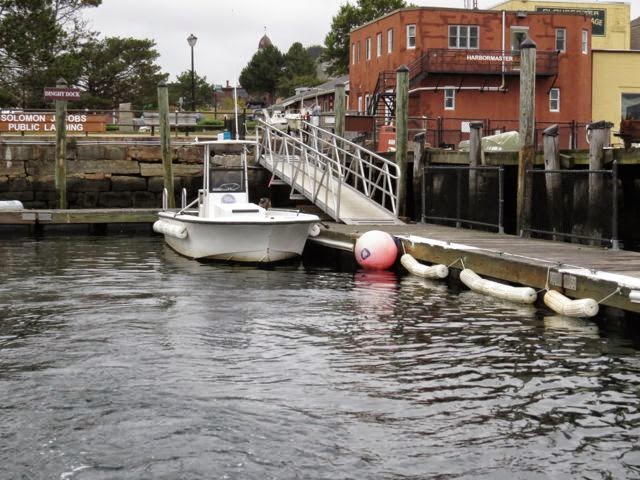
for the Solomon Jacobs Park at Harbor Loop :

 
A $30,000 expenditure related to this proposal will be on the agenda for the City Council meeting the following night. 


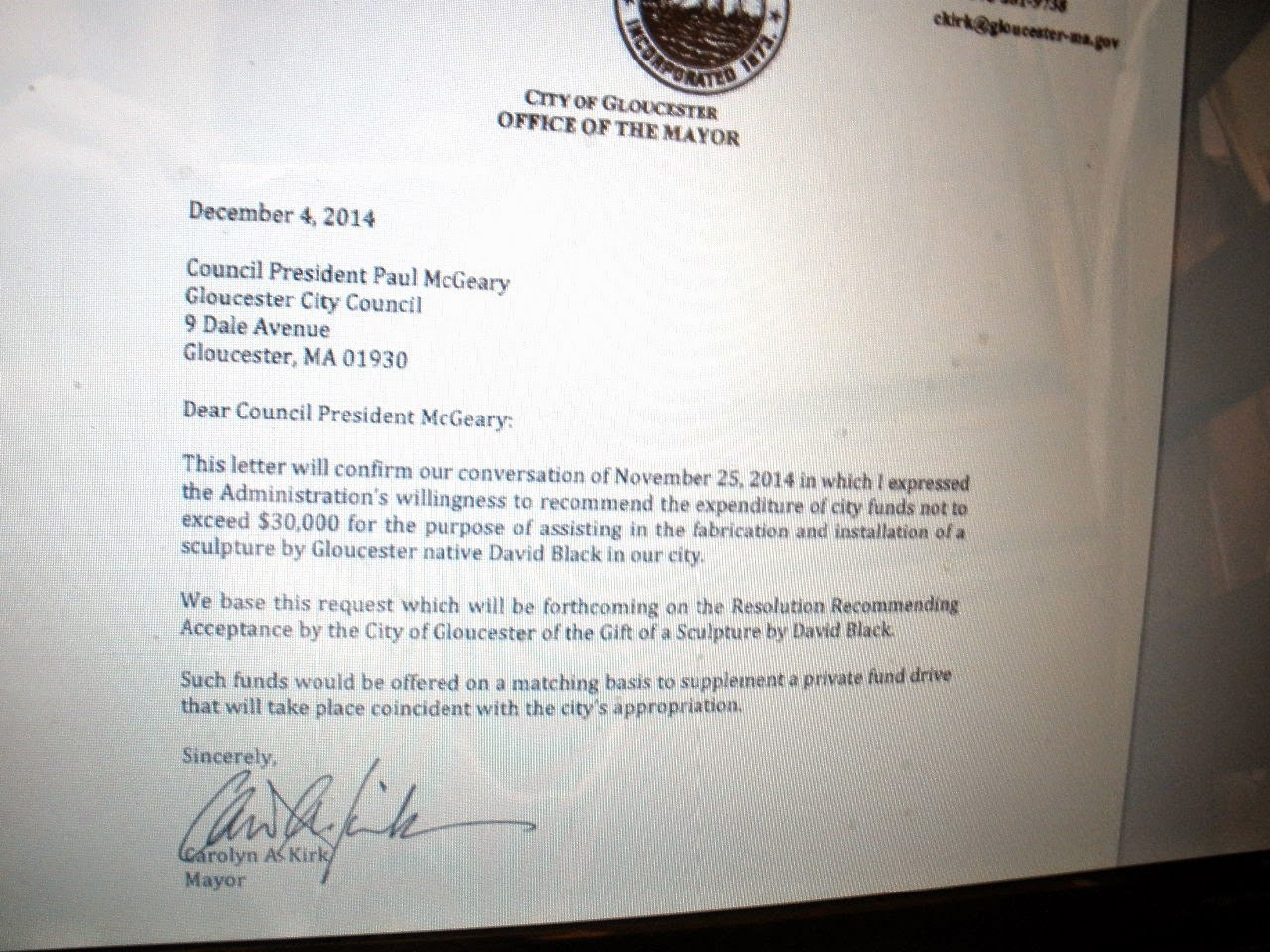
In early December, then-Mayor Kirk asked the City Council to recommend spending $30,000 in support of a gift of a sculpture……. 


(as long as a private fundraising effort provides at least that amount,)

….because the Gloucester Committee for the Arts recommended that the City accept the gift:

“…subject to
1- private fundraising to provide for all projected costs, as outlined above (fabrication, site work, maintenance fund for the future.)
2- the opportunity for public comment * on the proposal ………”