Tourism Can Not Make For an Economic Plan

OLYMPUS DIGITAL CAMERA

by Mike Cook


If I were not working this summer in Provincetown, I, after reading Peter Anastas’s most recent contribution to “Enduring Gloucester”, (read it here,)  would be at the forefront of a draft “Peter for Mayor” movement.

Now, that news might not thrill or excite Peter. But the issues he spelled out in his recent essay, and the way in which he proposed they be addressed, was in, many ways, a manifesto of what is needed, not just for Gloucester but for many other seaport and fishing communities around the country who are seeing their economies devastated by burdensome federal regulations, and the very things that made them such authentic and unique places threatened as some in positions of power chase what Peter called the “chimera” of tourism and the illusion of a sustainable “visitor based” economy.

The morning Peter’s essay was posted, I received a news story in my inbox about a survey conducted by the National Low Income Housing Coalition documenting the hourly wage needed to rent a two bedroom apartment in the various fifty states.

In Massachusetts, in order to be able to just afford a two bedroom apartment, a person needs to be earning just under $25 an hour. That is more than three times both the federal and state minimum wage.

As Gloucester’s fishing industry, and other industries associated with it decline, there are a lot of eggs being put into the tourism and hospitality baskets  and the belief that high end, boutique hotels, marinas filled with luxury yachts, and a harbor rung by chic, over priced restaurants,  coupled with once working class neighborhoods like Fort Square and “Portagee” Hill being transformed into “Louisburg Square by the Sea” and “Beacon Hill by the Bay” respectively, lie at the heart of Gloucester’s salvation and renaissance.

Well, folks, let me tell you. It ain’t so.

I, by choice, have chosen to work in the hospitality/tourism industry these last seventeen summers because doing so earned me enough money to save several thousand dollars each summer so that I could spend the winters exploring Costa Rica and its Central American neighbors. I worked in coastal towns from Provincetown at the tip of Cape Cod to Camden on the Penobscot Bay in Maine.

To be sure, in July and August, I often made much more than twenty five dollars an hour but such earnings were, truly, limited between, in Gloucester, Fiesta at the end of June and Labor Day. In the weeks and months before and after that time span, there were days when going home with tips that did not even meet the state’s minimum wage for the hours you worked were not uncommon.

In short, tourism in coastal New England is very much a seasonal industry and in no way provides an individual, never mind a family, the $25 an hour
wage  year round that individual or family needs just to rent a two bedroom apartment – never mind cover life’s  other expenses like transportation, food, and health care.

In addition, the industry is notorious for not only low wages but also minimal to no benefits, long hours, and very little concern for the well being of its employees.

In the off season, many industry workers, from Provincetown to the Penobscot, either migrate somewhere to follow yet another tourist season in another milieu, or they hunker down to a long winter struggling to pay their bills while living off their summer savings and a meager unemployment.

It is, except perhaps in July and August, as we say in the gay community, “not pretty”.

All this is not say tourism and hospitality and some gentrification  do not have key roles to play in a community like Gloucester’s economy. They do. But neither can they be the  mainstays of such a community’s economic base. Anyone who thinks they can is either living in a fool’s paradise, or one of the lucky few who stand to make a killing in a trend that from Provincetown to the Penobscot has greatly enriched a select few at the expense of the hard working many.

So, Peter thank your lucky stars I am marooned at Land’s End this summer, otherwise – well, Mayor Anastas, I think it has a nice ring to it.


Mike Cook

Mike Cook  is a long time liberal and gay rights activist who saw the uniqueness of Gloucester from the first moment he drove over the bridge during his move from Cambridge to Cape Ann in 1991 to run NUVA’s AIDS education and services programs.


“While I appreciate Mike Cook’s suggestion about a mayoral candidacy on my part, I’m a writer not a politician.  My job is to raise the issues and hopefully encourage a community-wide discussion about what we are looking for in a new mayor and what the city’s future will be.”

Peter Anastas

Gloucester for Gloucester

What I’m Looking for in Gloucester’s Next Mayor

by Peter Anastas

Slide 1

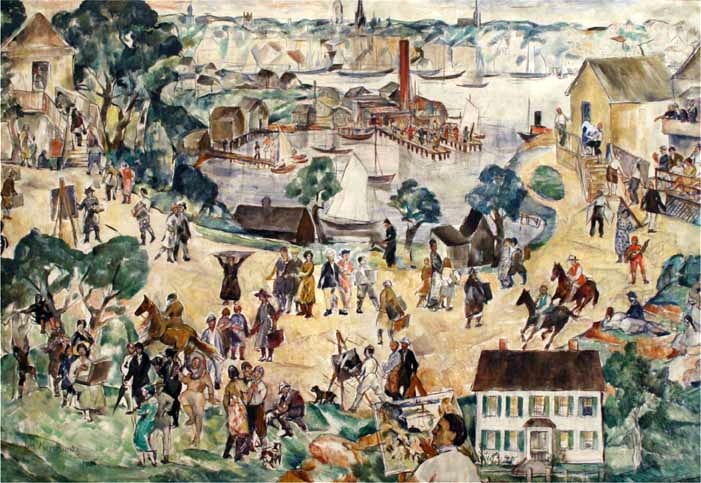
Gloucester Humoresque ~1920 William Meyerowitz (1887-1981) Cape Ann Museum

” First, I want a mayor who understands that communities exist primarily for those who live in them, not for transient visitors, or developers who wish to exploit their resources: a mayor who believes that Gloucester and its future belong to those of us who live and work here. “

Gloucester is a multi-million dollar public corporation and should be managed as such.  For that reason, I would prefer a return to the city manager-council form of government.   Having a city manager would also depoliticize the role of mayor and eliminate the necessity of hiring an additional administrator, thus saving taxpayers a second layer of salary and benefits.

Since there doesn’t seem to be a current initiative toward changing our form of municipal administration, and such a process, if initiated, would take several years, beginning with the formation of a charter commission, rewriting the city’s charter and holding special elections, we will clearly be facing a regular municipal election next November.  In fact, we already have candidates who are actively running for mayor and city council.

What, then, will I be looking for in Gloucester’s next mayor?

First, I want a mayor who understands that communities exist primarily for those who live in them, not for transient visitors or developers, who wish to exploit their resources: a mayor who believes that Gloucester and its future belong to those of us who live and work here.  To put it bluntly, I want a mayor who will refuse to sell our city out from under us to the highest bidder.  In order to achieve this goal, a mayor should not be influenced by or beholden to special interests but to the citizens themselves.

Gloucester is a community full of imaginative and creative people in all walks of life; people, for example, who have conceived and built businesses that manufacture locally-based products, like the organic fertilizer Neptune’s Harvest, which carry the city’s name and reputation abroad while creating good jobs with benefits for local workers.   An ideal mayor would grasp the value of these indigenous enterprises and work to encourage the development of more of them, rather than seeking to attract out-of-town businesses or entrepreneurs, who have no connection to or understanding of the community.   The mayor I’m looking for would equally support and advocate for the entire city’s locally owned and operated businesses.

Gloucester has one of the highest populations of visual artists.  Inspired by the city’s natural beauty and legendary light, they have created works of art to enhance the lives of those of us who live here as well as art-lovers everywhere.

Our local writers have been a major asset to the community, sharing their knowledge and talent, while bringing honor to the city.

One can say the same for our musicians and all who participate in what is now considered “the creative economy.”

This is equally so for those institutions like the Cape Ann Museum, the Gloucester Lyceum and Sawyer Free Library, the Sargent House Museum, Maritime Gloucester, the Rocky Neck Cultural Center and the North Shore Arts Association—all local, all celebrating local history, local art and local culture.

It should be a major responsibility of our next mayor to recognize and support our creative community and these essential institutions, not as window dressing or tourist attractions, but as valuable components of the city’s living, breathing, cultural, educational and aesthetic fabric, without which the whole life of the community could not exist.

In addition, I want a mayor who will fight to keep Gloucester’s civic center the heart of the community’s governance and municipal life, retaining City Hall as our centrally located administrative facility and preferred public meeting place for all city bodies.  To lose this vital center of the community, or to convert City Hall to non-civic uses, would run counter to the vision of those who created Gloucester and made the city what it is today.

What I am looking for is a mayor who understands that the preservation and enhancement of what we already enjoy here, in terms of our indigenous life and rare natural beauty—what, in effect helps to attract visitors—is more valuable to our culture and economy than cheapening ourselves to attract ephemeral tourism.

We don’t need a Harbor Walk in Gloucester with kiosks that impart trivialized versions of maritime history.  Instead, we need to maintain our working harbor that for centuries has given jobs to residents and brought visitors to experience the real thing and artists to depict it.

With respect to tourism, too many previous city officials have chased the chimera of the “visitor-based economy,” leaving us with a hotel we agreed we needed but not where we wanted it; eviscerating, in the process, an iconic neighborhood and leaving fault lines in the community that could take years to heal.  Tourism has always been a part of the city’s economy, but it should not dominate our future or be allowed to diminish the quality of our daily lives, as it has in so many communities that have ended up as “tourist traps” rather than authentic places to live and work.

Considering the damage left in the wake of the Beauport Hotel controversy, I want a mayor who does not seek to impose his or her will upon the community, but rather one who respects the will of the people, instead of attempting to manufacture consensus or claim it exists when it does not.   A mayor for all the people will not dismiss a neighborhood’s fight to preserve its own culture as NIMBY, nor consider citizens who exercise their right to speak in opposition to projects they feel are inappropriate as “obstructionists.”  Rather, this mayor would listen to their objections and engage them in the kind of productive dialogue that is the cornerstone of our Democracy.

I want a mayor whose first initiative will be to bring the entire community together in a planning process that will help to create a new Master Plan for the city’s orderly growth and development, a plan that will address the crucial questions of where we wish to go as a city and how we intend to get there—a plan that will protect our neighborhoods and historic  properties—our “sacred places”—and that will designate where it will be appropriate to locate new developments and where such projects will not be allowed.  At the very core of such a plan should be a vision of Gloucester’s future that incorporates the very best of our past.

Finally, I seek a mayor who will advocate for “Gloucester for Gloucester people,” who will lead us toward a more vital sense of community in education, civic responsibilities, historical awareness, fiscal prudence, economic and social self-sufficiency, and love of place.  I want a mayor who will wake up each morning, as so many of us still do, taking delight in how wondrously green our trees are after such a harsh winter, how extraordinarily beautiful our harbor continues to be, how important our fishermen are to us, even as they struggle to keep their industry and our maritime culture alive, how incredible our people are in all they represent and do, and how blessed we are to live in one of the most estimable places in the world.  For without this connection to place—what Charles Olson called “the geography of our being”—there is no point in wanting to be mayor or carrying out the work necessary to sustain a vital community.

 Peter at Museum (1)    

Peter Anastas, editorial director of Enduring Gloucester,  is a Gloucester native and writer.  His most recent book, A Walker in the City: Elegy for Gloucester, is a selection from columns that were published in the Gloucester Daily Times.


Fifty years of ACTION

Fifty Years of Community Action in Gloucester: 1965-2015

Peter Anastas
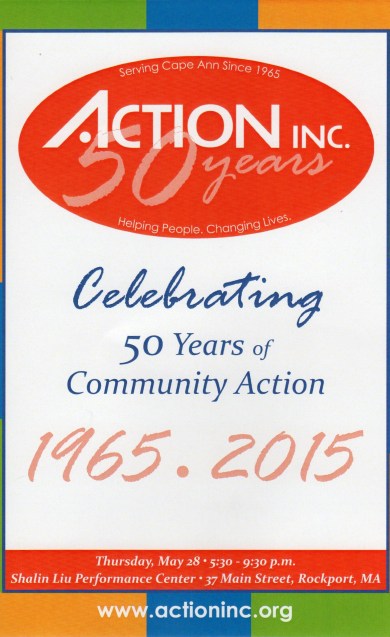
Action celebrates (2)

On Thursday, May 28, 2015, Gloucester’s antipoverty agency, Action, Inc., celebrated its 50th anniversary with a reception and concert at The Shalin Liu Performance Center in Rockport.  The following remembrance of my three decades of involvement in Community Action for Cape Ann is dedicated to the caring professionalism of those with whom I worked and to the extraordinary people we served, all of whom enriched my life immeasurably.
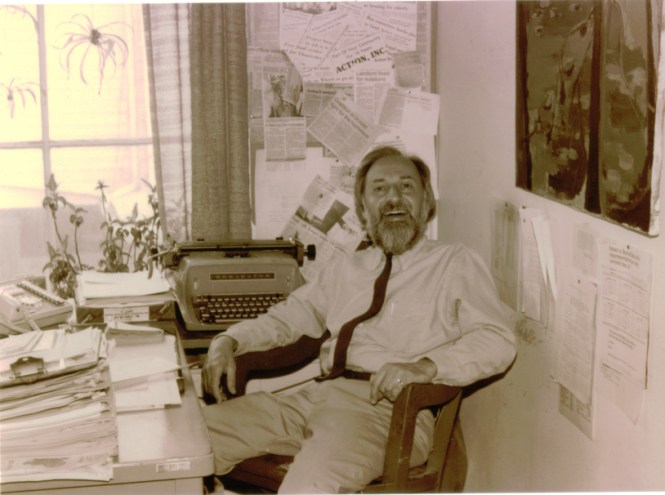
Peter at Action

Peter Anastas, 1992, at his desk in Action’s original offices at 24 Elm Street, formerly the Red Cross, and before that, the Rogers School, where his mother attended first and second grades.


“Social work, especially as we practiced it at Action, can be seen as opposition to arbitrary power.”

When I was growing up in Gloucester during the Second World War, I experienced how some of my schoolmates lived in sprawling, rickety tenements, crowded in with parents and grandparents, as the war raged and most of the men were overseas.  But it wasn’t until I went to work at Action, in 1972, that I began to understand the true extent of poverty on Cape Ann.  It was then that I was forced to confront the potential consequences of this condition in terms of family violence, substance abuse, alcoholism and crime. That was the real poverty, I came to understand, not simply the fact that people didn’t have money or jobs or decent places to live.

At first the agency didn’t want to give me the job I’d applied for as “home visitor” in a new research and demonstration program called “Home Start.” The purpose of the program was to explore a home-based option for the popular and extremely effective Head Start preschool programs, which soon became the signature of President Lyndon B. Johnson’s War on Poverty. The Home Start concept considered mothers to be the primary educators of their children. What the agency hoped to create for the group of mothers who entered the program (there would eventually be a total of 300 families enrolled) with their one- to five-year old children was a base of support that centered on the home visitor, a teacher and resource person, who would visit the family on a regular basis, providing the mother with educational materials, personal and moral support, and parenting skills enhancement. The program would also provide mental health counseling and family therapy for those who needed it, comprehensive health care, nutritional information, further education for mothers who wanted to re-enter the workforce (many were on public assistance), and a steady, helpful, friendly presence in the person of the home visitor for normally young single mothers, who had become isolated as a result of poverty, abuse and abandonment. Most of our client families lived in public housing, which, if more affordable to them, presented its own problems, not the least of which was isolation, as poverty became increasingly ghettoized in the nation.

In reviewing my application for the position of home visitor, the board of directors found me suitable for the agency; but some members had reservations about hiring a newly single man, who would be entering the homes of what they considered to be vulnerable young women. Wouldn’t it be better, they suggested, for me to be given the job of family services coordinator, along with an office of my own, where the mothers could come to me if they wished? On the surface it seemed a good compromise, though I had no experience in social work or counseling and the position paid less than that of a home visitor.

As it turned out, the job was a good fit. I loved the program and its new staff which, like me, had been recruited entirely from the community, based largely on our knowledge of Gloucester and our experiences living in the city. For several months we were trained together in the principles of child development and early childhood education by professionals from the Harvard School of Education and other institutions that offered cutting edge approaches to working with parents and children. I was also given training in basic counseling and social work skills. Later, as I took on more responsibilities in the agency, Action paid for social work courses and professional enhancement seminars at the Boston University School of Social work and at several area hospitals that offered intensive training in mental health issues.

As much as I provided referrals and direct services for the families in our program, including visits to the pediatrician for families who had no means of transportation, I also began to advocate for them if they faced eviction, residential health code problems, or issues with public housing. I learned how to deal with the welfare and Social Security systems, with health insurance providers, skills I had never previously developed but that were indispensable in helping us to educate our clients , about the services and benefits they were entitled to by law and by virtue of their poverty.

There were those in Gloucester who felt threatened by Action or who disliked the agency’s presence in the community.  Some city councilors ludicrously insisted that there had been no poverty in Gloucester until the federal government declared its presence here under the guise of Community Action.

Although we received a significant portion of our funding from the federal Office of Economic Opportunity, which was established in 1964 to administer the nation’s antipoverty programs, we were a private, non-profit educational and charitable organization, with its own board of directors, consisting equally of members from the public sector, the private sector, and clients of the agency. This tripartite structure was unique to the War on Poverty, allowing maximum feasible participation of the poor in the agency’s program planning and the implementation of its policies. Local agencies were not only allowed but encouraged to set their own agendas, so long as they came under the broad mission of Community Action, which was to advocate on behalf of the poor, while addressing the root causes of poverty in each community.  (Enzo Giambanco, father of Gloucester mayor Sefatia Romeo Theken, was president of Action’s board of directors during my early years in the agency, and our mayor has long been one of the agency’s staunchest supporters.)

It was a noble mission, one that has scarcely wavered in the half century of Action’s life and the life of Community Action in the nation at large, even in the face of obdurate legislators and the onslaught of an anti-government ideology under Ronald Reagan and his heirs in the Tea Party.  And while it may have seemed ironic that an antiwar activist like me, who had railed against the federal government for taking our country into an illegal and unnecessary war in Vietnam, was working in an agency much of whose funding came from that same government, those of us who became soldiers in the war to liberate the poor (another irony) felt that our mission was part of what government should be doing, in its role as intervener of last resort.

I went to work each day feeling good about my job and about myself.  I believed in what I was doing. I could see daily the results of working with mothers and their children, to empower the mother and help the child with learning and socialization skills. There were mothers who entered the Home Start program as high school drop-outs on welfare. Today they are teachers with master’s degrees or practicing law. Some started their own businesses. Others became social workers themselves or directors of early childhood education programs. And in almost every case, their kids finished school and went on to college. Some who were three years old when we started the program in 1972 are married today and raising their own families. None of them live in poverty.

Statistics exist to prove the value of Head Start and the Home Start option, which is still offered by many Head Start programs. It’s an option that I still feel good about having helped to create, along with fifteen other R&D programs nationwide (for several years, ABT Associates in Cambridge conducted an in-depth evaluation of Home Start, which showed the program to have been both highly beneficial educationally as well as extremely cost-effective). Our philosophy was to offer our families the broadest range of options so that they could choose freely among those which they most needed to free themselves from the privations of the welfare system. Instead of perpetuating poverty, our mission was to end it. Though we were ultimately unable to eliminate poverty, and there is a higher percentage of impoverishment in the United States today than when Lyndon Johnson declared war on it, and less money or will to impact it, those of us who spent our lives in Community Action continue to believe that the successes of the program have outweighed its failures.
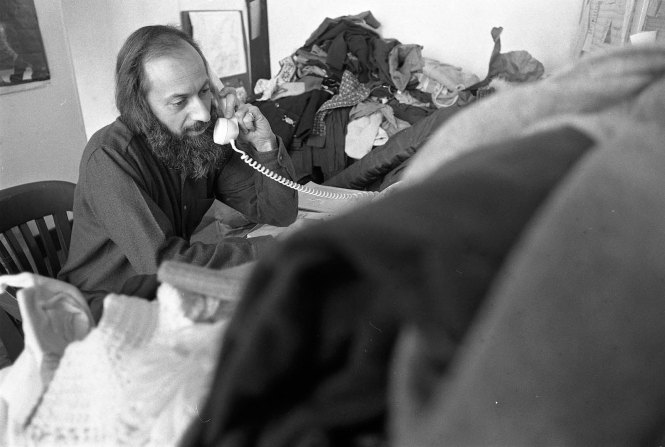
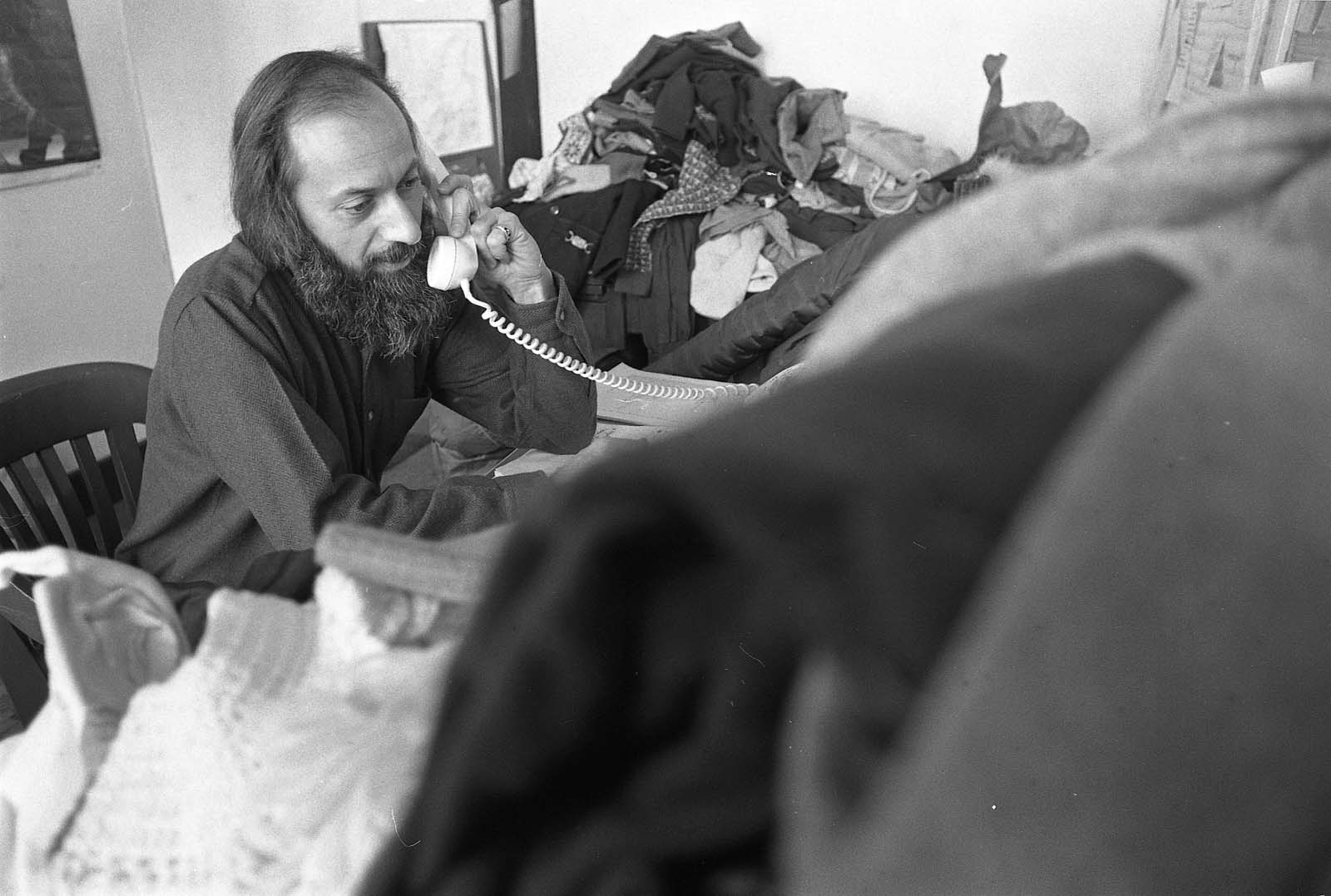
Peter Anastas, Action, Inc.  12-23-76.  photo by Charles A. Lowe, Gloucester Daily Times.

Peter Anastas, running Action’s Christmas drive, December 23, 1976. Photo by Charles A. Lowe, Gloucester Daily Times.

2.

From 1966 until 2002, the agency’s central offices were located in a former elementary school building on 24 Elm Street, in the heart of Gloucester’s downtown. Built in 1820, the yellow clapboarded building with Italianate windows had housed the Red Cross after it was closed as the Rogers School.  For years all the agency’s program managers and staff, including the receptionists, secretaries, bookkeepers and community organizers, were crowded into tiny offices on both floors of the old schoolhouse, separated sometimes only by room dividers that were hung from the ceiling by wire. Before the advent of the Xerox machine we used fluid duplicators; and before the agency could afford electric typewriters or computers, before even the advent of the PC, we wrote our reports and composed our correspondence on antique manual typewriters. The furniture consisted of dark green military surplus desks, file cabinets and metal desk chairs of nondescript design. We liked to joke that it had come to us directly from the Philippines, though in actuality we often requisitioned what we needed from the Portsmouth Naval Base. The city of Gloucester had given us the building for one dollar a year in rent, though its upkeep was the agency’s responsibility.

A Neighborhood Youth Corps program provided after school tutoring and part-time work for teens. Jobs 70, a precursor of the CETA employment and training programs, helped out-of-work parents. Head Start was run out of the agency with classrooms in several local church basements, while Home Start was housed in the former Gloucester Daily Times building on Center Street, where we had offices on the first floor and a day care center with state-of-the art educational materials on the top floor. The agency provided legal assistance to low-income families and home care for elders. There was family day care for working parents with children and an after-school program for school-age kids. Soon after I came to work, in 1972, a volunteer program for retired elders called RSVP would begin, along with programs providing fuel assistance and weatherization to eligible individuals and families. For several years, after the demise of the Gloucester Auto Bus Company, the agency also ran the city’s public transportation system, calling into service a fleet of military buses that we painted blue.

But at the heart of the agency were the community development, community organization and advocacy programs. L. Denton Crews was executive director when I first came to work. An ordained minister with years of experience in the civil rights movement, Denton was a bright, articulate manager, who guided Action from its inception, primarily as the grantee for Head Start, to its expansion into a multi-purpose agency addressing a range of community needs. When Denton left to become an aide to Rep. Michael Harrington, community organizer Bill Rochford took over as executive director. Bill had a degree in social work from Boston College, and under his direction Action moved in two significant directions, community development and advocacy. Community Development director Dr. Carmine Gorga made a study of the fishing industry with a view to enhancing its sustainability as the city’s primary industry. He and the community organizers helped to create the United Fishermen’s Wives, a group of women who became fierce advocates for the industry. Carmine also started the first worker-owned business in Gloucester, a small company that made finger foods and other hors d’oeuvres from fresh fish that were flash frozen and distributed nation-wide.  It was at this time that the agency also took over from the city the former Gloucester High School and Central Grammar building on Dale Avenue to develop, under the direction of architect Kirk Noyes, the community’s first private elderly housing complex. Many natives soon found themselves living in rooms in which they’d gone to school.

3.

What was equally important for me and for our mission was what went on behind the doors in that little yellow schoolhouse on Elm Street.  The staff met often to critique our programs and to speak about the grants we wanted to apply for. We discussed questions of poverty and how we hoped to address them. All of our program activities were driven by a rigorous planning process, the main document for which was an annual work plan, which laid out exactly what we hoped to achieve with each initiative, how we meant to reach our goals, and how much money and staff participation were required to fulfill our objectives.

After three and a half years in the Home Start program, Bill Rochford asked me to join the advocacy and housing program, which I would later come to direct.  Settling into my new assignment, I began to participate in the daily excitement of an agency that had survived an attempt by the Nixon administration to destroy Community Action. Conservative Republicans, adamantly opposed to the War on Poverty, managed in 1973 to force the closing of the Office of Economic Opportunity. However, after friends of Community Action in both parties lobbied strenuously for its continuation, the opponents succeeded only in transferring the Community Action programs to a newly created Community Services Administration, thus preserving pretty much intact the nation’s flagship antipoverty programs like Head Start, along with agencies like Action that administered them.

Just when we most needed an attorney to help clients file answers to eviction complaints or to appeal welfare terminations, Marshall Williams arrived.  Newly retired to Rockport and anxious to serve, Marshall was in his early sixties, a native of Maryland and a Princeton graduate with a law degree from the University of Virginia. He’d served in the military for more than thirty years, first as a fighter pilot and later as a member of the Judge Advocate General’s Corps.  Marshall prepared his cases so meticulously and argued them so relentlessly that he became the bane of existence of the administrative law judges in Boston, who heard disability appeals, the welfare claims adjudicators, or the magistrates, who sat on eviction cases. More than once he was commended from the bench for his preparation. He won thousands of dollars in retroactive benefits for elderly clients, who’d had their Social Security Disability applications denied or their payments terminated, or for mothers on welfare, who had wrongfully lost their benefits. Always fair and never judgmental, Marshall took on seemingly intractable cases for disabled veterans, who often addressed him as “Sir,” some even saluting when they appeared at his office door, though Marshall, who had held the rank of Colonel, was the most deferential of people and had long laid aside his military career. He represented women, who had been beaten mercilessly by drug-dealing boyfriends, and little old ladies, who were being evicted from their apartments because they had to make a choice between paying for food and rent or heating oil during severe winters.

I did the intake on all the cases before we were able to hire our intake counselor and associate advocate, Mary Adams. Those who needed legal help were directed to Marshall whose office was next to mine. The rest Mary and I worked with personally, though there were many cases we all shared. Mary and I would find families money for back rent while Marshall drafted their responses to summary complaints for eviction, defending them himself, or preparing them to mount their own defenses with the help of legal services attorneys. Part of our philosophy included a strong self-help provision. Wherever possible we encouraged and trained our clients to represent themselves, arguing their own cases. Most found the experience empowering, even exhilarating, especially if they prevailed, which they often did.

Marshall Williams retired from Action in 1988, succeeded by Ken Riaf, a young attorney, who had also been a fisherman. Ken brought a unique perspective to the agency, as we became more deeply involved with the fishing community, which was then entering the protracted crisis it still faces today, with declining stocks and restrictive federal regulations that have reduced Gloucester’s fleet to a shadow of its former greatness. We were also forced to address the deepening housing crisis in the state, as real estate prices rose and landlords were converting apartments into condos, thereby squeezing out low-income families and elders and adding to a burgeoning homeless population. In response to homelessness, the agency joined with Ron Morin, executive director of NUVA, the city’s primary substance abuse and mental health agency, and Bill Dugan, executive director of the Gloucester Housing Authority, to create the Cape Ann Coalition for Housing and the Homeless. Ron, Bill and I produced a study of the problem, “Homelessness on Cape Ann,” with recommendations for its solution. Two new homeless shelters were created, NUVA’s for women with children and Action’s for homeless men and women eighteen and over. A number of programs, including counseling, case management and substance abuse treatment, were also initiated to impact the problem, along with recommendations for the creation of more affordable housing. Of great help to us in this effort was Dr. Damon Cummings, a naval architect and former MIT professor, who had become one of Gloucester’s leading advocates for the fishing industry and a fighter to preserve the city’s working waterfront.

4.

My last ten years at the agency were years of intense lobbying for funds to implement these housing programs. In concert with the responsibilities of managing an expanded advocacy and housing program and seeing clients on a daily basis, I also directed the Action Homeless Shelter. We spent hours at city council and planning meetings advocating for the new shelters, and for a soup kitchen and food pantry, which were independently created. New funding regulations from Congress required the adoption of more stringent and sophisticated planning and management tools and an automated information storage and retrieval system, as the agency entered the digital age and we all had to learn how to use computers.

Losses in the fishing industry and fluctuations in the economy made it clear to us that Action had to expand our employment and training programs to include those who had been downsized out of jobs or who had lost them in industrial consolidations and takeovers. With the support of Varian, a high-tech consortium whose corporate offices were located in Gloucester, the agency opened a computer training center in downtown Gloucester, at Brown’s Mall, the former site of the city’s largest department store. Expanding our client base, we trained homeless men and women at the site along with those who had once had well-paying jobs. We added training for medical secretaries and hospital workers, while offering GED and Adult Basic Education courses, including ESL classes for new Hispanic and Brazilian immigrants.

By 2001, after I had been at the agency for 29 years, the need for our services continued to increase. And the landscape of human services had been shifting for some time, confronted, as we were, with the rising animosity of conservative politicians and once compassionate voters toward service agencies and the people we were committed to helping. Constrained also by shrinking government funds and more onerous reporting requirements, agencies found themselves in competition for charitable dollars as a way of ensuring their independence.

Under Bill Rochford’s leadership, and with the experience, political savvy, and commitment of Action’s veteran program directors — Deputy Director Tim Riley in administration, Gerry Anne Brown at Homecare, Ronna Resnick in Employment and Training, and Elliott Jacobson at Energy — Action charted a cautious passage through these perilous waters, arriving not only safely to port in new headquarters in the former Woolworth building on Main Street, but winning support and funding for innovative youth programs and housing for AIDS patients, while creating public-private partnerships that offered new employment and training opportunities for local residents.

Retiring on November 15, 2002, I left Action with a sense of new expectations but also with great sadness. I knew I was bidding farewell to an important part of my life.  When Bill Rochford retired in 2009, Tim Riley took over as executive director, and has continued to lead the agency in ever creative directions.

Social work, especially as we practiced it at Action, can be seen as opposition to arbitrary power.  It seemed a fitting segue for me, as a former anti-war activist in the 1960s, to have become a social worker in the 1970s; indeed, natural to my temperament and my politics. Just as I had helped to organize opposition to the war in Southeast Asia, I helped to bring neighbors together to encourage local government to remedy conditions in their neighborhoods, or mothers on welfare to fight iniquities in the welfare system. Our agency empowered citizens to speak out against slum landlords, who withheld heat, or to demand that the city’s regulatory agencies enforce health code regulations that made their apartments unsafe for themselves and their children. We provided legal assistance, family counseling and one-on-one assistance to help low-income families overcome poverty. We created education and training programs for fishermen, who were driven from the sea by onerous government regulations; and we helped displaced workers retrain in digital technologies.

Our work was motivated by the need for social change and for self-determination on the part of those who felt powerless — to help the disenfranchised find good jobs and obtain affordable housing, and to make government accountable to those whom it was designated to serve; indeed to change repressive legislation where we could. We didn’t win every battle, and not everyone we tried to help overcame poverty; but we forged partnerships between citizens and interest groups and we brought the public and private sectors together in many instances to build new housing or rehabilitate older stock. We helped formerly homeless men and women create their own businesses and we provided services to elders that allowed them to remain in their own homes with dignity rather than entering nursing homes. Perhaps our greatest success was in helping those we worked with to understand the systems in which their lives were enmeshed — how those systems operated, what their internal dynamics were, and how to overcome the enmeshment. And in the process, we ourselves felt a greater liberation.

Peter Anastas is the editorial director of Enduring Gloucester.
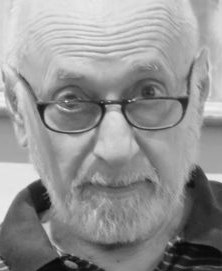
Kenneth Warren (1952-2015)

Kenneth Warren.1

Kenneth Warren by James O-Bryan


Kenneth Warren (1952-2015)


Kenneth Warren was a rare public leader who knew when/how to push the envelope of public discourse, to seek and participate in deep, locally defined values in an era nonetheless when the local is being uprooted in favor of global development. He was a man dedicated to finding the deeper currents that might drive a community, and thus a world, forward into a brighter and more humane future of greater good.

–Daniel Slife


The sudden death of writer, critic, editor, Jungian scholar and astrologist Kenneth Warren has a special poignancy for his friends in Gloucester.  Many of us first met Ken when he and Fred Whitehead were editing The Whole Song, the landmark volume of selected poetry by Lynn native and Gloucester poet laureate Vincent Ferrini, published in 2004 by the University of Illinois Press.

Ken visited Gloucester frequently, reading at the Writers Center, where he was an advisory board member, and The Book Store.

Ken was that rarest of critics, who could write about avant-garde poetry, Punk Rock, the interface of astrology and the arts, and the complexities of Jungian analysis, often in the same review.  To read his 2012 collection of essays, Captain Poetry’s Sucker Punch: A Guide to the Homeric Punkhole, 1980-2012, is to gain a sense of one of the most original and capacious minds of our time.

Yet Ken was far from self-involved.  As editor and publisher of House Organ, he sought out a stunning array of contributors, from former Black Mountain, Beat and New American poets to those who  were young and unpublished, to review some of the most exciting experimental writing in print and to submit their own poetry and prose.  To experience a single issue of the magazine that appeared in one’s mail box punctually each season, in its idiosyncratic 4 by 11 inch format, was to have an entrée into some of the most exciting work in poetry and personal and critical prose of our time.

Speaking for myself, it was a privilege to be asked by Ken to submit work he’d heard about, or to have been sent a series of remarkable collections of poetry or prose to review.  His editorial style was supportive rather than intrusive.  He let his writers be themselves, and in the process I believe we all flourished.  In asking me to contribute to House Organ, Ken literally gave me a second career as a critic and essayist, one that I would not have enjoyed without Ken.  Ken also published Enduring Gloucester poet Melissa de Haan Cummings.

Ken and I did not meet frequently, but when we did the talk was incandescent—largely from Ken’s side.   I would always leave with lists of books to read or new writers to discover.  With Ken one did not need to take a post-graduate course in innovative writing; one simply listened to him talk or read his extraordinary study of the work and thought of Ferrini and Olson that had been appearing serially in House Organ.

In writing to tell me about Ken’s death, our mutual friend, novelist and critic Bob Buckeye, described the void created by his leaving:

“We have suffered a great loss.  Something has stopped and I don’t know if it can start up again.”

Andre Spears, a member of the board of directors of the Gloucester Writers Center, wrote:

“Ken Warren departed the planet on Thursday (May 21), as the sun was transiting from Taurus into Gemini. He was, and remains, a beautiful spirit, particularly open to the world, and he leaves behind, in the singular poetic community he made cohere, a terrible absence that only time, sooner or later, will erase.”

Ken loved Gloucester.  He knew the city from his deep immersion in the poetry of Olson and Ferrini and from his own time spent here absorbing the look and feel of the place, its history.  Ken understood community and how it could be uprooted by gentrification and unwarranted development.  As his friend Daniel Slife wrote:  “He was a man dedicated to finding the deeper currents that might drive a community, and thus a world, forward into a brighter and more humane future of greater good.”

Goodbye, Ken.  We will miss you sorely.

Peter Anastas


How Much Fluoridation is Safe?

The Gloucester vote on fluoridation is on Tuesday November 5th

A “Yes” vote will continue the practice of adding sodium fluoride to our drinking water. 

A “No” vote will stop the practice of fluoridation in Gloucester.


0.7 Parts per Million

On April 27,2015, The United States Health and Human Services issued a proclamation that the “optimal” concentration of fluoride in drinking water should now be 0.7 parts per million (ppm), versus the old “optimal” range of 0.7ppm to 1.2ppm, which has been in place since 1962.  The very next day, The Massachusetts Health and Human Services dutifully passed this on to each and every Board of Health in Massachusetts.  On May 7, The Gloucester Board of Health followed suit by voting in favor of this proclamation.  Rockport will no doubt chime in any day now.

Interestingly enough, none of these bodies has provided any scientific evidence whatsoever that 0.7 ppm is a valid number. One must then surmise it has been randomly chosen.  Even worse, none offered a clear definition of “optimal”, but perhaps we can fill in the blanks for them here.

The EPA tells us that concentrations of natural fluorides above 4ppm can cause severe skeletal fluorosis….Bone spurs, deformed limbs, calcified ligaments, conditions often mistaken for plain old severe, crippling, arthritis.  So clearly, we’d better have less than 4ppm in our water.  The EPA’s administration has no comment on less severe forms of fluorosis which can result from lower fluoride concentrations.

It was determined (as a guess) during the 1940s that, with water fluoridated with synthetic fluorides to 1.0 ppm, only about 10% of our population would develop fluorosis.  Today, at 1.0 ppm the CDC tells us that 41% of US teens 12-14 years old have fluorosis, which shows up first as permanent white or brown spots on their teeth.  So clearly, something is going wrong.  Apparently, “optimal” must be lower than 1.0 ppm.  The EPA Union of Scientists and Engineers tells us that zero parts per million would be their best guess. They have been at odds with their administration over this for over 2 decades now.

There are quite a few “maybes” with all of this.  Maybe fewer teens will have fluorosis over the next few decades with the new improved “optimal” concentration, but without any study to back it up, it’s pretty hard to judge the impact, if any.  Maybe they will need to drop the concentration to 0.3 ppm someday, which is about what nature gives us in the first place.  Maybe we’d be better off just stopping the practice altogether.


mike foleyMichael Foley is a retired mechanical engineer who resides in Gloucester, MA.   He is a songwriter, musician and stone sculptor, and has been heavily involved in the effort to stop the practice of  fluoridation on Cape Ann, MA.

Thoughts on National Elections… and Gloucester

“…over the course of the last quarter century, I have seen first hand the strength, commitment, and activism of a whole lot of progressive and liberal Cape Anners and their ability to have a real positive impact on the community’s direction – even when some among the ‘powers that be’ dismissed them as quixotic, resistant to change, or just plain stupid.”
I not only see that strength, commitment, and activism as  being able to temper the impact of gentrification, and the negative socio-economic, cultural, and political changes it have on communities like Gloucester, I see it, if people are willing to organize, as having an impact far beyond Cape Ann as next year’s presidential campaign begins to heat up in earnest in the fall.”  
Mike Cook
Hotel1

Luxury hotel now under construction on Pavilion Beach in the Fort neighborhood of Gloucester

As what is a temporary, summer absence from Gloucester moves forward, I find myself telling friends and customers I wait on here in Provincetown about the uniqueness of “Fish City” and Cape Ann. I find myself extoling the virtues of  their physical beauty and the spirit of genuine community that still exists there and, sadly, has largely disappeared here – as the cost of housing has increasingly made Provincetown and other communities on the Outer Cape places where only the well to do can afford to live with any sense of security and dignity.At a recent dinner party at the home of an elderly lesbian friend on a very fixed income, who has to sell the house she has loved and owned in Provincetown for forty years because of  skyrocketing property values, and the sky rocketing property taxes that come with them, I shared my concerns about the fishing industry being in decline in Gloucester, and the gentrification pressures that have so fundamentally changed Provincetown bearing down on “Fish City”.
The consensus at the table was community activists in Gloucester, be they gay or straight, should look carefully at what has happened to places like Provincetown and Nantucket, I added Newburyport and Portsmouth, NH, to the list, so that the negative aspects of gentrification run amok do not damage and change Gloucester in the ways they have  in the coastal communities named above.That prompted a  spirited discussion about the housing situation here and the fact many tourism industry related businesses can find no summer help because the wages in those businesses do not even come close to covering the cost of housing, especially seasonal housing, here on the Outer Cape.Provincetown long timers like my elderly  friend take a kind of ironic pleasure in seeing the very people who so fundamentally changed the nature of this community over the last twenty years with their gentrification run amok now petulantly whining about the lack of “good help” available to them.But in that ironic pleasure taking lies a deep sadness because they know it means the very things and people that once made this little fishing village at “Land’s End” so special, whether it was the hard scrabble Portuguese and Irish fishermen, the artists and writers, like Edward Hopper and Eugene O’Neill, and the  bohemian gay community, who have all called this place home; or the art galleries, funky shops, and eclectic restaurants that made this town so unique, are rapidly being replaced by a high end retail and real estate market that feels more like some kind of master planned community and open air mall designed to cater primarily to well heeled tourists and the fortunate few who can afford to live here – a kind of “Chestnut Hill Comes to the Cape” phenomenon.People laughed when I quipped,  yet again, “Hey, let’s face it, Provincetown now celebrates ‘tolerance and diversity’ so long as it is rich, gay, and overwhelmingly white”. But it was laughter tinged with both great irony and lament.But back to Gloucester.I don’t think the fate that has befallen the communities named above is inevitable for “Fish Town”.I say that because, over the course of the last quarter century, I have seen first hand the strength, commitment, and activism of a whole lot of progressive and liberal Cape Anners and their ability to have a real positive impact on the community’s direction – even when some among the “powers that be” dismissed them as quixotic, resistant to change, or just plain stupid.

I not only see that strength, commitment, and activism as  being able to temper the impact of gentrification, and the negative socio-economic, cultural, and political changes it have on communities like Gloucester, I see it, if people are willing to organize, as having an impact far beyond Cape Ann as next year’s presidential campaign begins to heat up in earnest in the fall.

With Elizabeth Warren having taken herself out of contention for the Democratic nomination, the party establishment seems more confident than ever that Hillary Clinton’s nomination, dare I say coronation, is all but inevitable.

I, as a liberal Democrat, find the idea of Hillary being “inevitable” disturbing for several reasons.

The first is because the idea of “inevitability”, and the Democratic party’s establishment pushing it as the only option liberal Democrats, or liberals and progressives not formally registered as Democrats, have  is not only arrogant and offensive, it is patently “un-small d democratic”.

I know many liberal and progressive people on Cape Ann, some of them no doubt readers of “Enduring Gloucester”, who share that view.

I would like to share my reasons why I believe liberal and progressive Cape Anners have an obligation not to simply accept the Democratic party establishment’s meme, whether it is at the city, state, or national level, that Hillary Clinton’s nomination and ascension to the presidency is inevitable.

I am deeply skeptical that Hillary Clinton’s recent so called move to the “left” is genuine. I am deeply skeptical that Hillary’s new found concerns about wealth and income inequality and the “mass incarceration” of young men of color are sincere.
I, sadly, believe they are little more than cynically calculated political moves to try and placate the more liberal base of the Democratic party in the primaries so that she can secure the nomination. Once the nomination is hers, she will then move back to the center where will she will, overall, do the bidding of the big money interests who have been so important to her and  her husband’s political careers, not to mention their rapid accumulation of great wealth in the years following the Clintons’ tenure in the White House.
If Mrs. Clinton is genuinely concerned and appalled by the “mass incarceration” of young men of color, as she claimed in a speech at Columbia University in the wake of the Baltimore riots, why is he not criticizing the crime bill her husband and Newt Gingrich co-authored and signed into law that put the policy of “mass incarceration” into practice?
If Mrs. Clinton is so concerned about wealth and income inequality, why is she not questioning the wisdom of her husband and his treasury secretary, Robert Rubin’s decisions to loosen and do away with many of the financial regulations Franklin Delano Roosevelt put in place after the Great Depression? Perhaps it is because they did so at the request of the same big money and banking interests that played no small role in bringing the recent “Great Recession” down around our heads in exchange for hefty campaign contributions and lucrative speaking engagement fees – for both former President and Mrs. Clinton.
But for me, the biggest reason why Hillary Clinton should not be considered “inevitable” as the Democratic nominee remains her vote to allow GW Bush, and the neo-cons who dominated his administration to launch their invasion of Iraq in the wake of 9-11.  I say that because there was ample evidence available to anyone paying attention that the intelligence they were using to rationalize the rush to war was questionable at best, and patently dishonest at worst.
That evidence prompted Democratic Senators Ted Kennedy, Robert Byrd, and Russ Feingold, then Republican Senator Lincoln Chafee, and Congressmen Bernie Sanders and Barney Frank, to name just a few, to vote “no” on the question of invading Iraq.
But not Hillary.
She was one of those politicians who behaved more like a  profile in political expediency than a  profile in political courage.
As economist Paul Krugman wrote in a recent NY Times op-ed piece, “There was a definite climate of fear among politicians and pundits in 2002 and 2003, one in which criticizing the push for war looked very much like a career killer”.
Given Hillary’s long standing  presidential aspirations, it is now abundantly clear she decided to put those aspirations ahead of the lives and well being of hundreds of thousands of brave American men and women in uniform, and the hundreds of thousands of innocent Iraqi civilians who were killed or displaced in a war that never should have been waged in the first place.
What else can explain her unwillingness to stand with Ted, Robert, Lincoln, Barney, and Bernie?
Yes sir. I believe the strong liberal and progressive community in Gloucester can not only stem the rising tide of greed driven gentrification that has transformed communities like Provincetown, Newburyport, and Nantucket into little more than potential locales for an updated remake of “The Stepford Wives”. I believe it can send the Democratic party a message that, given her record, Hillary Clinton has no business, no business at all, being considered “inevitable” as the Democratic nominee.
One way for the liberal and progressive community on Cape Ann to do that is to support Bernie Sanders in his bid for the nomination – no matter how “quixotic” or “just plain stupid” the Democratic “powers that be”, be they at the city, state, or national level tell us doing so may be.
Mike Cook, Truro and Gloucester
Mike CookMike Cook  is a long time liberal and gay rights activist who saw the uniqueness of Gloucester from the first moment he drove over the bridge during his move from Cambridge to Cape Ann in 1991 to run NUVA’s AIDS education and services programs.

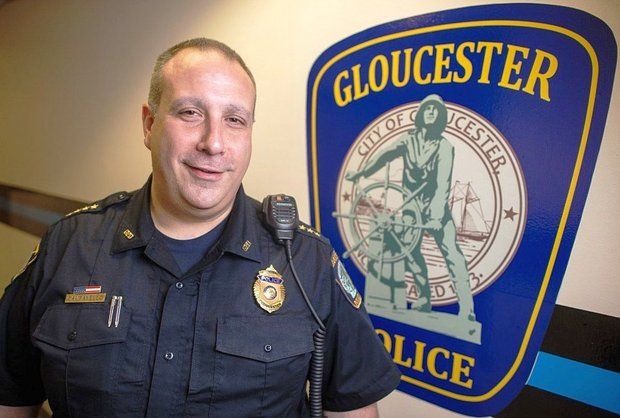
Chief Campanello Breaks Down Barriers

campanello

Kudos for Gloucester Police Chief’s Innovative Drug Policy

by Mike Cook

As a follow up to my  essay chronicling the history of the heroin/prescription opioid epidemic in Gloucester, I wanted to praise Gloucester Chief of Police Leonard Campanello for his courageous decision to offer active addicts an opportunity to avoid all but inevitable arrest if they come forward, surrender whatever drugs they may possess, and agree to enter a treatment program.

One can be sure Chief Campanello will take some heat for his willingness to treat addiction as the public health problem that it is from some on the Gloucester police department, along with  more than a few uninformed and judgmental “civilians” in the city.

In fact, that criticism is already brewing on the city’s right wing version of “Enduring Gloucester”. One blog site is already full of posts criticizing Chief Campanello, with dire predictions  the chief’s actions  will result in a tsunami of addicts coming down the line and over the bridge to “beat the rap” and take advantage of Gloucester’s sucker mentality – thanks to all of us “mentally defective liberals”  who become fabulously wealthy running social service empires paid for by all the aggrieved right wing, law abiding, over taxed, Christian residents of Cape Ann.

But let’s get back to Chief Campanello’s policy shift. This is a major positive step in the right direction for several reasons.

Perhaps the biggest positive is that Chief Campanello’s initiative will, finally, help  break down the barriers that long prevented social service and substance abuse treatment providers in the city from working with law enforcement in ways that actually might have helped address drug addiction in a truly substantive manner.

I recall, at the height of the anxiety in the early 1990’s over how HIV might impact the city’s needle using population, their sex partners, and, sadly, their children, doing a presentation at City Hall on needle exchange programs and why the Massachusetts Department of Public Health saw Gloucester, given its long entrenched heroin problem, as a prime candidate city for a pilot needle exchange program.

Law enforcement at that time was one of the most vociferous opponents of even discussing such a public health intervention and, given its influence in the city, it quickly became clear there was no point in trying to educate the community about such programs.

It mattered little such programs were highly structured. Needles, for example, were all numerically coded. Addicts didn’t just come in with any needle to exchange for another. They had to enroll, anonymously, in the program. They then would receive a numerically coded clean needle. When they brought that needle back, they would receive another coded, clean needle.

There were “no questions asked”, but participants in such programs were constantly provided with information and encouragement regarding treatment and the various services available to them when they decided they had had enough and wanted to get clean.

Needle exchange programs also provided epidemiologists with the opportunity to get solid data on the extent to which blood borne pathogens like HIV and Hepatitis B & C were present in injection drug using populations because the returned needles were sent to the state laboratory so that antibody screenings could be done on any residual blood  in the returned syringes.

But it was the “bridge to treatment” the exchange programs  created in communities like Provincetown and Springfield that proved so beneficial in getting other wise out of treatment addicts connected to services that ultimately led many into treatment.

Unfortunately, community resistance to a Gloucester needle exchange program two decades ago, with much of that resistance coming from law enforcement at the time, meant Gloucester missed out on the benefits such programs were shown to provide.

Chief Campanello’s proposal has all the potential of needle exchange programs of twenty years ago to serve as a genuine “bridge to treatment” for addicts looking to break the mad cycle of their addiction.

It represents a major shift in thinking on the part of law enforcement and will allow the police department and service providers to begin to work more closely together and build the kind of trust between the two systems that was missing for far too long.

Chief Campanello is to be commended for this bold shift in direction and, if the need arises, members of the community who understand the old punitive, enforcement approach to addiction has failed will need to raise their voices in support of the Chief because there are still those others who refuse to accept that addiction is a disease that requires a public health approach to addressing it – not just the “lock’em up and throw away the key” attitude that was prevalent in Gloucester for far too long.

mike_cook

Mike Cook  is a long time liberal and gay rights activist who saw the uniqueness of Gloucester from the first moment he drove over the bridge during his move from Cambridge to Cape Ann in 1991 to run NUVA’s AIDS education and services programs.

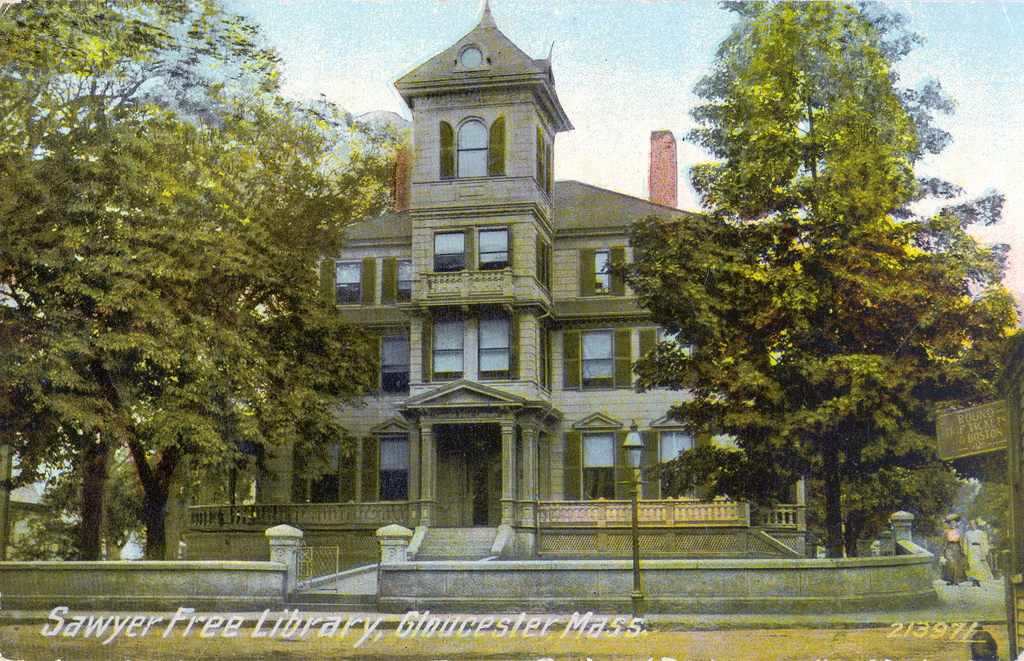
Sawyer Free Library in Transition

The Sawyer Free Library in Transition

Peter Anastas

 Sawyer_old (1)

“There’s a lot of passion in the community for the library! It’s not that we want to keep the place stagnant for nostalgic reasons. We are open to change; we just expect responsible, thoughtful change.  Isn’t this why we hire professional librarians? “

–A Gloucester citizen, May 6, 2015


Herman Melville’s Ishmael claimed that a whale ship was his Yale College and his Harvard.  I like to tell people that I graduated from the Sawyer Free Library.  While I’ve enjoyed the privilege of an excellent formal education in the Gloucester Public Schools and in college, I’ve always believed that my real education began at the age of six when I first starting visiting my local library. Browsing in the stacks, I discovered many of the books that have meant the most to me, books that changed my life.

I was lucky.  My Aunt Helene Lasley, a beloved elementary school teacher in Gloucester, taught me to read at an early age and helped me to obtain my first library card. This began a lifelong passion for reading and a thirst for knowledge, which the library has amply satisfied during the seventy-one years I’ve proudly held that library card.

But now our beloved public library is about to undergo a radical, though arguably necessary, transition.  Not only are many of the books that have meant so much to thousands of library patrons potentially going to be weeded—the technical term is “deaccessioned”—the physical spaces of the building itself are slated for change.  Many of these physical changes have been mandated by the Americans with Disabilities Act and state and local building and fire codes.  But the changes to the library’s historic collection of books (videos and music will also be considered), though undertaken partially to accommodate the planned physical modifications and lack of shelf space, are potentially more worrisome, especially to patrons like me who have benefited from the riches of the current collection.

On Tuesday, May 5, a sizable group of loyal patrons attended a meeting of the library’s Board of Directors to listen to the library director Deborah Kelsey and Board members describe the menu of changes that the library’s new strategic plan outlines   

(You may read the Strategic Plan for 2014-9019 HERE   and the Action Plan for 2015 HERE.)


and to express our concerns and offer our views about what many of us felt could be the deleterious impact of these changes on the library, and the community itself, as we have known and loved it.

At the core of our concern is the concept of “Gloucester Picks,” which asks library patrons to choose books, videos and other materials that are meaningful to them and which they believe should be preserved.  Patrons are asked to place these items in bins that have been provided, from which library staff will assemble a separate collection to be created and maintained as containing the community’s “favorites.”   While on its face this concept may appear appealing, in my view it seems an arbitrary way to manage part of Gloucester’s literary heritage, leading to a potential “dumbing down” of both the collection and the library through popularization.   Libraries should indeed be places where a wide segment of the community can find or discover books and other materials that appeal to them, but they must also be resources where the world’s literary, historical, aesthetic, and philosophical heritage can be at the fingertips of patrons, either through the maintenance of a rigorously curated core collection or access to books and research materials through the inter-library loan system.

The particular concern of many of us who question the Gloucester Picks program is that once the core collection has been picked through, what will happen to those books which were not chosen?  Will they be weeded out; and, if not, who among the library staff will winnow them yet again, using which guidelines?  Indeed, when you consider that only a small segment of the community may come into the library to choose their favorites, will this not lead to a much skewed result?  In the end, will many important works of fiction or non-fiction, books that have potential appeal to browsers, who often discover them serendipitously, simply disappear?

Those of us who attended the board meeting on May 5 also learned that the guiding principles of deaccession are set forth in CREW: A Weeding Manual for Modern Libraries, a publication from the University of Texas that is meant to guide public libraries in the maintenance of their collections and the management of both their resources and their physical spaces.  A reading of the CREW manual makes clear that one of its guiding tenets is a vision of the public library as a neat, clean physically attractive facility to draw patrons and make them feel comfortable once inside the doors.   To achieve this goal, the manual suggests that there be no books that appear worn or with torn or dirty bindings or covers in the collection, as this would tend to discourage patrons.  It seems almost as if a sanitized collection or environment is the principal goal of attraction rather than the library’s intellectual or aesthetic resources.   A further reading of the manual discloses a certain political correctness in its guidelines for the addition or retention of books.  One particularly glaring example is the suggestion that to maintain historical validity in one’s collection “dated” books, for example, those about the now-defunct Soviet Union, might be discarded.

Nobody argues against judicious weeding.  All libraries must make room for newly acquired books and discard those which have been damaged or are no longer relevant to the permanent collection, such as multiple copies of popular bestsellers, when a single copy in good condition can be retained for patrons who might wish to read or re-read it.  However, a core collection of the world’s classics must be retained, updated and maintained by the addition of fresh editions or translations, along with the acquisition of newly published books.

One could—and will—argue that the Internet provides wide access to materials that would not only supplement but surpass physical resources in politics or history, and that by providing access to the Internet in the libraries themselves, patrons are not only assisted but encouraged to explore beyond the limits of the actual collection.  Nevertheless, there is no substitute for the physical book that can be taken home, read deeply and carefully, and more easily be quoted from by the student or patron than by the use of a digital text, which for many patrons is hard on the eyes and impermanent.

The May 5 meeting was, in my view, extremely productive, not only in demystifying the library’s approach to the coming changes, but also in helping the patrons who attended to gain a sense of what the director and the Board’s approach will be to implementing and managing these changes.   Considering that the details involved in the transition have not been widely reported or understood, the patrons expressed a desire for transparency, about which the Board readily agreed.  Furthermore, patrons were asked by the Board and director not only for their input into the evolving process of transition, but also their active involvement, thus enhancing an important public trust, which I believe has been missing from much of the current public discourse in Gloucester.

If you care about our public library, especially in this important time of transition, please visit it, learn about the coming changes and how they may affect you, and take a proactive role.  It is the only way we can guarantee that the Sawyer Free Library will continue to be a valuable and important part of our community—not to speak of the crucial need to be engaged citizens ourselves.


Gloucester’s Drug Problem is Not a New One

There has been a lot of coverage in the media recently, at the local, state, and national levels,  about the scourge of opiate addiction-whether the addiction is to a street drug like heroin or to highly addictive, opioid based prescription pain medications.

This scourge is taking a devastating toll on individuals, families, and entire communities. Sadly, Gloucester has not been spared that harsh reality.

What is interesting about Gloucester is the problem is not a new one in “Fishtown”. In fact, the problem in Gloucester dates back almost fifty years to the late 1960’s, when Gloucester’s working class young men who could not avoid the draft began coming home from Vietnam – more than a few of them addicted to heroin.

I recall sitting in my office at NUVA at 100 Main Street in the mid 1990’s with a recovering heroin addict who was enrolling in a program to assist him with obtaining his medications for his HIV-Disease.

It was he who educated me about the role his generation’s service in Vietnam played in the entrenchment of the heroin problem on the “island”.

The son of a hard working, Italian fishing family, this man did not have the means to go to college. He had planned to make his living from the sea, as his father and grandfather had done before him, but the draft and Vietnam intervened in devastating and life changing ways.

Talking with this man, who died not too long thereafter as a result of complications from AIDS, opened my eyes as a social services professional as to just how interwoven seemingly unrelated events and issues really are.

In his own journey of recovery, he had begun to make the connections between his life growing up in Gloucester, where life as the son of a fisherman was good but often hard. Harvesting the sea was, he made clear to me, a tough way to make a living and, as a result, many who do so work hard and play hard.

He came to see the inter-generational pattern of substance abuse within his own family, where the men of the older generations often drank hard after a tough stint fishing at sea. His family, he assured me, was not at all atypical.

When he was drafted and sent to Vietnam, substance use/abuse was a common phenomenon and the availability of cheap heroin became just another way to cope with the high stress of war – much the same way throwing back a few too many beers or shots at Mitch’s or the old Depot was a way for the older generations to deal with the stresses of working the sea.

That opiate based “coping” mechanism, as dangerous and deceitful as it was, followed more than a few of those young soldiers home to Gloucester.

In the 1980’s, a young Gloucester Times reporter named Sean Murphy, working with long time Gloucester educator and community activist Phil Salzman, pulled the curtain back and exposed the extent of the heroin problem in “Fishtown”.

The breaking of that story resulted in the CBS news magazine “Sixty Minutes” coming over the bridge to do a feature on the heroin scourge in “America’s Oldest Sea Port”.

The demographics of the problem were both astounding and frightening.

Gloucester, at that time, had, per capita, more heroin addicts within its city limits than the Big Apple.

The community did not respond positively to either the story or the reality and scope of the problem . In fact, many people were angry at Murphy and Salzman for what, in their eyes, was nothing but an attempt to damage Gloucester’s reputation by bringing the problem to light.

At the same time Gloucester’s heroin problem was making both local and national news, another scourge was emerging in America. I am, of course, referring to the AIDS epidemic.

Initially and erroneously written off as a “gay plague”, it was becoming clear by the time the story about Gloucester’s heroin problem broke that AIDS was caused by a blood borne pathogen impacting a growing number of people far beyond the gay community – including injection drug users.

By the late 1980’s, several gay men in Gloucester who were living with AIDS began working with their friends and the growing number of holistic health practicioners making Cape Ann their home to form what became known as the North Shore AIDS Health Project.

At the same time, Ron Morin, who was the executive director of NUVA,  then the city’s leading out patient substance abuse treatment provider, recognized that HIV/AIDS was likely to become an issue in Gloucester among the city’s local injection drug using population and their sexual partners.

NUVA worked with the Massachusetts Department of Public Health to obtain funding for an HIV counseling and testing program, case management services, and a prevention, education, and outreach program.

Shortly thereafter, the VNA of the North Shore received funding for a home care program for people living with HIV, and a variety of other social service agencies on Cape Ann, including  Child Development Programs, Addison Gilbert Hospital, Action, Inc., representatives from the school department, to name just a few, joined with NUVA and the Health Project to form the Cape Ann AIDS Task Force. The task force provided a forum for providers to better coordinate and plan  responses to the myriad needs emerging from a public health crisis that linked the diseases of addiction and HIV in a truly unsettling way.

Within a few short years, that kind of cooperation and collaboration had Gloucester being held up as an example by the state for other communities in Massachusetts to emulate.

That kind of collaboration and cooperation also played no small part in preventing the dual epidemics of HIV and addiction from having a much bigger impact  on Gloucester than they have.

Today, the dual scourges of HIV and opiate addiction are still very much with us, both in Gloucester and across the country.

As a result, there are those who argue funding for programs like those in Gloucester was and is a waste of tax payers’ money.

To those people I pose this question, “Can you imagine what Gloucester might look like today if those programs and the services they provided had not been funded and never existed, as the dual crises of AIDS and addiction came together in a truly unholy alliance on the ‘island'”.

It is a relevant question for several reasons, not the least of which is the fact Gov. Charlie Baker has proposed cutting funding for programs that serve people struggling with both HIV and addiction while at the same time claiming the opioid addiction epidemic is one of his top priorities.

But beyond that, there is growing evidence  the escalating opioid addiction crisis has reignited the spread of HIV among people trapped in the addiction cycle to a degree not seen in more than a decade.

Nowhere is that more evident than in a rural Indiana county reeling from opioid addiction. Since December, public health officials have diagnosed over 80 people in the county as HIV positive. All of them are either opioid addicts who also share needles or the sex partners of people who do.

That explosion of new HIV diagnoses in so short a time has local, state, and federal public health authorities scrambling to intervene on numerous fronts.

The federal Centers for Disease Control are concerned the strains of virus being spread are likely to be ones that have been exposed to anti-retroviral medications for years, increasing the likelihood those strains within a new host will be resistant to the medications that slowed the progression of the disease in the original host.

Translation, the opioid epidemic could well be  fueling a new epidemic of HIV infections already resistant to medications that have been such godsends to so many for so long.

I share all this because people should know about Gloucester’s leadership role through the years  in the fight against two of the most serious public health crises the US has ever faced and continues to face today.

That leadership role is something to be heralded and respected, not belittled by those who think trying to address these types of issues is a waste of time and money or somehow an affront to Gloucester’s reputation and the reputations of its residents.

Nothing, absolutely nothing, could be further from the truth.


Mike Cook, Gloucester and Provincetown


Mike Cook  is a long time liberal and gay rights activist who saw the uniqueness of Gloucester from the first moment he drove over the bridge during his move from Cambridge to Cape Ann in 1991 to run NUVA’s AIDS education and services programs.

mike_cook

To the City’s Youth

An Open letter
To the Youth of the City: A Call to Action

Ernest Morin


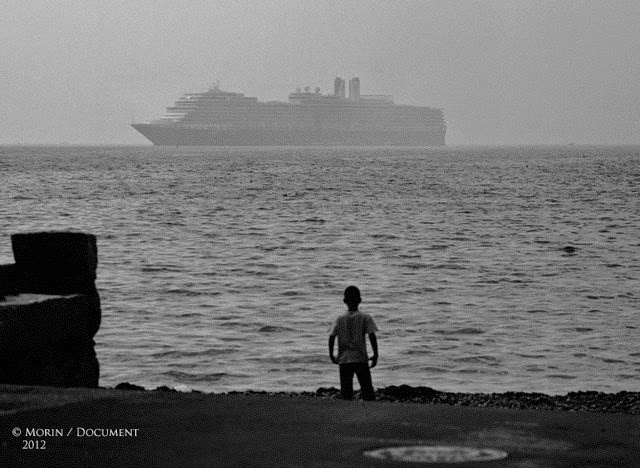
I took this photograph a few years ago now and it has haunted me since, for it poses a real question about what is actually going on here and seems far more fitting of a Third World port.

Gloucester will be 400 years old, in just nine more years 2023…

What will Gloucester be about in nine more years? Do you wonder as well?

What will you want to celebrate about your city at her 400th birthday ?

I was 13 years old during the city’s 350th celebration and it was a very different city.

No one asked me back then what I wanted the city to be 50 years hence.  If they had, I’m not sure that I would have of thought it would be so different at all at 13, or that being a wharf rat with your Gramps, wouldn’t exist as a common situation.

But the city of my youth is now gone and here we are at a crossroads.  There is no point in lamenting. The question is where do we go from here and how can we best arrive there?

What makes this place special?  How do we hold onto that while also moving forward?

What are the top five or so attributes that make Gloucester unique and a place you want to live in?  Can you hold onto them through the changes you see coming?

What do you see that needs to change to make a life here for your generation to be able to stay here and thrive?

Would you take a moment and consider what you would want as 20- to 30-year-olds living in your city today for work, living places, cultural activity, places to play, and access to shoreline and Dogtown?  How do you define a quality life?  What would it look like and how would it feel?

Because I truly wonder about the type of future we’re building for this child in the photograph, or for the children your generation will raise here.

If you don’t envision it, you won’t stand a chance of making it happen.

If you don’t act on your vision you will lose your city as you know it.

Much like my generation now has.  Despite strong late attempts to forestall the Government’s regulatory schemes, we have suffered the loss of industry along with the proud independent way of life that was prevalent for over 380 years.  How much longer are we to be the “Fighting Fisherman” of Gloucester?

This place has always stood for something.  Since its very inception it’s had strong values for both hard work and hard living and been a vibrant city with entrepreneurial spirit and a lot of creative energies.

Maintaining a city requires dedication and effort and you have to start now as a generation, you can’t leave it to others. You have to take care of your home, and the city is also your home. Few of my generation did so and we are paying the price now.

Pick up the torch, take control of your future, get involved, define your vision

and then commit to acting on it.  Work to see that your city government is transparent and accountable to you.

But don’t let the lack of vision within the city allow it to be less than it could be or be developed into a city you don’t want to live in or don’t see yourselves fitting into.

Many cities across the nation are facing the same challenges. How we respond to it defines character.

Gloucester as a place has never lacked character.

So what do you want your Gloucester to be?

How can you build a future to be proud about in 2023 in 2073?

You have to figure it out, if you are to stay here so that the city can function as the living organism cities are. The older generations will certainly help you along the way, as that is the Gloucester way.

So I ask you to contribute to this blog.  Write about how you feel.  Join the dialog and start working toward building a consensus on how you can affect the changes you want most and make Gloucester endure as a city that you can build a richer quality life in—one you can feel good about leaving to future generations.

Gloucester should endure as Gloucester

It’s your home.  Only you can take care of her and see to that.


Ernest Morin Is a native of the City and a socially concerned documentary photographer.