Shut Up and Dance

On Saturday, March 26, 2011 my life was transformed when a 6 lb 11 ounce princess joined my world. When the midwife first placed her in my arms, my daughter rested her tiny hand against my left cheek and stared at me with large, dark brown eyes accentuated by strikingly long lashes. Her look was intense and so attentive, qualities that would only grow deeper as the years passed. It has been almost five years since Emerson Belle was born and not a day goes by where I don’t try to live like “Emmy.”

To Emmy, every day is the best day of her life.  Every chocolate milk she tastes is “the most IMG_5886delicious one ever.”  Every dress she owns is, “the most beautiful gown in the world.” Every cartoon on t.v. is “the funniest show she has ever seen.” Emmy feels everything so deeply that something is not merely good, it’s, in her words, “unbelievable.” And the compliments that this kid dishes out can make you feel like a million bucks. She won’t just say you’re pretty, she will tell you that you’re the most gorgeous woman in the entire Universe.  But times are not always glorious on Granite Street.

When Emmy is upset, “it’s the worst day of her life.”  This comes with slamming doors and loud outbursts.  But her tantrums are short-lived and she emerges from her bedroom apologetic and loving. Emmy has taught me the value of pure and raw emotion. Being vulnerable enough to share your true feelings with another is a beautiful thing, yet it becomes so rare as we age.  Society tells us that mature adults must control their emotions. Adults must not get angry and certainly must not cry.  Adults that do such things are labeled as “emotional” and deemed weak.  Label me then. To share your genuine self makes an ordinary person extraordinary. Through Emmy, I have learned that feeling things so deeply simply means that you are living completely.

Not long after Emmy’s first birthday, I discovered that I was once again pregnant.  Thrilled, I did what most newly pregnant women do, I hit the computer. I found out my estimated due date and started scanning websites for potential names. All the while, I did not feel quite right. Looking back, all the signs of a miscarriage were there, but my optimistic nature refused to pay them any mind.  I was convinced that I was having a baby boy and that Blake Ashton would make his arrival on or around December 9th.  I had no reason to think otherwise because I had such a textbook pregnancy with Emmy. But this time, I was not so lucky. Just shy of two months, I would experience the loss that accompanies a miscarriage.

I was left devastated and full of questions. How could this happen? I thought I was healthy.  Did this mean I will have problems having another child? I wanted Emmy to have a sibling. I felt tremendous guilt and deep sadness all at the same time. Did I have the right to grieve this much when others have carried and lost a baby much later in pregnancy? And what about those women who have faced multiple miscarriages. I felt so alone and it was not until I met with a midwife of Essex County that my healing process would take shape. She listened to all of my fears and questions. She let me cry long and hard and then provided invaluable comfort and guidance with her words. A baby is real the second a woman finds out she is pregnant. Give yourself permission to grieve the loss of your baby.  Your body was healthy enough to reject an unhealthy pregnancy. You will conceive again when you are ready.  It took this loss for me to learn that it’s okay for adults to talk with other adults about what hurts and to even share fears. There are some great listeners out there. Through opening up to others, I learned that I was not alone. In fact, it is estimated that as many as 1 in 4 women experience this same heartache. Time and a shocking surprise helped me to move forward but not forget. Every first week in December I think about the loss I suffered but also pay respect to the Universe for the surprise she brought me.

Not long after that meeting with the midwife, Brandon and I learned that I was once again pregnant. This time around I felt awful, but a good kind of awful. My morning sickness lasted for six months and it didn’t stop at noon. I was nauseous 24 hours a day and I couldn’t be happier about it! It meant that my body was doing what it should, creating a new life. And what a life it would create.

Emerson Belle and Ryder Kai Sanborn

Emerson Belle and Ryder Kai Lewis

Ryder Kai entered the world on Saturday, January 26, 2013.  This 6 lbs and 6 ounce baby boy with blonde hair and blue eyes would grow into the coolest kid I have ever met. While I know my daughter like the back of my hand, my son still surprises me constantly. A boy who marches to the beat of his own drum. A very large drum. Ryder knows what he wants and he doesn’t care if everyone else wants something different. No one is changing Ryder’s mind when he sets it on something. He is that comfortable in his own skin. You can imagine the struggles we have faced when trying to convince him to eat something besides butternut squash or chocolate. Through Ryder I have learned how important it is to stay true to your genuine self and that spontaneity can be invigorating after adhering to a schedule dominated by routine.

Ryder is a fearless child who takes risks and has the scars on his chin to prove it. He lives hard and sleeps the same way. In a few weeks, Ryder will turn 3, yet he still naps like a infant, for 2-3 hours every day. Ryd savors mischief and easily finds it countless times in any given day. The kid who appreciates the bad guy. Sher Kan, Scar, and Shredder are among his favorites. My son loves to

Emmy and Ryder Kai Sanborn. Good Harbor Beach .

Emmy and Ryder Kai Lewis
Good Harbor Beach .

swear and I know his favorite song is Shut Up and Dance just because he thinks he’s getting away with saying something inappropriate. Ryder has taught me not to take life too seriously. He has

helped me worry less and lighten up, even when times are tough.  He has shown our family the importance of humor; no one can make us belly laugh quite like Ryder Kai.

It is true that there is no gift like a new baby. But the best gift of all are the lessons these babies teach us as they grow up.


lori sanbornLori Sanborn was born in Gloucester and returned to live permanently in our seaside community three years ago. She has been a public educator for 12 years, teaching eighth graders.  Lori is most proud of her role as mother to her children, Emerson and Ryder.

Toward a Vision for the City’s Future

Peter Anastas

Peter Anastas and Sefatia Romeo Theken. Gloucester Mayoral Inaugration. January 1, 2016.

Peter Anastas and Sefatia Romeo Theken.
Gloucester Mayoral Inaugration.
January 1, 2016.

The American Heritage Dictionary defines inauguration as “to induct into office by a formal ceremony” or “to cause to begin, to dedicate, to consecrate.”  Our Gloucester High School Latin teachers, Josephine P. Ray and Vincent Elmer, would have taken pains to point out the Latin root “augurare,” “to presage, to foretell, to look ahead.”  This gave us the Italian “augurio,” “to wish, to be of good omen, to give one’s best wishes,” as in auguri.   So, in effect, we are here today not only to celebrate the induction of Sefatia Romeo Theken into her first full term as mayor of Gloucester, we are also gathered to look ahead, to consecrate ourselves and the city we love to a future of good omen, to wish our new mayor and her administration, our new city council and school committee—the community itself— tanti auguri for the New Year ahead and for our hoped for future.

Before I speak of that bright future we richly deserve, I’d like to look back for a moment, to pay tribute to those who have made it possible, particularly our parents and grandparents; and for Sefatia, her mother and father, Rosalia and Enzo Giambanco.  Enzo Giambanco, was president of the Board of Directors at Action, Inc., Gloucester’s antipoverty agency, when I first went to work there in 1972.  I found in Enzo not only a mentor but a person of deep compassion for the low-income families we were serving, including out-of-work fishermen, children who needed a pre-school education their parents could not afford, people who did not have health insurance, and elders who were torn between paying rent and utility bills and eating.  As an immigrant he understood what it felt like to be on the outside, whether you spoke a different language or your customs differed from those of the community.   Along with Executive Director Bill Rochford, Enzo helped to steer the agency through some of its most challenging times, while never abandoning those who depended on our services, whether it was help with fuel bills, home care, or after-school care for the children of working mothers.

I will never forget the time when, after the construction of the O’Maley middle school, the city was deciding what to do with the suddenly empty Central Grammar School with its beautiful WPA murals, where many of our parents had gone to high school and my generation had spent our 7th and 8th grade years.   Action proposed a reuse of the stately building for apartments for the elderly; but there were questions about the need for such housing and the ability of an agency like Action, which had never done bricks and mortar, to undertake such a project.  A public hearing was to be held at City Hall to determine which direction the city would move, and it was necessary to show support for the agency’s plan to create quality housing for our senior citizens.   Enzo told Bill not to worry.  And that night he arrived with 500 elders and their families, filling city hall auditorium and convincing the council of public support for the project.   The present Central Grammar Apartments not only met a crucial need in the city, it became a pioneer project in the regional movement to adapt former schools into much needed housing.

Sefatia learned these innovative and caring ways from the cradle.  She has spent her entire life helping the people of Gloucester as one of the city’s hardest working councilors and as a health care advocate and human services liaison at Addison Gilbert Hospital.  During her tenure as interim mayor, Sefatia again demonstrated her skills at reaching out to citizens across the entire social and economic spectrum of the city, listening compassionately to their concerns, hearing the ideas they shared, and making decisions in a thoughtful and intelligent manner, while relating to all of us in an open, caring and humane way.  When you are hugged by Sefatia you know she means it.

Sefatia has roots that run deeply into the community and its history.  She’s gone to school and raised a family here.  She can walk down the street and recognize everyone she meets.   She can tell you who lived on which street, who worked where, and what happened to them if they got laid off.  This kind of knowledge that comes from growing up in one place and feeling it in your blood is indispensable when it comes to understanding the needs of neighborhoods and their residents, no matter which part of the city they are located in.  A public official who is not deeply in touch with the culture of the community he or she hopes to serve is already at a disadvantage.

We need a mayor who encourages our community to engage in the kind of constructive dialogue that is the cornerstone of our democracy, a mayor who will lead us toward a more vital sense of community in education, civic responsibilities, historical awareness, fiscal prudence, economic and social self-sufficiency, and love of place.  We particularly need a mayor who understands and cares deeply about our fishing industry and the importance of our working waterfront and the innovative Blue Economy.  I believe that Sefatia will be this kind of mayor.   Just as we need to move ahead, we equally need to maintain our roots as a city of families and neighborhoods, where everyone has a place at the table and everyone’s  voice is listened to and respected.  There is a yearning all over America for the sense of place, of shared history, of belonging, that we in Gloucester are fortunate to enjoy in abundance.

Gloucester has always been a city of ethnic and economic diversity—and this diversity has been one of our greatest strengths.  We live in dangerous times and we need the peace and comfort that a community like ours affords.  It is through community that we learn together and grow together, as we help our children and grandchildren grow and prosper.

Concretely we must address the following issues as we look to the city’s future.

–We need a revised and updated Master Plan so we can best manage growth and know where to build and what to preserve.

–We must recommit ourselves to our embattled fishing industry and to the working waterfront itself, continuing our long history of adaption to change with the creation of a strong seafood innovation cluster economy and the good local jobs it will create.   We are also a great boating community and while we work to make our waterfront a more welcoming place for recreational boaters, we must not forget the importance of community boating facilities for our own residents.

–We will need to look newly at tourism and its impact on the city’s life and infrastructure (traffic, the harbor, the beaches, the land), with a special conversation about the role of a smart,  human-scale visitor-based economy, the corner stone of which should be cultural and eco-tourism.

–We need to continue our conversation around the development of a public arts policy with added discussion on the place of the arts in local life and the visitor-based sector.  Essential to the future of the city as a magnet for the arts is the development of live-work housing for local artists, who constitute a bridge between the life we all enjoy here and what we want to offer to those we welcome into our community.

–Essential also is an initiative to involve more citizens in public life, volunteering for boards and commissions.  We must especially nurture a new generation of engaged citizens: our democracy will depend on it.

–As for schools, plant is important, but what happens in the classroom is paramount.  We must transcend the tyranny of standardized testing, reasserting the primary role of the imagination, critical thinking and creativity in art, music, drama, science and the humanities.

–We must do everything to keep our city beautiful, not only for those who wish to visit but for those of us who live here year round.  The restoration of Stacy Boulevard, Gloucester’s crown jewel, is long overdue.   Dogtown is our refuge for hiking, cross country skiing, berry picking, and the exploration of nature.  Let us continue to support the work that volunteers are engaged upon in preserving this treasure and keeping Dogtown unspoiled for future generations.

What we especially need, along with careful planning to account for inevitable change, is a land ethic, a way in which we view the land and its uses beyond mere profit-taking and commercial development.  We must build what we need, but we must do it in a way that does not destroy the unique character of neighborhoods or disrupt human and natural ecologies.

We must plan regionally as well as locally, always with a sense of preserving the character and integrity of particular communities; for I believe that only those places which are sensitive to their uniqueness will survive.  Without an informed, coherent and humane vision of ourselves in relation to our environment we will not survive as a community, let alone as a planet or a species.

So as we inaugurate our new mayor and congratulate the city councilors and school committee members we have elected to represent us, let us re-commit ourselves to working together, to building “not only for today alone but for tomorrow as well.” If we expect it of ourselves, those who come after us will thank us for our vision, our imagination, and especially for our commitment.

Thank you e tanti auguri a` tutti for the New Year and for Gloucester’s future.

(This speech was delivered at City Hall, on January 1, 2016, at the inauguration of Sefatia Romeo Theken as Mayor of Gloucester)


Peter at Museum (1)Peter Anastas, EG editorial directoris a Gloucester native and writer. His most recent book, A Walker in the City: Elegy for Gloucester, is a selection from columns that were published in the Gloucester Daily Times.

 

ALL THAT’S LEFT: ANOTHER HOUSE BITES THE DUST

This is all that remains of what was once a nice old house at the Cut

This is all that remains of what was once a nice old house at the Cut

Back in September I wrote “The Value of a House” published in Enduring Gloucester.  At that time word had circulated around the city that two houses on the Boulevard were in danger of being demolished.  News that one of the threatened houses was the Inn at Babson Court caught the attention of the public.  There was an anguished outcry of dismay from a number of people including the Gloucester Historical Commission.

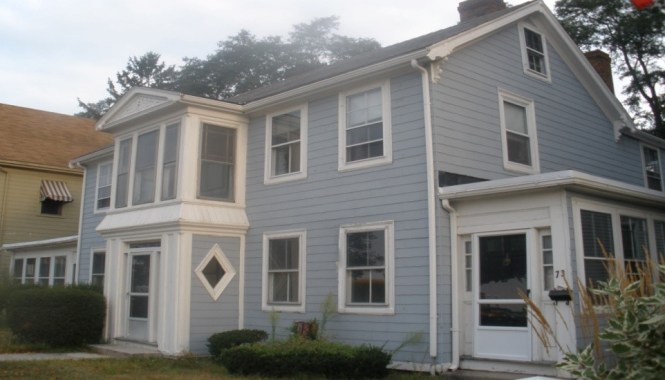
Meanwhile, the owners of a lesser known house just a few doors down the street obtained a permit to demolish and rebuild with hardly a ripple.  This house was not as old as the Inn at Babson Court but with its two big chimneys running up the back of the house supporting numerous fireplaces it actually had more integrity and more remaining original fabric than did the Inn.  Somehow it never got the attention it deserved and there was little or no reaction or opposition. Misleading was the date of 1900 from the assessors’ records.  People don’t realize that the arbitrary date of 1900 has been assigned to most old houses in Gloucester having nothing to do with the actual age.  The demolition was quickly approved by the ZBA.

73-75 Western Avenue in recent years. Not so long ago it was an intact house.

73-75 Western Avenue in recent years. Not so long ago it was an intact house.


This is 73-75 Western Avenue in better days showing the added enclosed Victorian portico.

This is 73-75 Western Avenue in better days showing the added enclosed Victorian portico.

In the fall the outside of the house was stripped away.  It sat there with little happening.  A large dumpster occupied most of the  yard.  I secretly hoped the owners were having second thoughts.  But as was predictable, its brief reprieve came to an end and heavy equipment sat in the front yard, poised to wreak the inevitable destruction.

The Stripped House, December 23, 2015. Linda Amero photo.

The Stripped House, December 23, 2015. Linda Amero photo.

The demolition only took a few hours. Joshua Gerloff photo.

The demolition only took a few hours. Joshua Gerloff photo.

By mid afternoon I grabbed my camera and headed to the Boulevard.  All that was left was a pile of kindling.

I took several photos. The Harborview Inn right next door was festively decorated for the season looking beautiful and inviting,  sharp contrast to the pathetic pile of rubble just a very few feet from its foundation.   I hurried back to my car not caring to linger.

The Harborview Inn in sharp contrast to what is left of its long-time neighbor next door.

The Harborview Inn in sharp contrast to what is left of its long-time neighbor next door.

73-75 Western Ave in 1883 The long ell on the left is there but the large portico on the front has not yet been added. You can see the big chimneys accommodating many fireplaces behind the ridgepole, standing tall to the very end. (Corliss and Ryan photo. Property of CAM.)

73-75 Western Ave in 1883 The long ell on the left is there but the large portico on the front has not yet been added. You can see the big chimneys accommodating many fireplaces behind the ridgepole, standing tall to the very end. (Corliss and Ryan photo. Property of CAM.)

My definition of a true antique house is one with a hand hewn, handmade timber frame and fireplaces for heating and cooking.  By these standards this house was a true antique almost 200 years old.

Here is a repeat of the history of the Joseph Proctor house researched by me and previously published in Enduring Gloucester.

“The house was built on land owned by Joseph Procter, just one of a long line of Joseph Proctors.  It may not have been his homestead but certainly was the homestead of his son, Joseph Johnston Proctor, followed by Joseph Osborn Proctor.  The Procter family’s role in the history of Gloucester is huge.  They were heavily involved in the fisheries and many local organizations.  Ultimately they owned a number of houses along the Boulevard including the Inn at Babson Court as well as the stately house at 73-75 Western Avenue.   Their holdings extended up the hill toward what is now Hovey Street.

Joseph J. Procter was born in 1802 and married Eliza Ann Gilbert in 1826.  This couple had eleven children before Joseph died unexpectedly on September 2, 1848.  His death was followed by the death of a one year old son just two weeks later.  Eliza Ann lived in the house until her own death in 1887.

At this time the house was sold to Hiram Rich, a poet (1832-1901), who worked at the Cape Ann National Bank.  Hiram Rich was widely published in many periodicals including the Atlantic Monthly.  Not so long ago in the Gloucester Times John Ronan called Hiram Rich an underrated poet who was important to the City of Gloucester.”

On Wednesday December 22rd almost simultaneous to receiving the news that the house on Western Ave. was being leveled I received a call from an out–of-towner; a stranger to whom I had been referred.  After giving me his name he said, “How would you like to help save one of the oldest houses in Gloucester?” My immediate thought was, “ Here we go again! “   But, of course, the caller already had my full attention and yes I would go to bat for another old house; another piece of Gloucester history, the fabric of this place.

Two hours later I was wandering through the old house poking into the nooks and crannies of the large,  once charming  rooms of this interesting but tired  country antique from the late 18th century.  I had to acknowledge that this was not a project for the faint hearted.   Yet I’m sure most readers of Enduring Gloucester would have the same conviction as I that this house too must be saved.

I learned that some of the heirs to this property wanted to save the old landmark while other heirs did not appreciate its value and wanted it to be demolished.  Old Gloucester names such as Riggs, Haskell and Dennen are associated with the property.

It is premature to predict the outcome and too soon to talk about it publicly but when and if it is no longer confidential information and still in jeopardy you will be hearing from me.

We need demolition delay and we need it now!

There is positive news about the Inn at Babson Court.  The anticipated demolition has been CANCELLED!  The  potential owner has gone back to the drawing board and will retain the house with alterations and adjustments on the interior in order to create new spaces for today’s condo living.  With so little of the original remaining on the inside I have no problem with redesigning the interior.  I hope the developer will be sensitive to retaining an appropriate exterior.  His willingness to accommodate and still come up with viable plan for development is commendable.

There will always be houses in jeopardy in the name of progress.   Will we be ready to go to bat for them?  Will we have a demolition delay in place to at least slow down the destruction thereby gaining time to consider other alternatives?

Has this recent spate of demolitions been a wake-up call?   In 2016 will Gloucester finally say, “We’ve had enough already!”  by approving a long overdue demolition delay ordinance with a long enough delay to give it some teeth?

Now that would be a good first step in the right direction.

 Prudence Fish

Prudence Fish, of Lanesville, is a published author and expert on antique New England houses.  Read Prudence Fish’s blog, Antique Houses of Gloucester and Beyond.


GREEN WEED

"View from the Ledge" 1975. Nell Blaine (1922-1996)

“View from the Ledge” 1975.
Nell Blaine (1922-1996)

Green weed

Tawny tufts

were flowers

Mushrooms climb

a listing tree

Carpets of oak

and brown pine

needles over gray

rock and root

A light shower

accelerates the dogs

The tie to my hoodie

sways

December pansies

loving the mist

the fog horn

from the lighthouse

South easterly gusts

darken yesterday’s

northeasterly swells

suck back around

smooth and ancient

boulders by thistle

and bitter sweet

green weed

Melissa de Haan Cummings

17 December 2015

melissa2bcummingsMelissa de Haan Cummings majored in French and English Literature at Bryn Mawr. She has published poetry in a number of journals.

She describes her interests as including,“much small boating around
Cape Ann, love of Charles Olson, Hatha yoga practice since 1969.”

An Academic Christmas

by Eric Schoonover

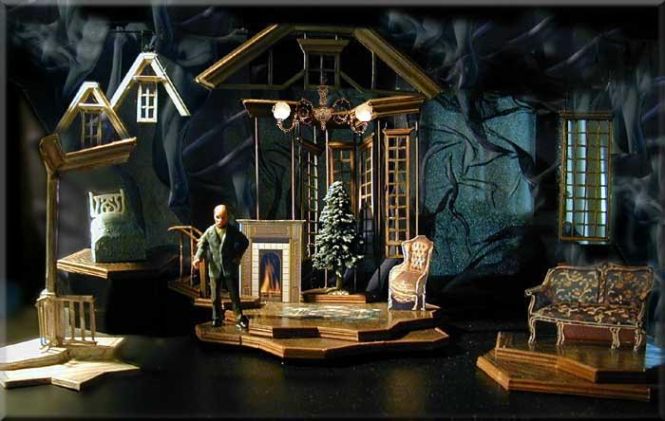
A Child's Christmas in Wales - Winter 2000 production for The National Theatre of the Deaf. The Set Design is by Richard Finkelstein. This adaptation of the work of Dylan Thomas, is by Burgess Clark, with direction by Peter Flynn

A Child’s Christmas in Wales – Winter 2000 production for The National Theatre of the Deaf. The Set Design is by Richard Finkelstein. This adaptation of the work of Dylan Thomas, is by Burgess Clark, with direction by Peter Flynn

The corgi sits next to the stack of papers. Perhaps he’ll eat some: there are essays on Melville, Whitman, even Elizabeth Bishop. Some tasty stuff, even whale meat there, but he only nickers and dreams of a Xmas-day bone.  Children race through my study, loving to slide across the wide waxed floorboards on the runner rugs, their winter surfboards, crashing into the dictionary stand holding the giant Webster’s III.  I shout. The dog looks up. The phone rings. It is the day before, long before, caller-ID, so I scrunch deeper into my great comfy chair . . . and hope.  “Dad, the phone’s for you.  Sounds like another sob story!”

Time: 9.30 a.m. 24 December, many years ago. This is the worst time in an academic’s year.

Our semesters always ended just before Xmas. Grades had to be submitted to the registrar within 78 hours after the final examination—in hand.  So, if you gave an examination on the 23rd you’d be staring at a pile of blue books on Xmas day. The computerized processing of grades was far in the distance.  Students could not discover their final grade until the New Year, when reports were sent home; we faculty posted grades on our office doors. But some students, even some of my students, couldn’t wait: they began calling before I’d even read their exams or papers. I had clearly informed them, repeatedly, that grades could be obtained only by those two methods:  the registrar or the office door. But as my son, now too an academic, observed, “Some students never listen!” a remark that seemed to apply to a few of the some 7,000 students that I have “taught” over some 40 years of my life. (Quick checking on my arithmeticing fingers informs that probably I read a grand total of some 42,000 student papers in my academic career.)

The day before Xmas can be trying, even in a non-religious household. There are commitments of gifting, of cooking, of making music, of writing letters and cards, of visiting, of entertaining, of reading Dylan Thomas. Yet for the academic, all of this must be pushed aside in favor of the exam booklet, the term paper, the graduate thesis proposal. This is the worst time in an academic’s year.

And then the reading itself, after the younger children have fled to other adventures and the door firmly shut against the delicious smells of pies and strudels and sauces for the next day. Did Mr. Adams deliberately mis-read the exam’s instructions? He’s been a tough one, frequently missing class, missing quizzes, and then arguing about grades. Do I give him the benefit of the doubt? It’s too late for a make-up, which I always allow in term. I want my students to learn the material. If they fail or do poorly in a major segment, I feel as if they should have a second chance.

So now, with grades due in a few hours, there’s no second chance. And that first paragraph lead in Daphne Cook’s term paper on Anne Sexton sounds awfully familiar—and it’s not credited. Well, other matters are, thoroughly credited. And, you know, once you say something about Sexton, everyone else seems to have said it too. This is the worst time in an academic’s year.

Hey Professor Softy, get a grip. But I can’t just now; I have to drive to the station to pick up the New Yorkers who feel a seasonal urge to be in the country in a large Victorian farmhouse fairly near the ocean.

Morning has gone, strident Xmas trumpets blast through my thickened door. “Dad, Mom wants to know whether you can . . . and now!” A sandwich, edges curling up, has been set on my desk. Thoughtful, maybe. I think of the Frost poem we studied last month:

. . . I am done with apple-picking now. / Essence of winter sleep is on the night, /. . .  I am drowsing off.  “Daddy, Henry won’t play Candyland with me!” I Drowse.

I check the pile of remaining exam booklets—constantly wishing that it will magically shrink to one, well, maybe two. It won’t. I’d like to skip that part of the course. “Dad, they’re back from the beach, and Mom says it’s time to make them cocktails.” That’s the answer. An anodyne. It’s danger? More sleep. This is the worst time in an academic’s life.

After midnight, after Santa has descended though our enormous fireplace and arranged all of the presents just so, after I have relaxed again into the depths of my Morris chair, after a blanket has been pulled up over me (thoughtful) and I might just sleep a bit more, the number of booklets has magically, it seems, reduced itself to very few. And then I think of the ending of that great story of Christmas written by the Welsh poet Dylan Thomas:  I said some words to the close . . . darkness, and then I slept.


Eric SchoonoverEric Schoonover, Professor Emeritus of American Literature and Literature of the Sea at the University of Rhode Island, now lives in a small 1735 Cape Ann cottage with his wife, a writer. Gone the corgi and the farmhouse, gone the blue books and even Candyland.   “An Academic Christmas” will appear in Schoonover’s forthcoming book, Telling Tales.


Village Facing the Sea

Anne Babson Carter

Dunes at Annisquam. 1916 John French Sloan

Dunes at Annisquam. 1916
John French Sloan

Bing1 (2)bing2 (2)

September 14, 1991/For K.D. and T.B


Anne Babson Carter is the author of an award-winning collection of poems, Strike Root, published by Four Way Books.  Her poems have appeared in The Nation, The Paris Review, Theology Today, The Christian Century, Borderlands Review, among others.  A founding member of the Guilford Poets Guild in Guilford, CT, Carter has twice been a fellow of the Yaddo Corporation.  She lives and works on Cape Ann, Massaschusetts


Jim Lynch: My Favorite Veteran

Justin Demetri

On a rainy Armistice Day my thoughts and prayers go out to my favorite Vet, James J. Lynch as he recovers from a serious fall…Get well my friend.

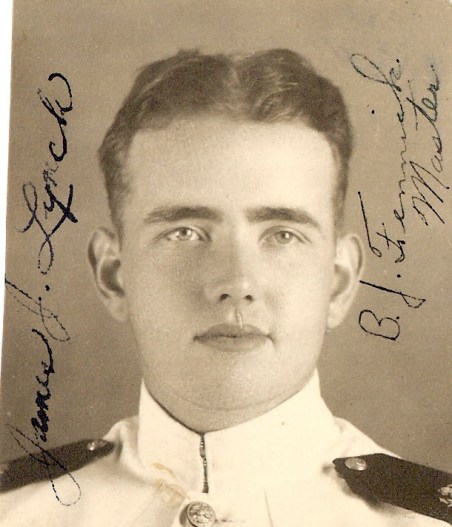
To me the most interesting man in the world is not the guy from the Dos Equis commercials; it is a 91-year-old gentleman who lives down the Fort in what many of us still call “Dutchie’s House.” For over 15 years, Jim Lynch has been more than a best friend, he’s my mentor, my Master Yoda, if you will; and along with the late great Joe Garland another set of shoulders that I stand upon. Jim has been so influential to me that it’s hard to pinpoint all that he has done. But anyone who has talked with Jim, either down the Fort playground, at the Sawyer Free Library, or even aboard the schooner ARDELLE, realizes very quickly that he has lived a life straight out of a Hollywood script. In honor of his service, here are just a few of his adventures during World War II.

As a kid Jim spent his summers aboard his family’s fishing schooners where he learned the art of navigation from his grandfather and uncles. By 1939, with German U-Boats starting their patrols, his grandfather was reluctant to have him aboard. When America joined the Allies in 1941, Jim

Jim Lynch

Jim Lynch

signed on to the Merchant Marine, and with his fishing background was made a lieutenant. He was to be a navigator on the perilous Murmansk Runs – large, poorly protected convoys to the Soviet port of Murmansk to keep the USSR in the war. Part of his training was an intensive crash-course in conversational Russian that would serve him far beyond the war years.

In May of 1942, Jim was part of a convoy on its way to Murmansk from Philadelphia. While steaming past Jan Mayen Island in the Arctic Ocean, German bombers came in almost at mast-height and bombed the ships. A direct hit sent Jim into the icy water as the ship went down.  The long day this far North allowed him to find some floating wreckage to climb upon. As he lay floating there with hypothermia beginning to take hold, he was rescued by the Soviet freighter the STARY BOLSHEVIK, heading to Murmansk with a cargo of high-octane gasoline from Texas. They threw a line and Jim had just enough energy to tie a bowline around his waist as they hauled him on deck. He was surprised to find the captain and all of the officers were women. They did not waste time as they set him up on the ship’s boiler to get his core body temperature back, while on the way to Murmansk. When Jim tells this story today he usually ends it with “it made a Christian out of me.”

Salerno

Jim’s ship was ordered to deliver mobile artillery during the landing at Salerno. The captain of this ship didn’t like Jim, one time saying, “You’re Irish, You’re a fisherman and you’re from the North….You’ll never be any good to me.” He ordered Jim to the battle bridge in the stern. By exiling him aft he saved Jim’s life. German fighter bombers swept in equipped with the latest in Nazi super weapons: Hs model remote guided rockets, the precursor to today’s cruise missiles. One of these flew right into the bridge and killed most of the bridge crew. Now it was up to Jim, highest ranking surviving officer, to run back to the ruined bridge and pull the damaged ship out of the line. I won’t describe what he found once he got there, but I have no idea how he sleeps at night…

The Raid at Bari

Jim barely survived the German raid at Bari, Italy in 1943. The Allies had ships filled with mustard gas containers in the port. The official story is that these banned weapons were being prepared in case the Nazis used chemical weapons in Yugoslavia or Greece. Jim knew what was on the ships–his ship was tied up next to them. When the German bombers flew over the ships and dropped conventional bombs, the mustard gas in the ship holds was released. Jim was once again thrown overboard from an explosion, but this time he was covered in oil, contaminated with mustard gas. Jim was mostly blind for the next three months but fared better than the 2000 military and civilians that were killed from the gas. This little known event was covered up until the late 1950’s.

Jim had many more exploits during the war, which took him to most of the major Allied ports, from Archangel to Asmara. He spent time in the Adriatic ferrying Frogmen and Partisans from Italy to Yugoslavia under German fire. It was there he met members of Italy’s exiled nobility fighting for the Allies and became life-long friends with the Duke of Colonna, the Count of Montezemolo and Venetian banking families. By the end of the war in Europe, Jim was back in the Soviet Union, where he celebrated V-E Day on the Eastern Front with Russian champagne and the thunderous singing of hundreds of Cossacks. The war was over for Europe but not for Jim. Due to the fact that Jim knew where the Germans laid mines in the Black Sea, Stalin “invited” him to stay and help with their removal. Jim didn’t return home until 1947. In the 1990’s Boris Yeltsin invited Jim and the other Murmansk Run survivors to return and they were recognized as Heroes of the Great Patriotic War.

This is only a sample of Jim’s war stories, but one thing they all have in common is his message that all he was trying to do was to stay alive: a fisherman who was just doing his duty for his country. Whoever Jim Lynch was before the war, a stronger but still honest and true version emerged from the USSR in 1947. And for those like me who have the privilege of knowing Jim, we know that his wartime exploits only set the stage for the amazing career and the wonderful family that would soon follow.

Schooner Ardelle

Here’s to you Jim!


Justin Demetri

Justin Demetri

Justin Demetri grew up “Down the Fort” in one of the many families that comprised Gloucester’s Italian fishing fleet. He spent his childhood among the fishermen, the boats and the wharves. At age 12, Justin gave the first cash donation to the newly arrived Schooner Adventure, leading to a friendship with author and historian Joseph E. Garland. This was the spark that would lead to a love of writing and an appreciation for the special place he still calls home. His interests include researching local maritime history and exploring his family’s Sicilian fishing heritage. His works on Italian history, culture and food can be found at LifeinItaly.com. Justin holds a degree in Cultural Anthropology from the University of Massachusetts/Boston and is the Director of Visitor Services for the Essex Shipbuilding Museum.

Giving Thanks

A wish to all of you from all of us at Enduring Gloucester…   may you have a Happy and Safe Thanksgiving, filled with many blessings.

“For each new morning with its light, For rest and shelter of the night, For health and food, For love and friends, For everything Thy goodness sends.” ~ Ralph Waldo Emerson

Gloucester Landscape 1919 Stuart Davis (1892-19640

Gloucester Landscape 1919
Stuart Davis (1892-1964)

Pot Luck

Laurel Tarantino

I’ve resigned myself to the fact that I will never have a formal dining room.  You know the kind I mean, a room with a long handsome table that seats ten or twenty people, with water glasses, stemmed goblets for wine, fine china and fingerbowls.  The kind of table where I would have to question, “Which fork is this, my salad fork, or is it for the main course?” A room where there are old fine art oil paintings that adorn the walls, lit by brass lamps that reflect the mastery of the artist.  Oh, and candles, how they’ll set the mood for an exquisite evening.

No, I may never know what it’s like to dine in such a formal setting, but I do know fine dining.  I’ve found a dining experience that fits into my life just perfectly, and I can’t imagine a month without one.  Pot Luck dining: I don’t know where these dinners originated, I like to think they started right here in New England.   I’m not going to “Google” them on line to learn their history, but one thing I do know, whoever came up with the concept was a genius.

I can’t remember my first, perhaps it was at the Fire Station in Lovell, Maine, where it seemed the entire town showed up to socialize.  I’m always tempted to stop at those suppers you see advertised on a hand painted board “Church Supper Tonight, All Are Welcome,” but it’s usually last minute that I see them and I was brought up never to show up empty handed.  So I smile instead for those inside enjoying their community gathering.

I have a small group that gets together to play what we call “Extreme Croquet,” mostly during the not-so-perfect weather days, hence the name “Extreme.”  One Saturday a month, at High Noon, weExtreme Croquet meet for the fun and the bragging rights of taking the win on the course.  There may be briar, knee deep grass, waist high snow, rain, or other obstacles on the course.  Always, there is friendly ribbing…   “Watch him, he cheats!  Send Him, Send Him Long.”  And always, always, there is laughter in abundance and a great variety of food in between rounds.  A quiet comes over the room as folks warm up with some of Helen’s chowder, a mound of Shepherds’ Pie, or a slice of Tracy’s extreme lemon cake.Extreme Lemon Cake

So, I may have only won bragging rights once in 20 or 30 games, but I surely come out on top each time I go, from the friendship, fresh air filled with the sounds of friend’s voices, and that wonderful, ever present “Pot Luck” meal.

Fast forward now, to a boat building shop on Harbor Loop.  The building itself is part of Gloucester’s Maritime Heritage Center.  Why they took the word “Heritage” out of the name is beyond me and a whole other story.

Anyway, when I bump into Geno he’ll say, “Hey, we’re going to be cooking this Saturday, you should come by if you can.” Or: “We’re getting together this weekend,” and the one I’m always sad to hear: “We’ve been getting together, I haven’t seen you in a while, where’ve you been?”  Life.  Why is it that life sometimes gets in the way of being somewhere we’d like to be, doing what we’d like to do?

Back to the Dory Shop.  There’s usually a boat in the process of being built on any given Saturday afternoon you step through the old wood sliding door.  Hopefully, for our purpose, it’s at the stage where it’s upside down and we can use the bottom for our table.   One of my fondest memories was hearing someone yell from inside the shop “Hey Geno, we need a bigger boat,” as people kept arriving with more food.   There’s plenty of sawdust, boat building tools and warmth from the wood stove that will surely have something good cooking on it.

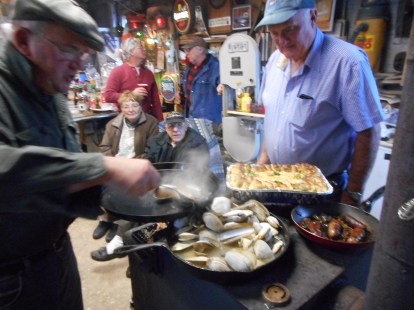
Cooking on the wood stove at the Dory Shop

Cooking on the wood stove at the Dory Shop

Remove the lid from the cast iron skillet and catch a fine mouth-watering aroma taking the chill out of a November day.

Tom will most likely arrive with rosy cheeks, a bucket of steamers and a few lobsters he hauled just that morning.  Someone may bring Finnan Haddie, home baked beans, a salad, sweets… Ever hear of a “Gloucester Lollipop?”  We have those too, when Joe comes in with his Mackerel on a stick and what a treat when Geno makes his fish cakes and calls from the wood stove to get ‘em while they last.  You never know what you’ll get, but a guarantee is that you will be welcomed, you will be well fed, and you’ll have such a grand time that you’ll want to return again and again.

An added bonus to Saturday afternoon’s at the Dory Shop would be the music. Someone is bound to bring an instrument or a pretty voice to entertain for a spell.  Want to dance?  Go ahead, no one judges you here.

Music at the Dory Shop

Music at the Dory Shop

Perhaps others will join you, or try and sing along. It’s okay if you don’t know the words.  Just don’t sit in the rocking chair if it’s empty. That’s Joe’s chair and he’s too much of a gentleman to tell you so.  It’s just a given for those of us who’ve been around a while.  The way I hear it, Geno started these Saturday afternoon “Pot Lucks” so he would have something fun to do with his uncle.  How wonderful for us that we benefit from these kind souls.


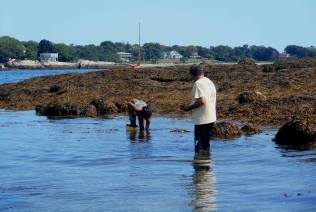
I bring you a bit away from the waterfront, to a two-car garage that houses no cars, behind Burnham’s Field.  I call these pot luck meals “Sunday Dinner at Joe’s Garage.” I have an entire photo album just for these meals.  Some of the photos include Joe gathering mussels off theGathering Mussels seaweed beds of Ten Pound Island with his daughter, to be later photographed in a pan of garlic, fresh tomatoes and wine.  Oh, and the fresh bread!

Bread is always warm at Joe's Garage

Bread is always warm at Joe’s Garage

Joe makes loaves every time.  Hot from the industrial restaurant style ovens, smothered in sesame seed, a true gift for your taste buds.  How many pictures of food can you take?  I don’t know yet, I’m still working on it.  I know for sure, there’ll be more delights coming from Sunday Dinner at Joe’s Garage.  Homemade sausage, pizzas, linguini with the clam sauce, countless photo ops.

Today I’m at another friend’s house for “Patriots Football.”  I’m among some of my dearest of friends and they all know I’m not here to watch football.  Oh, I do hope the Patriots continue with their winning streak, but it is certainly not the foremost reason for being here.  It’s the nourishment of friendship, good eats and conversations, before, during half time and after the game that feed me.  Even the dogs are happy to be invited.  Maybe someone will toss them a scrap; in the meantime, they run and play in the autumn sunshine.    This group of people take turns each time there is a one o’clock game on a Sunday.  One week it might be at Maria’s or June’s, perhaps a Harvest Meal at Lenny and Ricks, wherever it may be any particular week is the place I want to be.

I can hear cheers from the other room, the Pats must be winning.  From where I sit, we have all won for this day we’ve been given together.

There are so many ways we enjoy ourselves.  I find for me they generally involve food.  The Fort Gang feasts at different friends’ homes during St. Peter’s Fiesta, celebrating the Fourth of July with the same crew and then some in Rockport.  Bringing a dish to the Orchard Street Parade where the famous “Hat Ladies” debut their incredible work.   St. Joseph’s Feast at Auntie Emma’s, which starts before most are out of bed to make the pasta.  All memories that make forever stories to be told time and again.

So folks, if you’ve never experienced it, I highly recommend it…   call it what you will, “Pot Luck Dinner, Pot Luck Lunch, Sunday Dinner at Joe’s Garage.” Make up your own excuse, just do it.  Get together with your friends, share in the making of the meal, and eat it together, be it leaning on a porch railing or the bottom of an overturned boat.  Rain, snow, sunshine or under the stars, simply enjoy each other’s company.

If you want to “Google” the origins of Pot Luck, please let me know what you find.  I imagine they’ve been around since time began.  Surely, because of them, I dine on the best food on earth, in the finest settings, surrounded by the laughter and love of friendships old and new.

It doesn't get any better than this...


Laurel TarantinoLaurel Tarantino, writer, is happy to live in her hometown, Gloucester, with her husband, James,”Jimmy T,” daughter Marina Bella, and the family dog, Sport. She is known for “stopping to smell the roses” and loves to photograph and write about her beloved waterfront community.


Hear Her Roar

Lori Sanborn

For the first twenty-five plus years of my life, I felt more connected to the male gender. Throughout my middle school, high school, and college years I had way more male friends than female ones. Of course, I had a few girls that I trusted and could tell anything to. And one or two, who I was really close to that I would even smoke Marlboros with and cut class. But overall, at these stages of my life, I felt more comfortable around males. I was even able more readily to

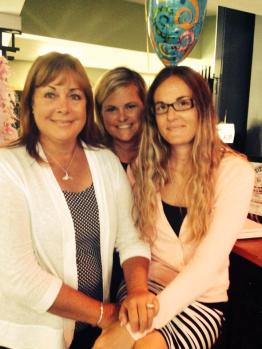
Nancy Sanborn (my Mom), Meagan Sanborn (sister) & me

Nancy Sanborn (my Mom), Meagan Sanborn (sister) & me

admire males over females. But then I turned thirty, and from that point on, my perspective had changed entirely.

During the last five years of my life, I have witnessed countless acts of unwavering courage and unbelievable strength from women in my circle of friends, women from our seaside community, and from one of the most important women in my life, my sister.

I have some badass girlfriends. Not because they ride Harleys or remain standing after pounding five shots of tequila. My friends endure. I have a friend who only cried once after being diagnosed with an aggressive type of breast cancer. When “cancer” entered my world, I was on the bathroom floor unable to move. Yet when recalling her story, she actually smiled and told me she “had two boys to raise and they needed her.” She never looked back but rather dedicated herself to being the best mother she could be. Did I mention that she was also a single mom? Badass.

Another girlfriend of mine had her world turned upside down upon hearing that her mother had been diagnosed with early onset Parkinson’s disease. Honestly, I would struggle to get out of bed if faced with such a circumstance. But in looking at my dear friend, one would never know of her struggle. She maintains a calmness and stick-to-itiveness that is admirable. She goes to work. She takes her mother to all of her doctor appointments, all while managing to hold down her own fort. She values her role as wife and mother. She doesn’t complain and is one of the most genuine women I know. Did I mention that she doesn’t drink? Badass.

Within our Gloucester community heroism is all around us. She is the woman that has the drive to start a new main street business and still raise four kids. She is the young woman that moves by herself to North Carolina to start anew.  She is the woman that can still believe in love after being lied to time and time again. She is the loyal wife of over 30 years. She is the woman that has the courage to file for divorce. She is the woman that can still raise a child after losing one.  She is the woman that can work more than one job to provide for her family. She is the woman that decides to follow her dream or face her fear.  She is the woman that runs for office. She is the woman that chooses to be a stay at home mom. She is the woman that has lost a spouse or sibling unexpectedly. She is the woman that faces a health scare of her own. She is the woman that ran the Boston Marathon. Did I mention that SHE doesn’t always roar?  Sometimes she just shows up, and that alone is enough. Badass.

My sister is one of those women who always shows up. No matter what time the hockey game is, no matter the hosting state, she is always in that rink for her sons.  And she’s probably there two hours ahead of time.  No matter how many times she has faced unfairness or less than desired

My sister, Meagan Sanborn and her son, Timmy

My sister, Meagan Sanborn and her son, Timmy

outcomes, she has pushed on. She never complains about being the sole provider, but rather has always found a way to provide. She always puts her boys first yet somehow finds a way to be there for her family and friends when they need her. She is the type of woman that shoots straight and knows just what you need and when you need it. Intuitively, she knows when to take you on a Backshore ride, grab her Macy’s card, or pour a big glass of wine. She is the woman that picked me up off that bathroom floor after I was misdiagnosed with lymphoma and spoke only this to me, “So, you’ll beat it.” She is the woman that hates hugs but can still make you feel loved and comforted.  Did I mention that she just closed on a new house for her and the boys? Badass.

It may have taken me thirty years to truly connect with the female gender. But in only five years “She” has taught me the real meaning of compassion, loyalty and above all, strength. Imagine what “She” will teach me in next twenty-five.

And this is not some feminist propaganda piece.  I could give you a thousand reasons why I love my Daddy.

~Lori Sanborn

lori sanborn

Lori Sanborn was born in Gloucester and returned to live permanently in our seaside community three years ago. She has been a public educator for 12 years, teaching eighth graders.  Lori is most proud of her role as mother to her children, Emerson and Ryder.